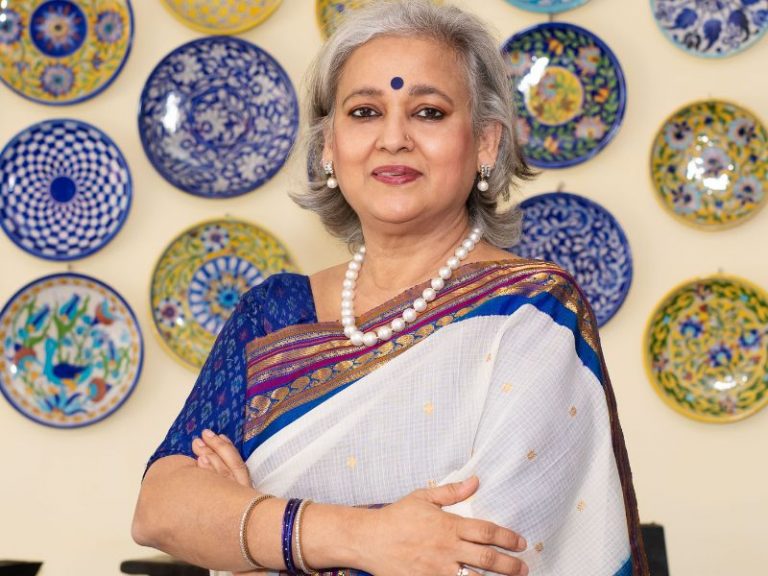
Aditi Misra has been the Founder Principal of DPS, Sector-45, Gurgaon since March 2002, and currently serves as its Director Principal. With previous roles as Headmistress at DPS Maruti Kunj and DPS Gurgaon, she brings extensive experience to her leadership positions.
Having earned an MEd from Annamalai University, Tamil Nadu, and a BEd degree from Indraprastha College, Aditi holds an MA in History from the University of Delhi. She is also an alumna of DPS schools at RK Puram.
Aditi’s contributions to education have been recognized through prestigious awards. In 2012, she received the first CV Raman Education Award for Excellence in Leadership and the Teachers Day Award for Recovering and Revitalizing Education for the COVID-19 Generation by the International Institute of Hotel Management. She was also honored with the Golden Door Award Singapore for Truth & Integrity of the Written Word as a Champion of Change.
“Most schools never consciously chose their basic unit. They inherited one from the past: the class. With the class as the focus, the things that happen between people get squeezed out: the apprentice learning alongside someone skilled, the child taught where they are rather than where the class is, and the daily practice of getting along with people they did not choose. The most promising new schools are organising themselves around the individual child rather than the class. A better approach is to group children by readiness in each subject and change those groups as they progress. Communication, collaboration and handling disagreement need daily practice. In a school built around individual progress, teachers get time back to observe, diagnose, mentor and step in where they are most needed. Most teachers entered the profession to make a difference to children. Many spend their careers managing classes instead. The best new schools offer them a system that finally lets them do the work they signed up for.”
- Rahul Raghavan, Economic Times, (27/10)
“Government medical college seats are 100% filled, vacancies are confined entirely to the private sector. Colleges and state fee-fixation committees must re-examine these fee structures, because lowering NEET qualifying cut-offs will not resolve an affordability crisis when millions of candidates already qualify. The vacancies are an indicator that qualifying for medical admission does not necessarily mean students could afford a seat. Institutions charge full fees to early applicants and offer discounts to late entrants to fill the vacant seats. It reflects a purely commercial approach that compromises merit while still failing to fill classrooms. High management-quota fees are putting seats beyond the reach of many candidates. Some 24 lakh students write the entrance test for 1.4 lakh seats. While the cream gets government seats, the rest of the students cannot afford a management-quota seat.”


















Add comment