







Assessing AI skills: What can ‘good’ AI questions tell us about how students think?
– Ashwini Chandrashekhar, Curricular Head for AI & Digital Thinking, Educational Initiatives
Chatbots and image generators have entered classrooms faster than most policies or textbooks. International studies of 15-year-olds show that about three-quarters expect AI to shape their future jobs, while only around half feel their schools are preparing them. Many say they learn more about AI from social media and news than from teachers.
While the access gap is closing in some ways, a thinking gap is opening.
At Educational Initiatives, we have tried to understand this through the lens we know best: carefully designed assessments and studying the patterns in student responses.
What earlier questions already told us
Long before the world used the phrase “AI Literacy”, our Computational Thinking questions picked up habits that are telling in an AI age. Here is an example to illustrate this.
1. Lemon slices in the wrong order
We showed grade 3-6 students an image of a lemon being cut five times.
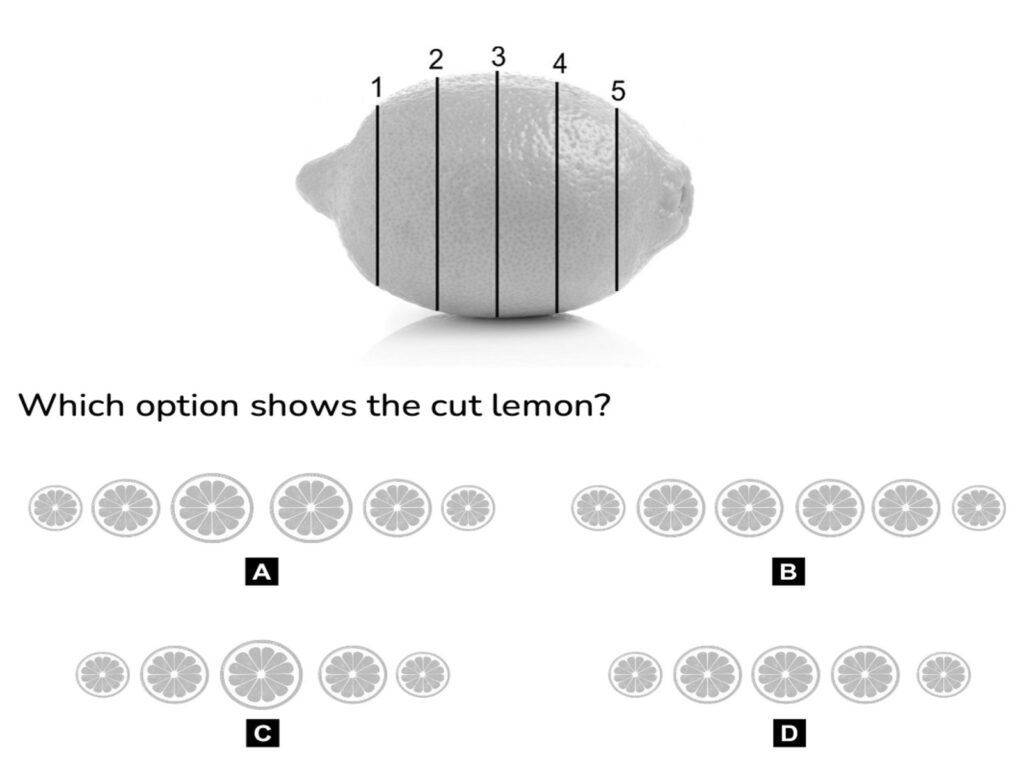
The task was to choose the arrangement that matches the knife’s movement.
In our data, fewer than half the students picked the correct option. A sizeable group chose an arrangement that had the right order but the wrong number of pieces. They are tracking appearance, not process.
This is the same habit we later see when students treat an AI system as a magic box and ignore the steps that lead to an answer.
New skills in an AI world
When generative AI tools became common in homes and schools, we started building questions that explicitly address AI but still hinge on the same underlying habits of thought.
Here are two examples from our AI and Digital Thinking work.
2. What parts does a smart device need
Younger students see icons for four possible components inside a “smart device”: microphone, camera, speaker and a small computer chip. The device can hear its name being called and then responds with “Hello”.
The question asks which parts the device must have to do this.
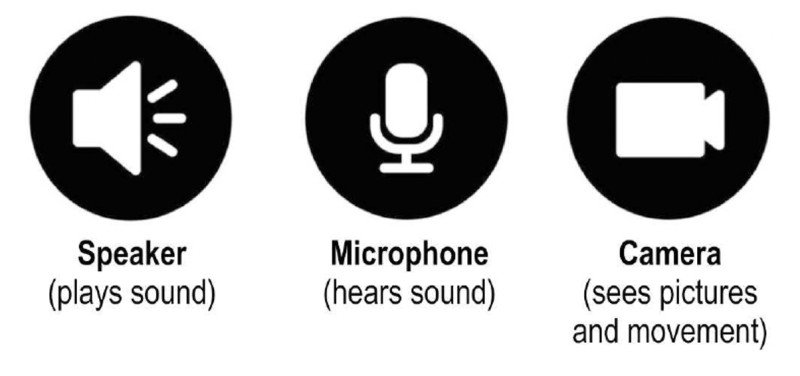
To answer correctly, students must reason that the device senses sound through a microphone and produces sound through a speaker, with some computing inside to decide what to say. Many children pick only one part or add a camera because they associate “smart” with taking pictures. The item separates students who see gadgets as mysterious objects from those who can think in terms of inputs and outputs.
3. When language changes, models change
Older students see a small table comparing how certain words are used in 1984 and in the present day. For instance, “viral” is linked to diseases earlier and to online popularity now. “Thread” linked to sewing and later to discussions on a social platform.
They are told that one language model was trained only on data up to 1984, and another was trained on data up to today. They then answer questions such as:
Which ending will the older model most likely give for the sentence “We studied the viral spread in ___”?
Which sentence is both models likely to interpret correctly?
Many students can repeat that “AI learns from data”. Far fewer use that idea to predict how a model will behave when word meanings shift. Their answers reveal whether “training data” is a memorised phrase or a real mental model.
Why assessment design matters here
Most AI-themed questions in textbooks or worksheets are designed carefully. However, they aim to “cover” a topic rather than reveal a student’s thinking, so they stop at “What is AI?”, “Give two uses of AI” or rule-based digital safety items that only test recall. When we design AI & Digital Thinking questions, we start from a single idea we want to probe, such as where a rule could fail or what data a model has seen, and we build options around real mistakes we have observed so that solving the item needs at least one clear reasoning step. Those small choices change what the responses tell us about students’ readiness to work with AI tools while staying in charge of the thinking.
A simple way for parents and schools to try this out
To give students, parents, and schools a simple entry point into these skills, Ei has created The Ultimate AI Quiz.

Click here to know more: The Ultimate AI Quiz by Ei
Also read: AI in Classrooms: Friend, Not Foe










Add comment