






Redefining India’s Higher Education Architecture
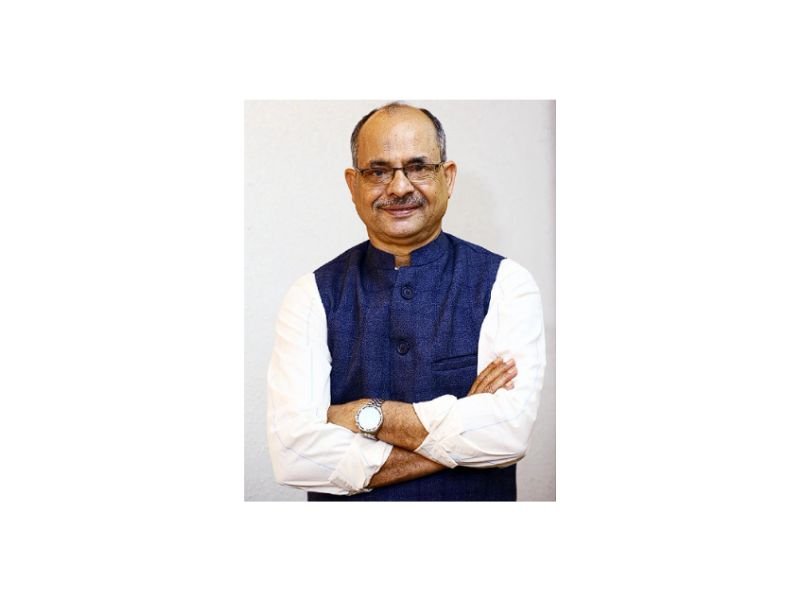
-Manoj Tiwari, Director, Indian Institute of Management Mumbai, Professor, Industrial and Systems Engineering, Indian Institute of Technology, Kharagpur
The Viksit Bharat Shiksha Adhishthan Bill, 2025 marks a defining moment in India’s higher education reform journey. Anchored in the constitutional mandate under Entry 66 of the Union List and aligned with the transformative vision of the National Education Policy (NEP), 2020, the Bill lays a robust foundation for a coordinated, transparent, and globally benchmarked regulatory framework. Timely and progressive, it holds the potential to significantly strengthen academic excellence, institutional autonomy, and national capacity-building across India’s higher education ecosystem.
India’s higher education landscape has witnessed unprecedented expansion over the past decades, with more than a thousand universities and tens of thousands of higher educational institutions serving over four crore students. While this growth has substantially improved access, it has also led to regulatory fragmentation and overlapping compliance requirements due to the presence of multiple statutory bodies. The proposed Viksit Bharat Shiksha Adhishthan (VBSA), envisioned as an apex umbrella institution, seeks to address these challenges by consolidating standard-setting, accreditation, and regulation within a unified, technology-enabled framework. For institutions of higher learning, this rationalisation represents a welcome shift—reducing procedural redundancies and enabling a sharper focus on teaching, research, and innovation.
The Bill’s emphasis on a “light but tight” regulatory architecture, as articulated in NEP 2020, strongly resonates with the higher education sector’s commitment to academic integrity, transparency, and innovation. By transitioning from prescriptive control to outcomes-based oversight supported by public self-disclosure, the framework promotes trust-based governance while reinforcing accountability. The introduction of faceless, technology-driven single-window systems is particularly significant, promising greater efficiency, objectivity, and reduced administrative burden for well-performing institutions.
Importantly, the Bill explicitly safeguards the autonomy of Institutions of National Importance, while simultaneously strengthening the broader regulatory environment for universities and other higher educational institutions. The proposed Standards Council, Regulatory Council, and Accreditation Council, each operating independently within its mandate, together establish a robust system of checks and balances—upholding academic standards while encouraging institutional differentiation, innovation, and excellence.
From a strategic perspective, the Viksit Bharat Shiksha Adhishthan Bill complements the aspirations of institutions of higher learning to foster interdisciplinary education, research-driven teaching, and industry-relevant skill development. Its focus on global best practices, flexible academic structures, and continuous reskilling directly supports the preparation of future-ready graduates equipped to address complex economic, technological, and societal challenges. Enhanced transparency, student feedback-driven evaluation, and a strengthened grievance redressal mechanism further contribute to the creation of a learner-centric ecosystem.
Equally noteworthy is the Bill’s emphasis on youth empowerment and Atmanirbharta in higher education. By enabling institutions to innovate responsibly and align academic offerings with national development priorities, the framework strengthens the talent pipeline essential for India’s economic and social transformation. It provides an enabling environment for higher education institutions to deepen their contributions to nation-building and advance the broader vision of Viksit Bharat.
In conclusion, the Viksit Bharat Shiksha Adhishthan Bill, 2025 represents a forward-looking reform that thoughtfully balances autonomy with accountability, innovation with integrity, and growth with quality. The higher education community views this legislation as a constructive step towards building a coherent, globally competitive, and future-ready higher education system. Institutions of higher learning remain committed to engaging positively with this evolving framework to uphold excellence, nurture talent, and contribute meaningfully to India’s journey towards becoming a developed and self-reliant nation.
Also Read: Assessing AI skills: What can ‘good’ AI questions tell us about how students think?











Add comment