The world inequality report 2026, released on December 10 by the Paris-based World Inequality Lab headed by celebrated economist Thomas Piketty, identifies India among the world’s most inegalitarian countries in which one percent of the population owns 40 percent of national wealth, and the top 10 percent of earners corner 58 percent of national income. The annual report has revived a familiar tirade within Left-liberal academics and media pundits targeting the handful of globally competitive businessmen as crony capitalists.
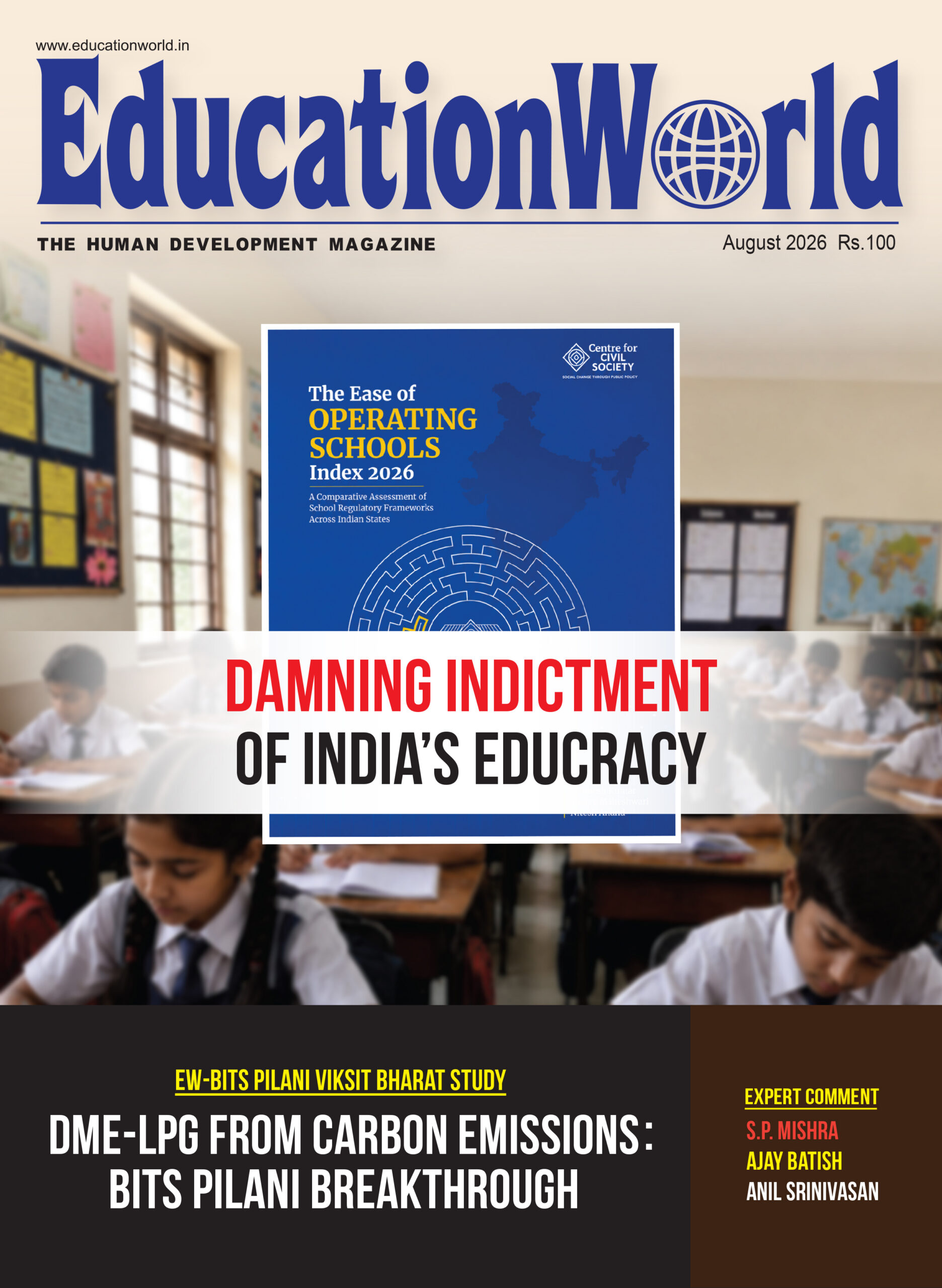
In retrospect, it’s clear that the greatest failure of the Nehruvian socialist development model was neglect of public education, which to this day remains inadequately funded and administered. Almost six decades after the Kothari Commission (1967) recommended that the Central and state governments should allocate at least 6 percent of GDP to education, national spending on public education has been stuck in the 3-4 percent groove. The country’s 1.1 million government schools are characterized by teacher absenteeism, rote learning, broken infrastructure and rock bottom student learning outcomes.
According to the Annual Status of Education Report 2024, published by the highly respected, independent Pratham Education Foundation, which field-tested 649,491 rural students in the 3-16 age group, 51 percent of class V children cannot read class II texts and 69 percent of class V pupils can’t solve simple division sums. Neglect of foundational primary-secondary education has been compounded by chronic under-investment in skills education and training. Only 5 percent of India’s workforce has formal skills training qualifications as against China’s 26 percent, USA’s 50 percent and South Korea’s 96 percent.
As a result, millions of youth enter adulthood functionally uneducated and unemployable, and condemned to low-productivity informal work. Their stagnant wages and precarious livelihoods then show up in global income inequality charts. No amount of post-hoc wealth redistribution can compensate for the denial of human resource development during childhood. It’s now well established that high-quality primary-secondary and skills education drives economic growth far more effectively than subsidies — it’s better to teach people to fish than to give them fish. In the neighbouring People’s Republic of China, which ab initio invested in foundational public primary-secondary education, the per capita income is $13,800 against India’s $2,132.
At bottom, The World Inequality Report 2026 is an indictment of successive governments’ failure to invest in developing human capital. Regrettably, despite a mountain of evidence, there seems to be minimal awareness within the self-serving establishment that quality education is the greatest equaliser and passport to upward socio-economic mobility of the bottom 90 percent.
“Technology must not merely serve industry; it must serve nation-building. The defining measure of excellence should be not simply how high an IIT rises, but how much of Bharat rises with it. The IIT of 2047 must be a university without intellectual walls, a national research engine, an innovation foundry, an entrepreneurship platform, a teacher multiplier, a technological living laboratory, a global knowledge node and a public institution accountable to society. Its success must be judged by how many teachers, institutions and communities become stronger because it chose to share its knowledge, infrastructure and opportunities.”
- Suman Chakraborty, The Indian Express, (18/8)
“The future of work for a broad swathe of India’s educated has turned ominous. What is increasingly being passed off as jobs has become punishing, contractual, part-time and piece-work arrangements. A vast number of educated and professionally trained Indians will be economically and socially worse off than their parents. This fear of sliding further in the social order has turned competitive exams into a desperate venture. The Indian middle class is being squeezed into precarity. In India, the precariat is not only embracing a counterculture but also taking to confrontational politics. Addressing precarity will require greater investment in health, education and housing, alongside meaningful decentralisation. The protests have created new solidarities across classes, genders and castes, opening fresh democratic possibilities.”
- Rajesh Mahapatra & Rohan D’Souza, The Indian Express, (24/8)


















Add comment