





Timeless classics retold
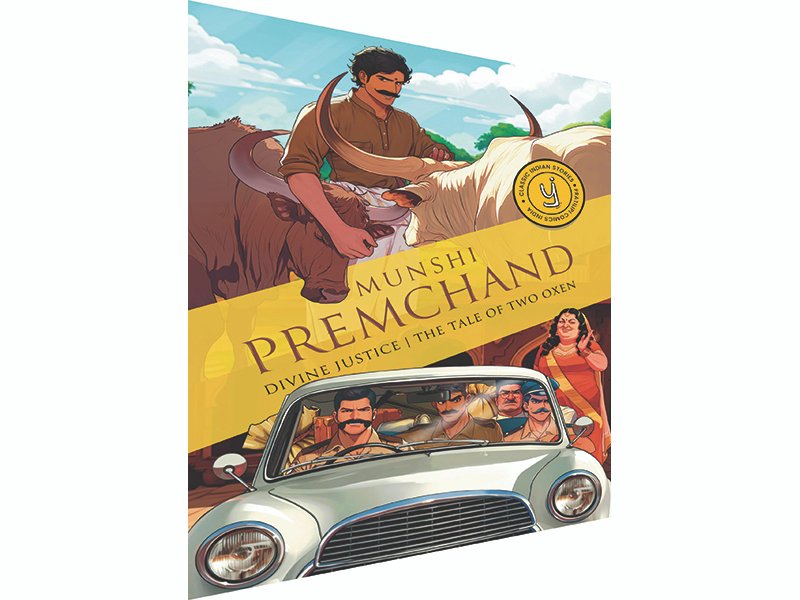
 Divine justice & a tale of two oxen: classic indian stories
Munshi Premchand
westland books
Rs.299
Pages 72
Two stories of one of India’s most beloved storytellers presented in the form of a graphic novel with vibrant illustrations and flowing language, making them engaging for children aged ten and above
Munshi Premchand is one of India’s most beloved storytellers, with his works woven deeply into the nation’s cultural memory. From early school readers to cinematic adaptations, his tales have reached generations of audiences. Now, Divine Justice and A Tale of Two Oxen: Classic Indian Stories, published by Westland Books in collaboration with Pratilipi Comics, brings two of his timeless classics to readers in a fresh, exciting way — the form of a graphic novel.
Though the earlier comic adaptations of Premchand’s works went largely unnoticed, this new 2025 edition reimagines ‘Khudai Faujdaar’ (Divine Justice) and ‘Do Bailon Ki Katha’ (A Tale of Two Oxen) with vibrant illustrations and flowing language, making them engaging and approachable for contemporary readers, especially children aged ten and above.
In ‘Divine Justice’, we meet Seth Nanakchand, a wealthy but dishonest man whose life unravels after receiving threatening letters that throw him into paranoia. Premchand paints a sharp portrait of greed and corruption, showing how fear overtakes those who misuse wealth and power. With suspense and irony, the tale builds toward its finale, where justice arrives in an unexpected yet fitting way.
The second story, ‘A Tale of Two Oxen’, follows Hira and Moti, two loyal oxen whose unbreakable friendship persists through hardship. When cruel circumstances separate them from the comfort of home, they endure mistreatment under a harsh master but continue to embody resilience and solidarity. Beyond animal characters, the story powerfully projects the virtues of loyalty, compassion, and the strength found in unity.
One of the most striking features of this graphic novel is its artwork. In ‘Divine Justice’, dark tones and sharp lines underline the tension at the heart of the story, while ‘A Tale of Two Oxen’ uses warm, earthy colours to capture the spirit of rural India and the emotions of its animal heroes. The art blends energy of modern comic design with the cultural richness of traditional Indian landscapes and village life, offering readers emotional depth and cultural context.
Premchand had a gift for writing stories that explored social realities, morality, and human values. Although written nearly a century ago, these stories remain strikingly relevant. ‘Divine Justice’ condemns dishonesty and the misuse of power, while ‘A Tale of Two Oxen’ reminds us to practise empathy toward animals and the priceless value of true friendship.
This adaptation, in clear and simple English, captures the warmth and wisdom of Premchand’s prose while presenting it in a fresh, visually appealing format. By doing so, it builds a perfect bridge for young readers and those new to Indian literature.
With its lively art, clear language, and enduring themes of justice, loyalty, and compassion, ‘Divine Justice’ and ‘A Tale of Two Oxen’ are much more than an introduction to Premchand. The tales are an invitation to experience the richness of Indian storytelling in a way that feels simultaneously timeless and modern.
Whether discovering Premchand for the first time or re-reading him again through this new lens, readers will find this graphic novel a rewarding journey into this great narrator’s stories that never lose their power to inspire.
Navnit Nirav (The Book Review)










Add comment