





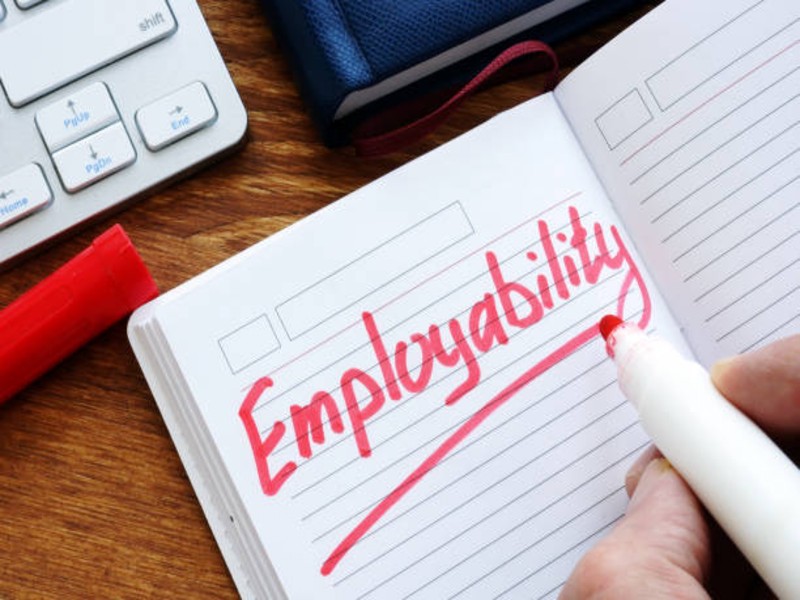
Only 1 in 5 colleges achieve over 75% placement within 6 months: TeamLease Edtech report
Despite employability becoming a central focus of the National Education Policy 2020, only 1 in 5 institutions (16.67%) achieve over 75% placements within six months of graduation, according to TeamLease Edtech’s report released recently.
The study, based on responses from 1,071 institutions across public, private, and deemed universities and autonomous and affiliated colleges, reveals that while intent is strong, with over 90% of institutions indicating employability will take precedence over traditional academic metrics in the next three years, execution remains fragmented.
Soft skills training, widely recognised as essential for career readiness, remains absent in nearly half (49.39%) of institutions, with only 36% embedding them into curricula and just 15.75% offering continuous learning programmes. This indicates that graduates are entering the workforce without critical communication and collaboration skills, weakening their job readiness.
Employer partnerships also lack depth, with fewer than 10% reporting very strong engagement and only 25% reporting strong or very strong partnerships. Alumni networks, another critical lever for mentorship and informal hiring pathways, remain underutilised, with 43.51% of institutions reporting no engagement at all. Institutions are failing to tap into one of the most accessible and cost‑effective bridges to industry.
Applied learning is still nascent, with one in four institutions frequently integrating live industry projects into coursework. Discipline-wise adoption of employability practices shows uneven progress: Management (68.42%) and Engineering & Technology (60.53%) lead, while Commerce (54.39%), Science (53.51%), and Arts/Humanities (59.65%) lag behind. These statistics point to a fragmented system where employability readiness depends heavily on the discipline chosen, rather than a universal standard.
Commenting on the findings, Shantanu Rooj, founder-CEO, TeamLease EdTech, said, “For decades, the system’s central promise was access to a degree. That promise mattered, and it still does. But the context has changed. Today, the true test of higher education is no longer enrollment or completion alone. Education should meaningfully improve a student’s ability to participate in the economy. What this report reflects is a system in transition. The pace and depth of adoption will define the next phase.”
The report underscores that while employability has moved to the center of institutional strategy, the challenge lies in moving from intent to institution‑wide execution. Without embedding employability into curriculum design, pedagogy, partnerships, and governance, India’s higher education system risks remaining a degree factory rather than evolving into an employability hub.
As India’s leading learning and employability solutions company, TeamLease EdTech helps higher education institutions (HEIs) launch, run, and manage their own online programmes, improve the employability of their students through their apprenticeship programmes, and helps employers build talent supply chains, along with improving employee productivity.
Also read: Education ministry to host Bharat Innovates deep-tech pre-summit









Add comment