







Students’ Corner: Aastha Borkar and Ansh Suri, JBCN International School, Parel
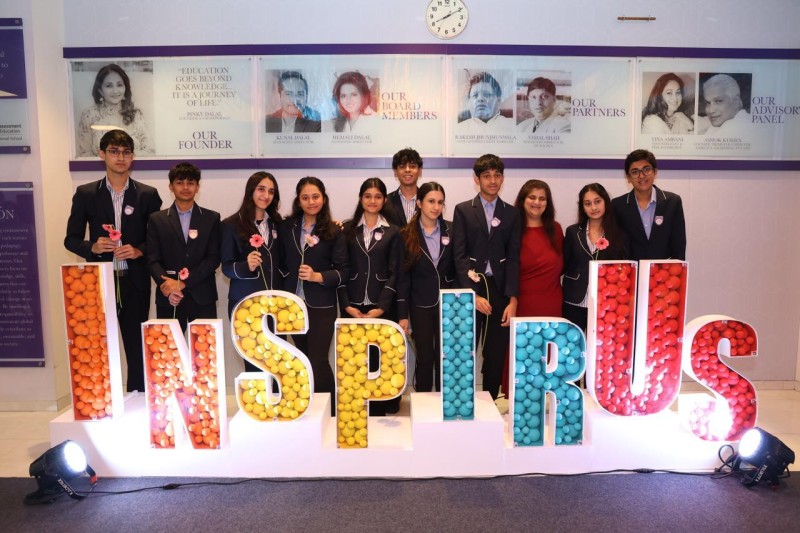
In continuation with the ongoing ‘Students’ Corner’ series featuring student leaders across the country’s top education institutions, EducationWorld interviewed two student leaders of JBCN International School, Parel — Aastha Borkar and Ansh Suri.
Aastha Borkar is currently an IBDP 1 student and the Head Girl of JBCN International School, Parel with a strong interest in pursuing Political Science in the future. Deeply passionate about global politics and social change, she aspires to contribute meaningfully to society through leadership and advocacy. Aastha is a vocalist in the school band and a trained Odissi dancer, reflecting her commitment to both artistic expression and discipline. She is also actively engaged in social impact initiatives as the vice president of the Climate Action Project at JBCN and the founder of Nari Shakti, a student-led women’s empowerment club focused on creating awareness and driving positive change.
Ansh Suri is an IBDP 1 student and the Head Boy of JBCN International School, Parel. A driven student leader, he has played an active role in creating meaningful impact within the school community by co-creating the “100 Acts of Change” service curriculum alongside Head Girl Aastha. Through this initiative, he has helped foster a culture of initiative, responsibility, and social awareness among students. He is also the host of The Unmuted Podcast. Beyond leadership, Ansh is deeply passionate about sports and actively participates across multiple disciplines, reflecting his enthusiasm for teamwork, discipline, and personal growth.
The Head Boy/Head Girl/Student Council representative is a coveted position. How do you carry out your responsibilities and studies together?
Aastha: Balancing academics with the responsibilities of Head Girl requires a conscious and structured approach. As an IBDP learner, the academic workload is already rigorous, so I rely on careful planning, prioritisation, and consistency. I break down tasks into manageable goals and maintain a clear schedule to ensure that neither academics nor leadership responsibilities are compromised. At the same time, I try to remain fully present in both roles.
Mention the challenges that come alongside this role.
Aastha & Ansh: One of the most significant challenges has been adapting to the heightened expectations that come with the position. There is a constant need to represent the student body responsibly while also maintaining personal academic standards. This dual responsibility can be demanding, especially in a programme like the IB. However, it has also taught me resilience and the importance of staying grounded. Learning to manage pressure while remaining authentic to my values has been a key part of my growth.
Fulfilling your responsibilities as the Head Boy/Head Girl/Student Council representative has its pros and cons. Friends have their umpteen demands on you. How do you manage the same?
Aastha: This role has played a crucial role in developing my soft skills. It has strengthened my ability to communicate effectively, collaborate with diverse groups, and approach challenges with a solution-oriented mindset. Additionally, it has made me more confident in articulating my ideas and taking initiative, which I believe are essential skills not just for university, but for engaging meaningfully with the world beyond school.
Ansh: Balancing the dual responsibilities of being Head Boy alongside the demands of the IBDP requires a high level of discipline and effective management. The academic rigor of the programme—with its Internal Assessments (IAs), Extended Essay (EE), and Theory of Knowledge (TOK)—is inherently challenging. To ensure that neither my academic performance nor my leadership responsibilities are compromised, I rely on a few key pillars: strategic prioritisation, effective time management, compartmentalisation, and delegation.
Serving as Head Boy also comes with the constant expectation of being a role model. Being consistently “on stage” can be mentally demanding, especially while navigating the personal and academic pressures of the IB programme. Ultimately, this experience has reinforced my belief that leadership extends beyond a title—it is rooted in discipline and accountability. It has pushed me to become more organised and self-aware than I ever imagined, equipping me with essential skills for life beyond the IB.
How much time do you spend on social media daily? Do you find it distracting?
Aastha: I spend approximately two hours daily on social media. While it serves as a useful platform to stay informed about global issues, current affairs, and student-related initiatives, it can also be a significant source of distraction. Being aware of this, I try to use it more intentionally rather than passively, ensuring that it adds value rather than detracts from productivity.
Ansh: I spend approximately 1 hour and 30 minutes on social media daily, excluding the time spent consuming long-form content, which can extend my total usage to over 3 hours. I find social media—and the associated habits—highly distracting.
However, I continue to use it for three primary reasons. First, it serves as an informative platform; by following credible individuals and engaging with meaningful content, it can contribute positively to personal growth. Second, from a professional standpoint, as someone running a podcast, it is essential for me to stay attuned to emerging trends, ideate, and plan upcoming campaigns—alongside occasional leisure browsing. Lastly, it enables me to stay connected with friends and serves as a medium for personal engagement.
Have you understood the key takeaways of the National Education Policy 2020?
Ansh & Aastha: We have a general understanding of the National Education Policy 2020, particularly its emphasis on holistic, multidisciplinary learning and skill development. While we have not explored it in extensive detail, we find its focus on flexibility and broader learning approaches quite aligned with the IB philosophy.
Do you think the post of Head Boy/Head Girl/Student Council representative helps you develop your soft skills and makes you ready for life after school too?
Aastha: This role has played a crucial role in developing my soft skills. It has strengthened my ability to communicate effectively, collaborate with diverse groups, and approach challenges with a solution-oriented mindset. Additionally, it has made me more confident in articulating my ideas and taking initiative, which I believe are essential skills not just for university, but for engaging meaningfully with the world beyond school.
Ansh: Absolutely. While the title may hold value on a university application, the true essence of being Head Boy lies in the responsibilities it entails. The role serves as a high-pressure environment that fosters the development of skills that cannot be learned through textbooks alone—such as public speaking and presence, adaptability, emotional intelligence, and conflict resolution, to name a few.
Also read: Students Corner: Sanah Tripathi & Ananya Satish, Scindia Kanya Vidyalaya








One comment
rema Kapur
So good to see the maturity with which Aastha & Ansh express themselves and fulfil their roles as young leaders ,without compromising on their values & academic work load. May the years ahead be even more fulfilling