






Tamil Nadu: Private schools mirage
– Shivani Chaturvedi (Chennai)
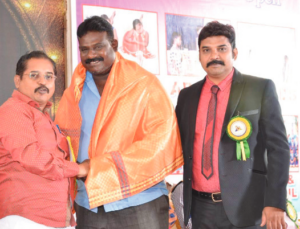
John Prabhu (right): deliberate delay
Free-of-charge admission of poor children residing in the neighbourhood of private day schools as mandated by s.12 (1) (c) of the Right of Children to Free & Compulsory Education Act (RTE), 2009 for the 2026-27 academic year, has begun on a disquieting note. Within the first two weeks of start of the applications cycle on April 20, private schools in the state have received only 18,000 applications against nearly 80,000-85,000 seats available. Under the 25 percent RTE Act quota in private schools, barely 20 percent has been availed. The application process is scheduled to close on May 18, with the list of poor children admitted into private schools scheduled to be released on May 20 and admissions finalised through lottery on May 22.
Education ministry officials who conduct and finalise s.12 (1) (c) admissions maintain that applications typically surge closer to the deadline (May 18). However, the current low response marks a sharp departure from previous years. In 2024-25, the Tamil Nadu education ministry received 1.58 lakh applications, and in 2023-24, over 1.1 lakh applications from poor households indicating strong demand for free-of-charge seats in private schools. The sluggish response this year has aroused alarm among policymakers and educationists, especially given that historically Tamil Nadu has been among the more proactive states in implementing s.12 (1) (c).
Advocate M.J. John Arokia Prabhu, vice president of the Tamil Nadu Private Schools Association, discerns deliberate government delay in kickstarting the admission process. “The government portal becomes active only just before start of the admission cycle and remains largely inaccessible for the rest of the year, limiting continuity and awareness. The government seems to be doing this deliberately because it doesn’t want to encourage s.12 (1) (c) applications as it hits enrolments in government schools. If the process commences so late, many parents are unaware of how many free seats are available in private schools. There is little transparency in the process,” says Prabhu.
Observers also highlight the fiscal dimension of low s.12 (1) (c) admissions in private schools. Under s.12 (2), the state government is obliged to reimburse private schools the tuition fee equivalent to the average per-child expenditure in government schools or actual tuition fee levied by private schools, whichever is lower. Lower intake of s.12 (1) (c) children in private schools reduces the government’s reimbursement burden, while increased enrolment in government schools allows the state to distribute overheads, infrastructure and staffing costs across a larger student cohort, thereby lowering per-child expenditure. Thus s.12 (1) (c) admission delays and procedural bottlenecks raise questions about whether the system is inadvertently — or deliberately — not facilitating the admission of poor children into private schools as intended by the RTE Act.
In 2025, when the admissions portal remained non-functional for a prolonged period, s.12 (1) (c) admissions were effectively stalled amid a broader funding dispute between the Centre and state. Over Rs.617 crore in reimbursements under the Samagra Shiksha Scheme — a Centrally sponsored program to improve school access, equity, and quality — owing to the state government remained pending with the DMK government alleging that the delay is linked to pressure on Tamil Nadu to adopt the National Education Policy (NEP) 2020 and Centrally-sponsored initiatives such as PM SHRI schools, both of which programmes the state’s DMK government has resisted.
With no clarity on s.12 (1) (c) admissions, many parents preferred not to wait and enrolled their children in government schools. Although this imposed additional pressure on public school infrastructure, including classroom space, teacher availability, and learning resources, the DMK government has interpreted the enrolment surge as a sign of renewed confidence in government schools.
“Low admission applications into private schools can’t be attributed to poor parents’ preference for government schools. It is the outcome of insufficient, ineffective awareness campaigns. Since these seats are meant for children from marginalised households, the responsibility of disseminating information and enabling access is with the state government,” says Dr. Sakthi Rekha, a Chennai-based educationist and social activist, who also highlights arbitrary distance norms, which disqualify children living beyond the prescribed 2-3 km radius of private schools, and the hidden costs of schooling, including uniforms and books, which many families struggle to afford despite free-of-charge admission.
Despite over a decade since enactment of the RTE Act, admission of poor children residing in the neighbourhood of well-resourced private schools under s.12 (1) (c) remains clouded in confusion and administrative apathy, particularly in rural communities. Shift to a largely online application process has compounded the problem, creating barriers for underprivileged households lacking digital literacy. Thus the benefits of the liberal and egalitarian s.12 (1) (c) of the RTE Act remain a mirage for a large number of high-potential children trapped in dysfunctional under-performing government schools.









Add comment