





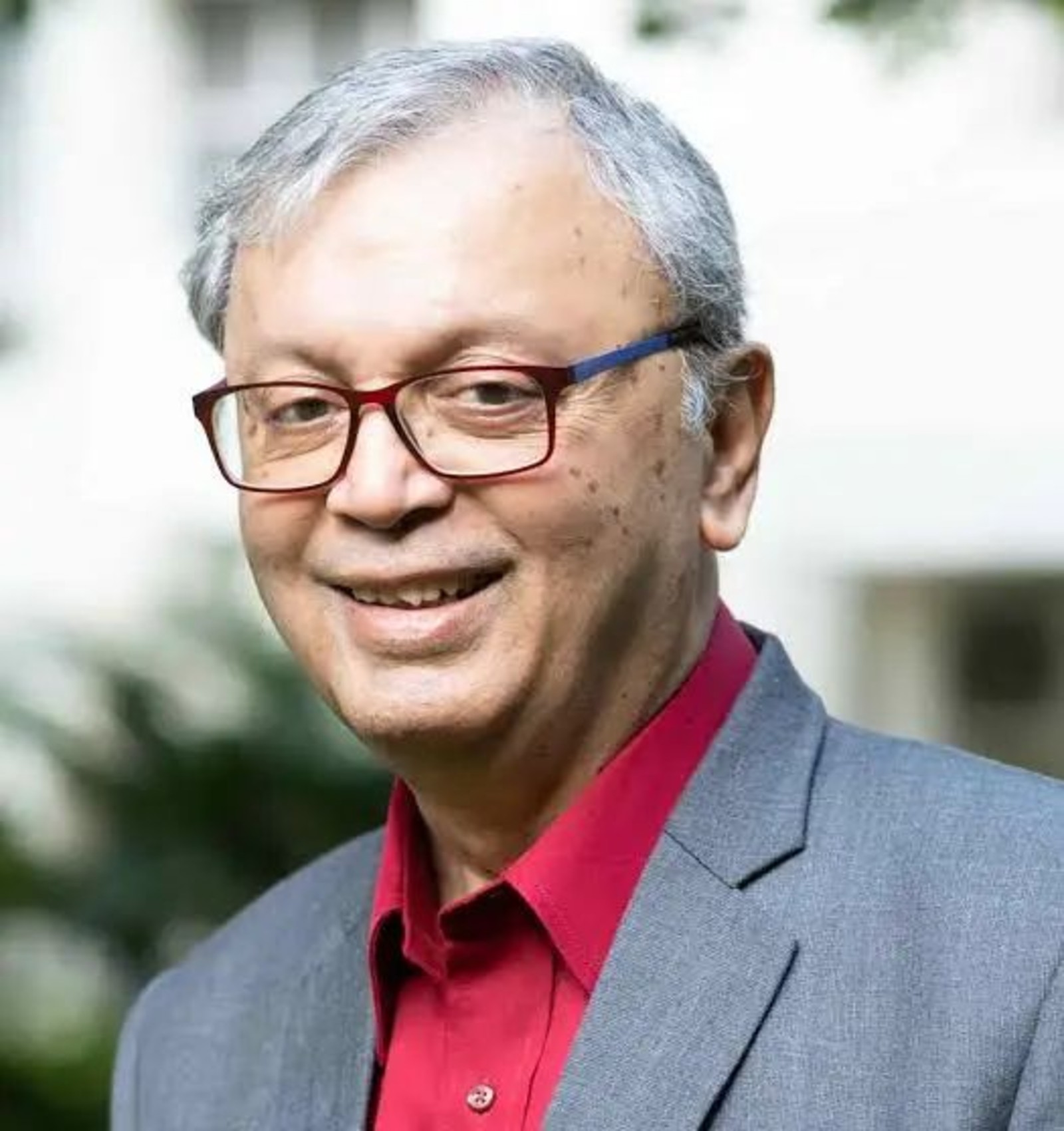
Eduleader In-Focus: Dr. Madhav Chavan, co-founder and former CEO, Pratham
A certified chemist with a Ph.D from Ohio State University, Dr. Madhav Chavan initially taught chemistry at the University of Houston before returning to India to work in literacy and education initiatives, eventually co-founding Pratham in 1995.
Founded as the Pratham Mumbai Education Initiative, Pratham Education Foundation has grown into one of India’s most impactful non-profit organisations focused on improving literacy and learning outcomes for underserved children. Its flagship Annual Status of Education Report (ASER) has significantly shaped education policy and classroom practices across the country.
Today, Pratham reaches over 80 lakh children through programmes in early education, youth skilling, and women’s empowerment. While Pratham operates across India, Pratham International and organisations such as PrathamUSA and PrathamUK support its work globally. Stepping into a new decade this year, Pratham has begun integrating AI-powered tools to strengthen student learning outcomes.
In an interview with Dipta Joshi from EducationWorld, Dr. Madhav Chavan, co-founder and former CEO, Pratham, reflects on some of the milestones that shaped Pratham’s growth and the road ahead for improving foundational learning in India.
1. What gap or gaps in the schooling system were you trying to address when Pratham was founded in 1995?
There were two perceived gaps at that time – not all children were enrolling in schools and some children who enrolled dropped out of the schools. There was some talk about the quality of education not being good, but back then nobody actually had a sense of what is meant by quality of education. The school teachers pointed out one reason for it – because the children did not start with pre-school education. So, when Pratham became active in Mumbai, the first programme we took up was to set up balwadis or pre-school centres. Today, the government of India too has pointed out that early childhood education is an important step.
2. Are balwadis still an integral part of Pratham’s early childhood education work?
Early childhood education is an important part in our programme but not necessarily in the same form as balwadis. The nature of our current early childhood educational programme is completely different from what it was in the first year. We aren’t running the balwadis ourselves but working with anganwadis and in some cases, partnering with the government’s early childhood education programmes giving mothers of the Anganwadi children an orientation on how to help children learn better.
3. Pratham was launched as a community programme based in Mumbai and yet its programmes were replicated across cities in India and abroad. Comment.
Pratham was supposed to be a societal mission where government, business and civil society work together and the Pratham Mumbai Trust reflected this philosophy. The whole idea that we could work on scale, were frugal and could show impact appealed to many business leaders who decided this was a good way to give back to society. The Pratham model was replicated across different cities where people started working on Balwadis and then the ‘Bal Sakhi’ in-school remedial education programme. For instance, in Bangalore, Rohini Nilekani led the Akshara Foundation. So, it was a spontaneous spread.
Pratham USA was an independent charity registered in the United States. It was operated by the Indian diaspora members who raised money for Pratham’s work in India. Other factors like the economic liberalisation within the country, the 86th Constitutional Amendment Act in 2002 and introducing the Right of Children to Free and Compulsory Education Act in 2009 for children aged 6-14 were also responsible for Pratham’s expansion.
Pratham had started work at the right time. Then, as wealth in the country increased, many others got into the education sector which led to some replication. I think Pratham did play some role in the growth of these organisations working in education in the country.
4. Was it Pratham’s focus on ‘learning outcomes’ rather than just school enrolment that led to the conception of Annual Status of Education Report (ASER) surveys?
When we started working in the slums of Mumbai and in schools run by the municipal corporation, we came to the conclusion that children not going to school and dropping out was not the biggest problem. The biggest problem was that children were going to school but not learning the basics. Fourth, fifth graders could not read simple paras although their textbooks were more difficult to read.
However, people did not believe it possible that children could not read despite 4-5 years of schooling. Dr. Rukmini Banerji, she was instrumental in creating a simple reading assessment tool which could transparently show parents, teachers, administrators and policy-makers the level of children’s basic reading ability. This tool used in the Annual Status of Education Report (ASER) survey, was devised not for policy makers but because people, the parents in slums, had to be convinced. Pratham pioneered remedial learning and the Teaching at the Right Level (TaRL) methodology to address these learning gaps.
Our model was to get children to learn to read. We still maintain our methodology of teaching is no rocket science. It is very simple and can be taught by an 8th standard pass young lady in the village. The simplicity of our methodology was deliberate because then it is easy to replicate. However, the simplicity of the method also makes people doubt it. Some pundits of education believe if systems aren’t complicated, they cannot be good.
5. If the methodology was simple, why didn’t the government implement it across its schools?
There are several issues why that did not happen. There are beliefs already entrenched in the education system and the first barrier was believing that children were unable to read or solve simple math problems even after four-five years of schooling. To understand just how widespread the problem was even amongst policy makers and government officers, consider this – 2006 was the first time we reported the ASER 2005 survey results and continued to do so every year (until 2014 after which it switched to an alternate year model in 2016). However, it was not until 2018 when the World Bank report cited a learning crisis (pointing out globally students in grade 5 could not read simple text) that discussions about ‘foundational literacy’ and ‘numeracy’ gathered momentum. We did not use these technical terms. We simply said children cannot read.
The World bank report also coincided with government of India’s work on the new education policy (2020) and the policy talks about children being able to read by the time they complete grade 3.
6. What is your view on the National Education Policy (NEP) 2020 and the current education scenario?
The NEP 2020 says the right things like it focuses on foundational literacy and numeracy which has been translated into policy and practice. We need to see the impact and that we will know by 2027.
One positive change I see around is that individuals, social entrepreneurs, and government officers are all aligned and clear there is a problem with our education system and agree it has to be solved. And we can see changes taking place – Uttar Pradesh fared well in the ASER 2024 results (reading levels of grade 3 students improved over 11 percentage points to 27.9 percent in 2024 from 16.4 percent in 2022). While the push is coming from people who want to see their child learn, there are politicians too who are keen to do something.
7. What changes would you like to see in how education is being delivered today?
That is difficult to answer because I have come to the conclusion that today’s school system cannot solve the problems of education because the system itself is the problem. Everything in a school is tied to a curriculum. Unfortunately, the thrust is still on scoring marks etc. and hence the tendency to go to tuition classes.
I am asking a very fundamental question – why do we think learning happens only in schools? In India, only 5 percent learn vocational skills but people learn a lot on the job. Why do we equate knowledge with text books only? During Covid, we measured children’s learning loss through reading but they learnt to handle technology which we did not measure. Along with implementing foundational literacy and numeracy, the government should also set up a system where children learn beyond text books.
Currently, we test children on text books and what they don’t know rather than test them for what they know. At Pratham, we are introducing an AI-based ATM – ‘Anytime testing machine’ (ATM) which does end-to-end assessment providing automatic grading and delivering personalised feedback to children. The ATM can be a system where students can be tested on any topic, not only what the curriculum prescribes. The education system needs to be flipped from being a filtration mechanism to one that offers differentiated pathways based on the child’s interest and background knowledge.
Also read: Eduleader In-Focus: Nikhil Barshikar, Founder-CEO, Imarticus Learning







Add comment