





Karnataka Public Schools project to be launched on June 1
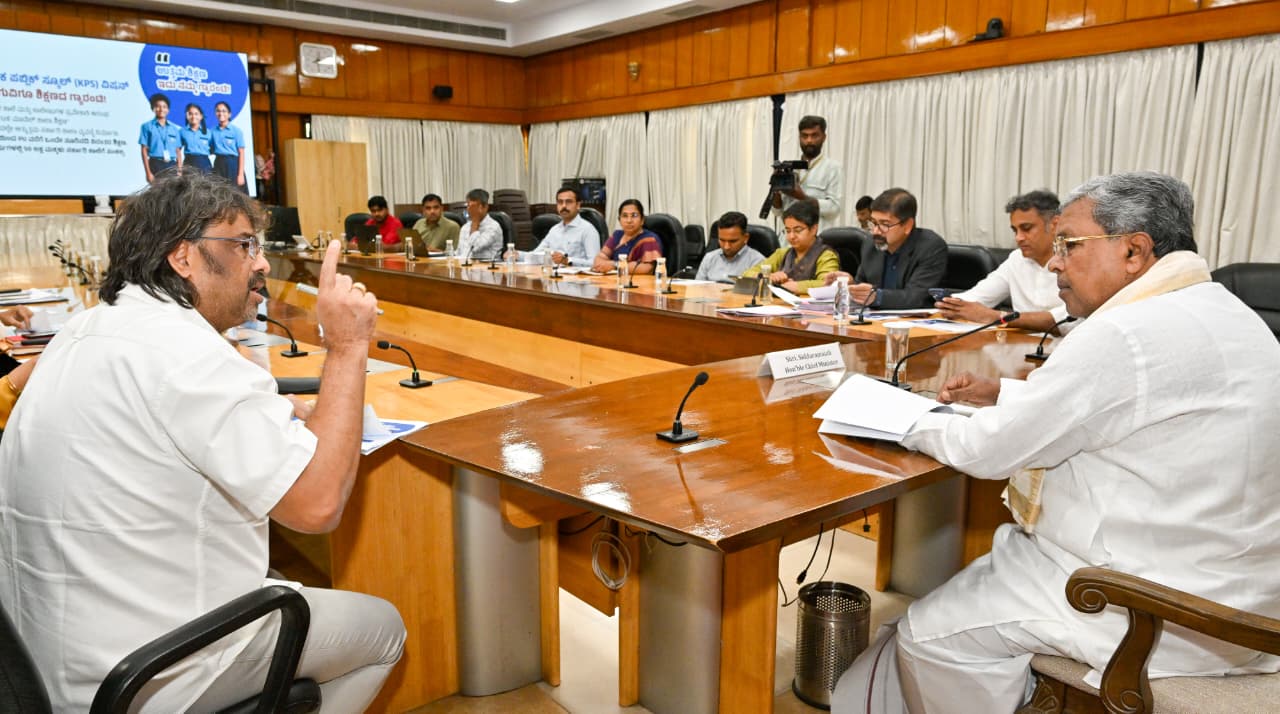
The Karnataka government is set to launch an ambitious expansion of the Karnataka Public School (KPS) project, with Chief Minister Siddaramaiah directing officials to fast-track the establishment of 800 KPS institutions across the state this year. The project will officially be launched on June 1 in Shivamogga.
Chairing a review meeting at his official residence Krishna on issues related to the School Education and Literacy Department, the Chief Minister instructed authorities to complete the tender process at the earliest and ensure that all 800 schools become fully operational within the next two years. The government is also examining the feasibility of providing dedicated school bus facilities for KPS institutions and has asked officials to immediately submit teacher recruitment proposals to the Finance Department.
 This project is among the eight ‘Education Guarantees’ the state announced soon after this year’s grade 10 board results. The other promises include one teacher for every class up to Grade 5, subject-wise teachers from Grade 6 onwards, optional English-medium education in all government schools, free transport facilities for KPS students, appointment of computer, arts, music and physical education teachers, separate non-teaching staff in schools, lesson-based learning assessments with regular parent-teacher meetings, and skill education with competitive exam coaching from middle school onwards.
The KPS model itself was first introduced in 2018-19 to integrate education from pre-primary to PUC under a single campus and improve enrolment in government schools, particularly in rural areas. According to official data from Samagra Shikshana Karnataka, 308 Karnataka Public Schools are currently functioning across the state, with nearly 2.8 lakh students enrolled. The state government now plans to rapidly scale up the model through the addition of 800 more KPS institutions in ph
Designed to provide quality education in both Kannada and English medium, each KPS campus is expected to accommodate around 1,200 students. The project aims to bridge disparities between urban and rural education infrastructure by offering modern facilities, continuity in learning, and improved access to higher secondary education within government institutions.
The meeting also saw discussion about the SSLC results. According to figures presented during the meeting, the SSLC pass percentage this year rose to 94.10%, an increase of 14.06% compared to last year. The Second PUC pass percentage reached 86.48%, marking a 13.03% increase from 2025.
School Education and Literacy Minister Madhu Bangarappa informed the meeting that the improved results were achieved through statewide parent-teacher meetings, appointment of guest teachers, curriculum-focused learning strategies, state-level preparatory examinations, and regular teacher training programmes. Special academic support initiatives were also undertaken in the Kalyana Karnataka region to improve student outcomes.
The government is additionally considering a proposal to distribute free notebooks along with free textbooks to schoolchildren as part of its broader effort to strengthen public education.
Also Read: Karnataka sign multiple MoUs on higher ed, employability & skill development








Add comment