






Teaching in a changing VUCA world
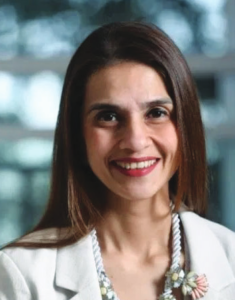
FATEMA AGARKAR
— (Fatema Agarkar is a Mumbai-based educationist and founder of the Agarkar Centre of Excellence)
The role of education cannot be ‘just to provide information’, but to stimulate and lead conversations to analyse causes and effects of global and local problems to ideate peaceful solutions
The world we live in today is changing in unprecedented ways. Since the Covid pandemic in 2020, unpredictable and overwhelming developments from natural disasters to man-made wars have disrupted lives and altered social realities. As a result, in their school years children are experiencing realities very different from what earlier generations were exposed to. These changing dynamics are a wake-up call for all stakeholders — parents, caregivers and especially teachers — to reflect and adapt with a reference point. The rules have changed and will continue to change at a pace that promises to accelerate.
Recent developments provide a prime example of what latter day children are experiencing — exposure to complex. geopolitical conversations much earlier than they would have liked to! Whether it is the conflict between Ukraine and Russia, the Gaza crisis or developments in the Middle East, children worldwide are growing up in a VUCA — volatile, uncertain, complex, and ambiguous — world. What was once considered remote knowledge is now part of everyday awareness.
These are sensitive times. And no one can dodge these discussions. Therefore, responding to children’s questions requires compassion, intelligence, neutrality and empathy not to mention understanding of not only politics but history, culture and economics. To this, add the rapid rise of Artificial Intelligence (AI) that is reshaping how we think, learn, and interact with the world. Information is no longer scarce; in fact, it is expanding and growing, and available to everyone, including those who may not yet know how to interpret, assess, or use it responsibly.
Against this backdrop, the role of education cannot be ‘just to provide information’, but to stimulate and lead conversations to analyse causes and effects of global and local problems and ideate peaceful solutions.
This means teaching-learning has to be well-planned, inclusive and immersive. The era of teaching subjects in isolation and measuring success through high scores is over. This is the age of integration and connectedness language, mathematics, science, history, and geography need to be meaningfully connected to address real-world problems — and challenges. Case studies and Project Based Learning enable children to understand that education cannot exist in silos. Competence in math, technology, science, and language and ability to connect knowledge across disciplines, is essential for navigating a VUCA world.
In these changed circumstances, the role of a teacher is that of an all-rounder. Today’s teacher needs to be multi-faceted — an individual who tracks global politics, climate change, sustainability, and social trends, while also teaching core academic arts, sciences and math effectively. Yet beyond content knowledge, teachers must possess capability to communicate, build relationships, and create classroom environments where students feel safe to express themselves, question and wonder. That’s because for today’s students, critical thinking, creativity, collaboration, and communication are no longer optional skills; they are essential competencies. In this context, technology and AI are not just learning tools for students, but powerful enablers for teachers as well. Teachers who embrace these tools can personalise learning, provide timely feedback, and create more engaging and interactive experiences while reaching out to peers to collaborate and upskill.
Another important shift that’s gaining universal acceptance is that every child learns differently. Factory-style one-size-fits-all teaching-learning for success is obsolete. Every child brings her own strengths, pace, interests, and challenges into the classroom. And acceptance of diversity requires teachers to be more observant, empathetic, and flexible while teaching. Adapting pedagogies to suit visual, auditory, and kinaesthetic learners is not just a strategy — it is a necessity.
But beyond tools, frameworks, and strategies, what truly makes a teacher effective is not just a well-planned lesson — those are easier than ever to create today — but the sensitivity and awareness to understand how each child is learning. This demands that teachers themselves become lifelong learners — open to new ideas, curious about emerging trends, and willing to question established practices. Teachers who continue to learn are better equipped to inspire learning in others. Moreover, teachers need to upskill in subjects other than their own specialisation to inspire students to question.
For school principals and leaders, it’s important to note that the partnership between schools, parents, and the wider community plays a crucial role in shaping a child’s educational progress. Open communication between them develops a supportive ecosystem for students. When teachers and parents work together, the impact of learning is experienced beyond the classroom.
Ultimately, today’s great teacher is defined by capability to adapt, empathise, inspire, and be more ‘humane’. Every child needs a hero, and more than ever now, in-school children need teachers to become humane co-learners ready and willing to readjust legacy pedagogies to changing times.









Add comment