






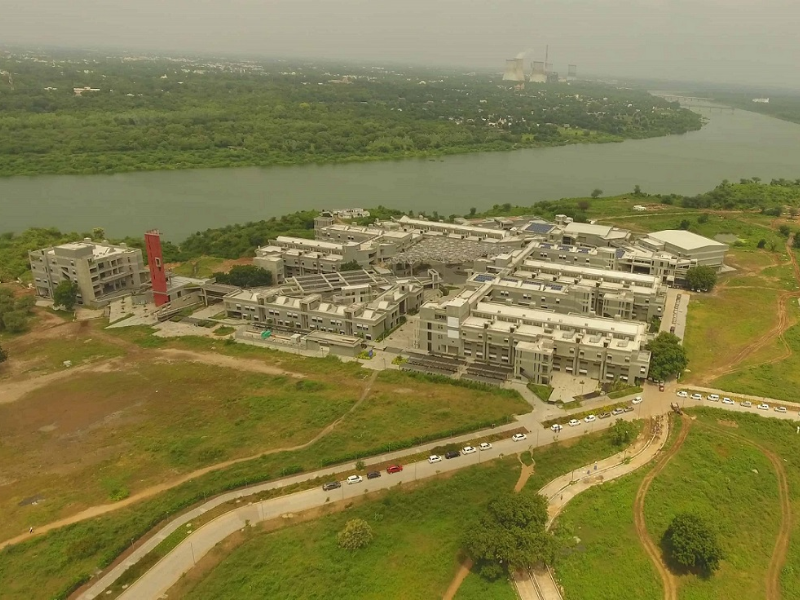
IITGN wins grant for indigenous EV, AI cooling tech
A research team at the Indian Institute of Technology Gandhinagar (IITGN) has secured a Rs 20 lakh seed grant to develop what it says is India’s first indigenous manufacturing technology for advanced liquid cooling systems used in electric vehicles (EVs), AI-driven data centres, railways and high-performance electronics.
The funding was awarded at MATRIx 2026 (Materials Research, Innovation & Entrepreneurship Expo), organised by the Indian Institute of Metals (IIM), to support the commercialisation of the team’s “Advanced Chill Tech” innovation.
The technology uses a manufacturing process based on Friction Stir Channeling (FSC) to produce liquid cold plates—components that circulate coolant through internal channels to dissipate heat from high-power electronic systems. Unlike conventional vacuum brazing, which joins multiple metal components, the FSC process creates integrated cooling channels within a single metal plate, reducing manufacturing complexity, material waste and energy consumption.
The innovation is aimed at addressing two key challenges: thermal management in India’s rapidly expanding AI-driven data centres and battery cooling for electric vehicles, where effective heat dissipation is critical for safety and performance.
The research team has filed an Indian patent application titled “A Friction Stir Channeled Cooling Plate” jointly with industry partner Epsilon Engineering Pvt. Ltd. The technology has reached Technology Readiness Level (TRL) 7, with prototypes validated in operational environments. According to the team, the largest prototype has withstood pressures exceeding 35 bar and successfully completed fatigue and tensile testing.
The project was led by Dr Amit Arora, Associate Professor in IITGN’s Department of Materials Engineering, along with final-year doctoral students Prachi Sharma and Rizwan Qureshi.
“To overcome these limitations, we have developed a manufacturing approach based on ‘Friction Stir Channeling’ (FSC). Instead of joining multiple components, the process creates integrated internal cooling channels within a single metal plate using a rotating tool that plastically deforms the material without melting it,” said Dr Amit Arora, who also heads IITGN’s Advanced Materials Processing Research Group.
The researchers said the technology could reduce India’s dependence on imported cooling components while supporting domestic manufacturing under the Make in India and Atmanirbhar Bharat initiatives.
The team has already developed and tested prototypes for high-speed railway applications and said the technology is also suitable for EV battery thermal management, GPU cooling, AI data centres, power electronics, defence, aerospace and metallurgical industries.
Also Read: IIT Bombay launches entrepreneurship programme for schools; registrations open till July 15








Add comment