






Journey to the stars India’s Best Astronomy and Space Science Centres
We present a shortlist of seven astronomical observatories and planetariums that children and parents can visit together to discover the fascinating world of stars, space science, and cosmic exploration – Punita Malhotra

India has a rich, ancient legacy of space science and research. As early as the 5th century BCE, scholars such as mathematician-astronomer Aryabhata proposed that the Earth rotates on its axis, scientifically, explained eclipses and calculated the length of the solar year with remarkable accuracy. Later in the 6th century, scholar Varahamihira wrote several authoritative texts on astronomy and astrology, while medieval observatories and mathematical schools refined ideas of planetary motion, calendars, and timekeeping. This knowledge shaped agriculture, navigation, architecture and religion, embedding astronomy into everyday life.
From astronomical observatories of the medieval and early modern eras to establishment of modern scientific institutions after independence, India has steadily built on its rich astronomical heritage. Today, this legacy finds its most visible expression in the achievements of the Indian Space Research Organisation (ISRO, estb.1969). Its Mars Orbiter Mission — the first successful Mars mission on a maiden attempt — and Chandrayaan-3, which achieved a historic soft landing near the Moon’s south pole, have established India as a spacefaring nation and a significant force in world-class space exploration. Moreover, India hosts several state-of-the-art astronomical observatories and planetariums that make space science accessible, engaging, and inspiring for children and young adults.
In this month’s Leisure & Travel section, we present a shortlist of seven astronomy observatories and planetariums that children and parents can visit together to discover the fascinating world of the heavens, space science, and cosmic exploration. These destinations offer immersive experiences that transform abstract subject into tangible learning.
They encourage children to ask questions and view science not as an abstract subject, but as a practical framework to understand the Universe and the place of planet Earth within it.
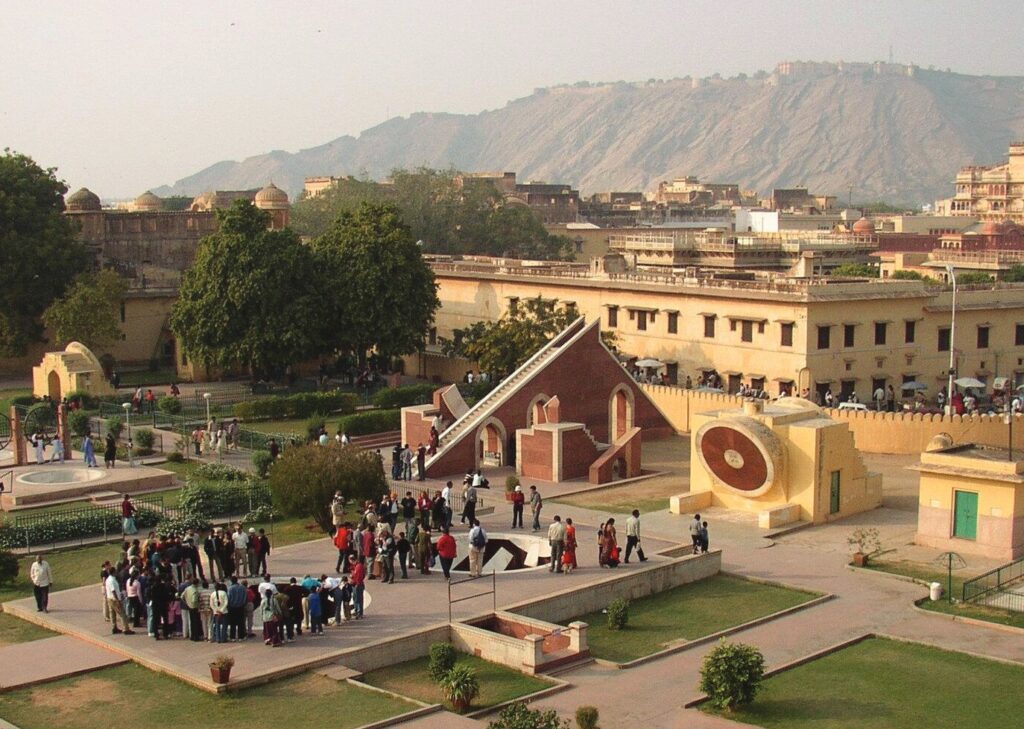
Jantar Mantar, Jaipur
Sited in the heart of Jaipur, where the Pink City’s palaces, courtyards, and bazaars display carefully ordered geometry, is Jantar Mantar. This observatory, built in 1734 by Maharaja Sawai Jai Singh II, represents a moment in urban history when a city was shaped by scientific inquiry.
Jai Singh II was an unusually scholarly king. Deeply versed in Sanskrit and Persian astronomy texts, he was troubled by inconsistencies in existing celestial tables used in different parts of the world. Determined to improve observational accuracy, he commissioned a network of five astronomical observatories across India, drawing on indigenous traditions and Islamic and European knowledge systems. Jaipur’s Jantar Mantar is the largest, most complete, and best preserved of the five and is a designated UNESCO World Heritage Site.
Spread across the open courtyard are 19 monumental instruments, each designed for a specific function — measuring time, tracking planetary positions, determining declination, and predicting eclipses. Built in stone, marble, and plaster, these structures are functional scientific instruments designed for direct observation. The most iconic among them is the Samrat Yantra, a massive 27-metre-high sundial whose shadow moves with remarkable precision, allowing time to be measured to the second. Nearby, the Jai Prakash Yantra forms twin concave hemispheres that map the sky, while the Rama Yantra translates celestial positions into measurable coordinates using shadow and structure. Together, they form an early system of observational astronomy that predates modern instrumentation but operates on principles of geometry and light.
For children, Jantar Mantar is an unusually close encounter with scientific concepts that are often abstract in classrooms, offering them a unique opportunity to practically experience and observe astronomy instruments in action, to acquire a deeper understanding of how ancient astronomers measured time, tracked celestial movements, and studied the night sky.
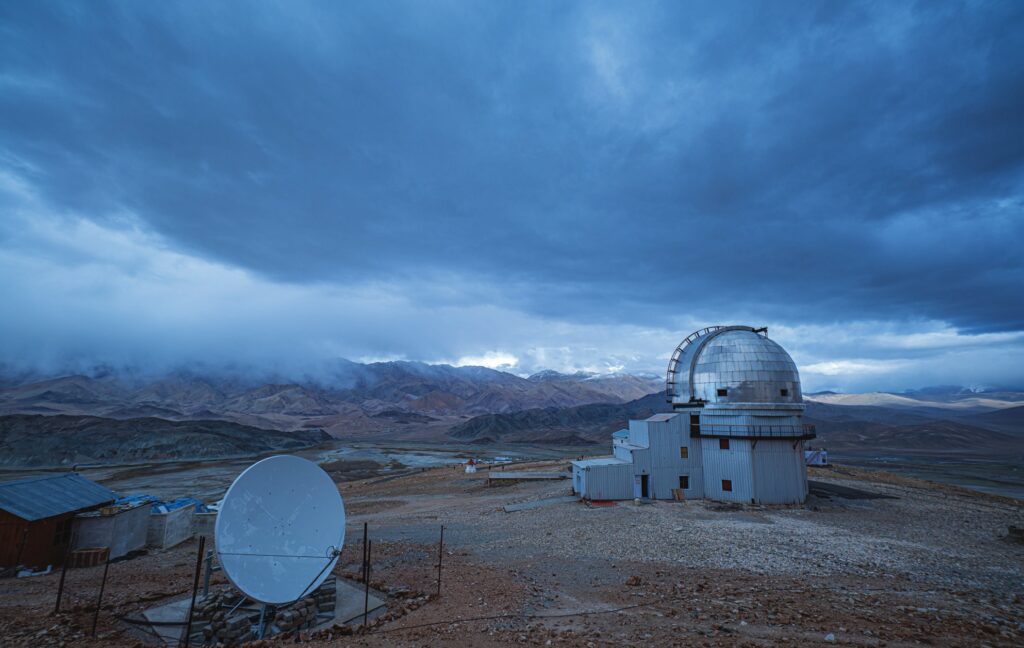
Indian Astronomical Observatory, Hanle (Ladakh)
The remote high-altitude village of Hanle in southeastern Ladakh, sited 4,500 metres above sea level, hosts one of the highest astronomy observatories worldwide. Administered by the Indian Institute of Astrophysics, Bangalore. Hanle is sited in a cold desert region shaped by extreme climate conditions — rare rainfall, low humidity, and almost no atmospheric pollution. Most importantly, it is far from urban light sources, making it India’s first Dark Sky Reserve. With over 250 clear nights per year, it offers some of the most stable and transparent skies for optical and infrared astronomy.
At the heart of the observatory is the 2 metres high Himalayan Chandra Telescope, one of India’s most valued ground-based optical instruments. It is supported by additional features — infrared and gamma-ray astronomy, enabling scientists to study distant, energetic phenomena in the universe and high-energy cosmic events that cannot be observed from populated regions. Data collected from the observatory is transmitted and analysed by scientists working across India and abroad, transforming Hanle into a quiet but critical node in global space research.
For children, the Hanle Observatory offers the opportunity to view bright stars without a telescope and encounter infinity, up close, yet far away.
Aryabhatta Research Institute of Observational Sciences (ARIES), Nainital
Sited 1,950 meters above the lake town of Nainital in the forested Himalayan slopes of Uttarakhand, the Aryabhatta Research Institute of Observational Sciences (ARIES, estb. 1954) has evolved into one of India’s leading centres for observational astronomy and atmospheric sciences. Named after Aryabhata, the 5th-century mathematician-astronomer who redefined early Indian cosmology, the institute carries forward a legacy that connects ancient sky observation with latter day astrophysics research.
Its work is split between its main campus near Nainital and a high-altitude Devasthal Observatory, located 50 km distant — specially chosen for its dark skies, stable atmospheric conditions, and minimal light pollution. At Devasthal, two of India’s most advanced optical instruments anchor its research. The 3.6 metres Devasthal Optical Telescope (DOT), among the largest in Asia, enables high-resolution studies of distant galaxies, star clusters, and exoplanetary systems. The 4 metres International Liquid Mirror Telescope (ILMT) is one of the few operational liquid mirror telescopes worldwide, designed for wide-field sky surveys and continuous monitoring of transient cosmic phenomena. Together, these instruments place ARIES at the forefront of global astronomy research, contributing to studies on supernovae, black holes, variable stars, and the large-scale structure of the universe.
Through outreach programmes, guided visits, and science communication initiatives, ARIES invites children to step into the world of professional astronomy.
Kodaikanal Solar Observatory
Established in 1899, Kodaikanal Solar Observatory is one of the oldest solar laboratories in Asia. Its location was chosen with scientific precision. At this altitude (2,343 metre s above sea level), atmospheric turbulence is relatively stable, and the elevated terrain allows for clear, consistent solar imaging. An enterprise that began as a colonial-era scientific outpost has evolved into a globally respected archive of solar data. During the past century, the observatory has maintained perhaps the longest uninterrupted record of solar activity worldwide, documenting sunspots, solar flares, prominences, and variations in solar magnetic behaviour.
The observatory’s photographic plates and digitised archives reveal patterns of solar changes that unfold over decades, allowing scientists to study how the Sun’s activity influences space, weather and, indirectly, Earth’s climate systems. The on-site solar museum has a wide collection of early spectrographs, solar filters, historic telescopic instruments, and preserved photographic plates.
For children, a visit to the Kodaikanal Solar Observatory transforms the Sun into a fascinating subject of inquiry. Phenomena such as sunspots and solar flares, usually encountered in textbooks, come alive through direct observation. Children begin to see sunspots as visible features on the Sun’s surface and solar flares as part of its continuous activity. Even ordinary daylight takes on new meaning — not merely as sunlight, but as evidence of the dynamic and ever-changing star that sustains life on Earth.
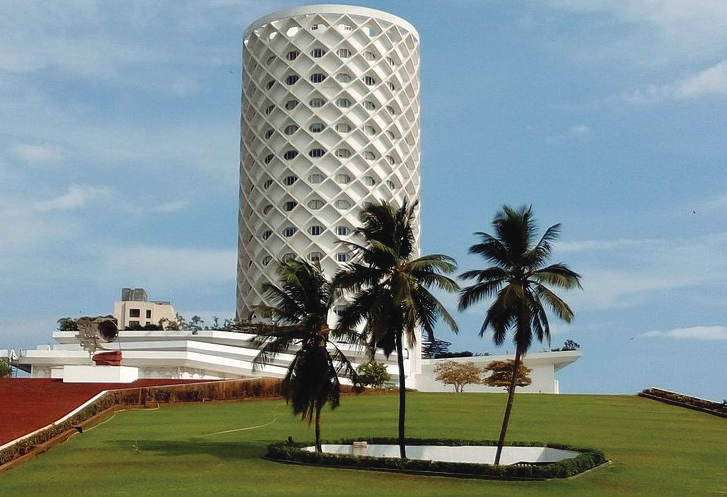
Nehru Planetarium, Mumbai
Named after Jawaharlal Nehru, independent India’s first prime minister and a passionate advocate of scientific temper, the Nehru Planetarium (estb. 1977) was envisioned as a public gateway to astronomy, offering residents of the commercial capital an opportunity to explore the wonders of the night sky and galaxy.
At its heart is the Sky Theatre, a 23 metres domed planetarium equipped with advanced digital projection systems. Here, the dome transforms into a living universe — stars drift overhead, planets trace their orbits, galaxies stretch across the ceiling, and cosmic phenomena unfold on a scale that is easy to comprehend. Rather than simply observing the night sky, children are immersed within it, experiencing the vastness and dynamism of the cosmos in a way that makes distant astronomy concepts feel immediate and real.
Unlike observatories that depend on clear skies, altitude, or specialised access, the Nehru Planetarium operates year-round, offering multiple daily shows in Hindi, English, and Marathi. Each programme is carefully curated and frequently updated to include contemporary discoveries, space missions, and evolving scientific developments.
Inside the dome, abstract concepts become visually intuitive. Orbital motion is seen and understood as a flow of pathways. Eclipses become alignments that unfold in real time. Black holes are no longer theoretical entities but dramatic distortions of space and light. Even complex ideas such as light-years and galactic expansion are translated into motion, sound, and scale that children can understand.
The planetarium’s galleries introduce children to basic astronomical principles through interactive displays — weight comparisons across planets, models of the solar system, and visual explanations of gravity and motion. Especially for primary school children, this is the perfect introduction to structured astronomy.
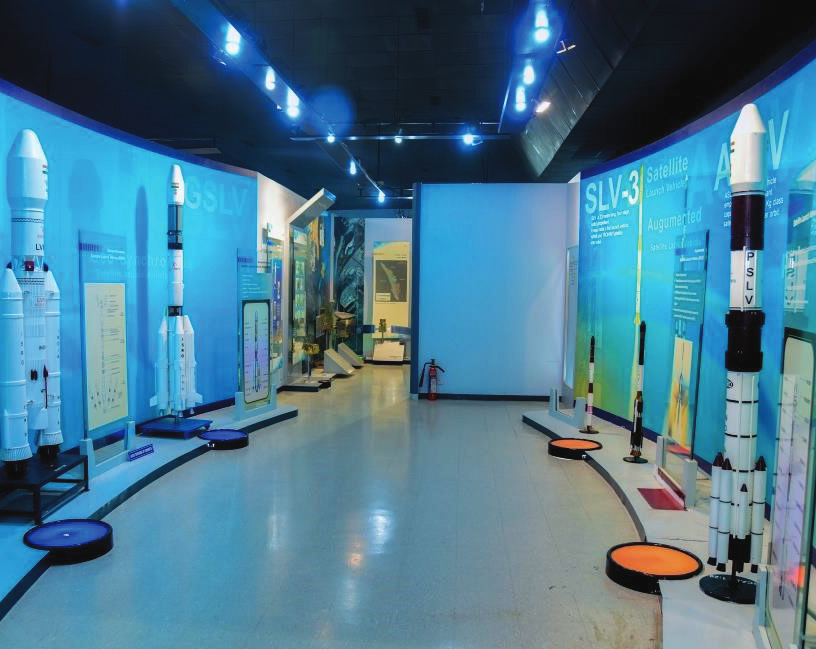
ISRO Space Museum, Thiruvananthapuram
Within the Vikram Sarabhai Space Centre campus in Thiruvananthapuram is the ISRO Space Museum, which chronicles India’s remarkable journey in space science — from the early days of experimental rocketry to ambitious missions exploring the Moon, Mars and beyond.
The story of the museum began in the 1960s, when India’s first space rockets were developed at Thumba, a coastal fishing village in Kerala, chosen for its proximity to the geomagnetic equator. In those early years, infrastructure was minimal and highly improvised — rocket components were transported in trucks, assembly was completed in makeshift facilities, and launch systems were built through collaboration between Indian scientists and global partners. It was a period defined less by scale and more by ingenuity, patience, and experimentation.
From these beginnings emerged a space programme that would grow into one of the most respected worldwide for cost-effectiveness and engineering ingenuity. The museum reflects this trajectory through scale models, mission photographs, and engineering displays that trace the evolution from early sounding rockets to operational launch vehicles like the PSLV (Polar Satellite Launch Vehicle) and GSLV (Geosynchronous Satellite Launch Vehicle), which now form the backbone of India’s satellite launches and interplanetary missions.
The museum breaks down the life cycle of a space missions — from concept design and simulation to testing, launch, and orbital deployment. Interactive panels and visual flowcharts translate complex aerospace engineering into understandable sequences, enabling children to see how thousands of components must work in precise coordination for a single launch to succeed.
Highlights include the Mars Orbiter Mission (Mangalyaan), which made India the first nation to successfully enter Mars orbit on a maiden attempt, and Chandrayaan-3, which achieved a historic soft landing near the Moon’s south pole. Children are especially drawn to the physical scale of space engineering on display: rocket stage separation models, propulsion systems, satellite payload structures, heat shields, and launch vehicle assembly diagrams. These exhibits translate abstract concepts — thrust, orbit, velocity, payload — into visible, tangible systems.
While the museum exhibits explain completed missions, the adjacent Vikram Sarabhai Space Centre is an active site where new missions are conceptualised, tested, and prepared for launch. This proximity to ongoing scientific work reshapes how space exploration is understood by children — as a story of disciplined progress over years of incremental engineering, collaboration, and persistence.










Add comment