






Letter from the Editor

Pundits and political scientists of greater authority and renown than your humble editor have pronounced their verdict on the causes and effects of the rapid rise of Cockroach Janata Party (CJP) and its spectacular success in attracting highly-respected educationist and climate warrior Sonam Wangchuk to make common cause with CJP. Together, they have forced the resignation of Union education minister Dharmendra Pradhan, holding him accountable for the leakage of the one-paper NEET-UG 2026 exam written by 2.2 million school-leavers countrywide as also for the CBSE-OSM scam.
For almost a month, Pradhan who presided over this leaky system accepted no accountability. He sat tight in his chair at Shastri Bhavan, Delhi even as Wangchuk, who undertook a 28-day fast in solidarity with students was at death’s door. This arrogance and lack of accountability was typical of this unlamented minister of education. For the five years he was in office, your editor mailed him a copy of EducationWorld ex officio accompanied by entreaties to grant an interview to explain some of his initiatives of deep impact upon the world’s largest child and youth population. Not once did he acknowledge or respond to them. Evidently, he believed he was not answerable; he could do as he pleased.
Yet during the past month, the CJP-led protest in Delhi — despite the government’s disproportionately violent crackdown on student protestors — has spread beyond maladministration to a nationwide awareness about the continuous neglect and clumsy politically motivated interventions in the education sector of the BJP/NDA government during the past 12 years. The promise of raising annual outlay for education to 6 percent of GDP made in three election manifestos of the BJP have not been redeemed. On the contrary, outlays for education as a percentage of total budgetary expenditure has declined. The latest report of Niti Aayog, the Central government’s in-house think tank, states that government schools are in pathetic condition and experiencing an outflow to budget private schools. Suddenly millennials and Gen Z have discovered that the preschool to Ph D education they have received since independence has been sub-standard and totally unrelated to workplace realities — a denouement your editors have been predicting for a quarter century. Hence the snowballing anger of young India.
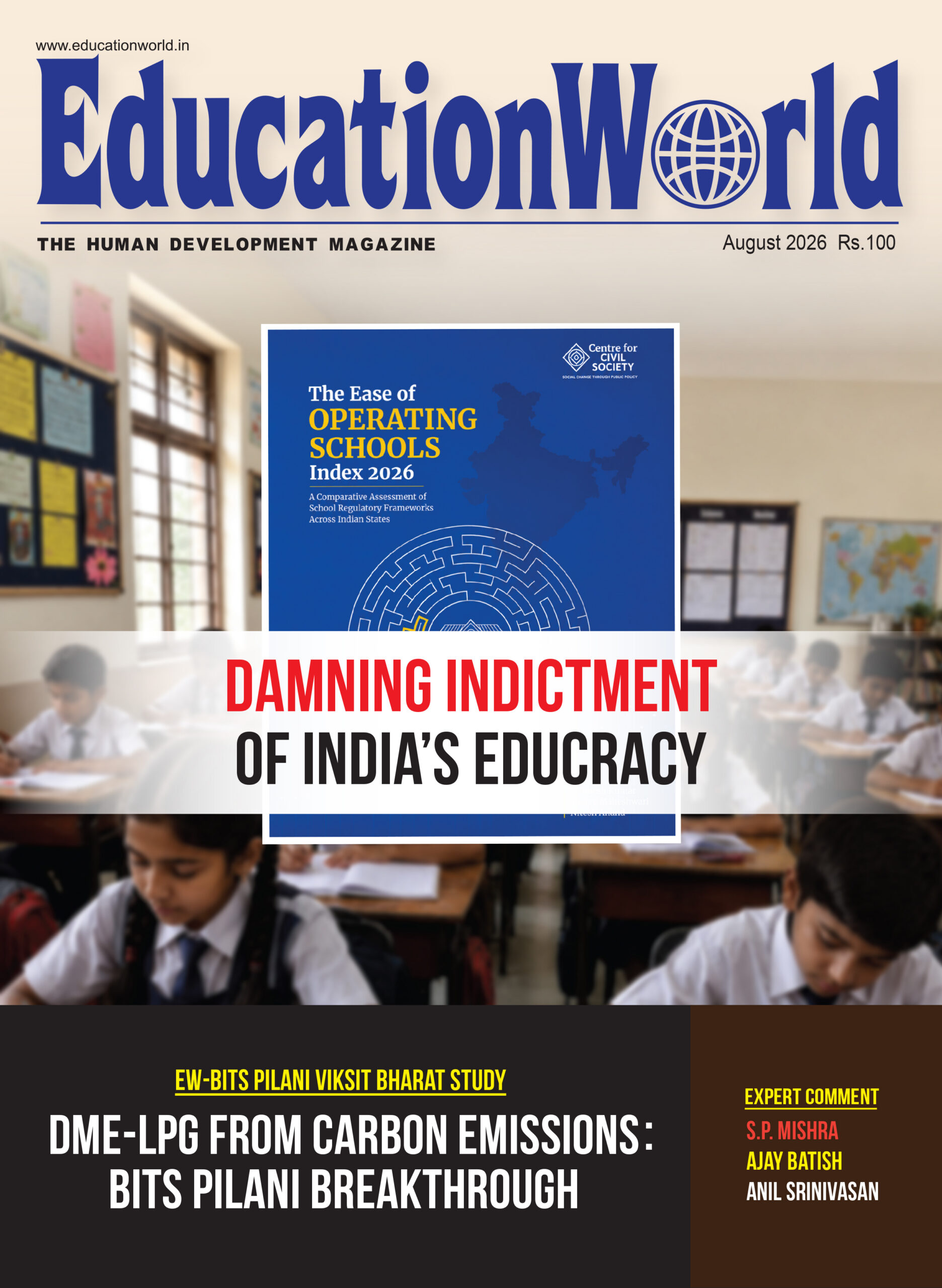
Our cover story in this issue is congruent with the open, continuous and uninterrupted short-changing of India’s children. Instead of focusing on strengthening the government school system, the country’s educracy has been pre-occupied with suppressing private education providers — as an unprecedented report of Delhi-based think-tank Centre for Civil Society details. And in our third Viksit Bharat Study, we have teamed up with learned professors of the top-ranked BITS-Pilani to report how some universities are going beyond pure research and applying proprietorial knowledge for the benefit of the general public.








Add comment