






Rajasthan HC orders improved infrastructure, safety and technology access in government schools
– Reshma Ravishanker
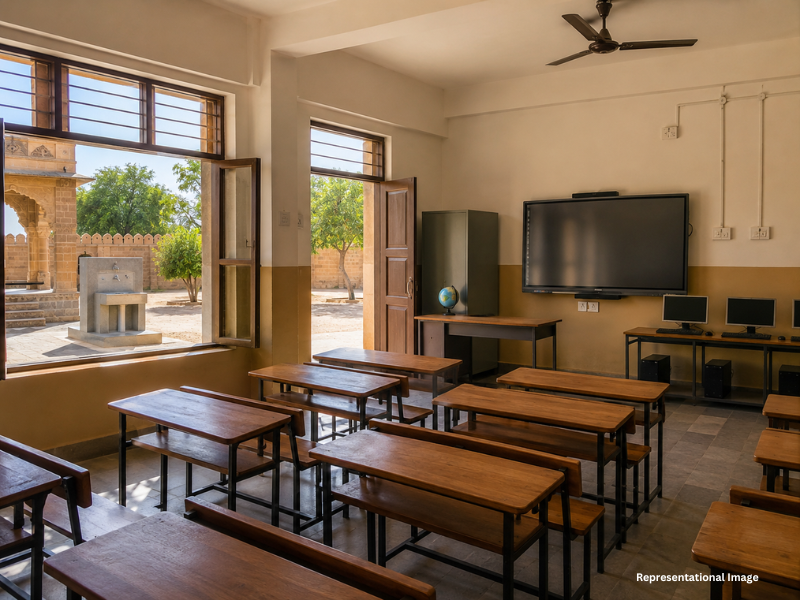
The Rajasthan High Court has called for improved facilities in government schools, particularly those in rural and village areas, to meet the educational, technological, health and safety needs of current and future generations of students.
In an order titled In the Matter of Welfare and Future of Generations Gen Z, Gen Alpha and Gen Beta, Justice Anoop Kumar Dhand expressed concern over the condition of government schools and the systemic deficiencies affecting institutions attended by children from vulnerable sections.
The Court observed that while the country is preparing Gen Z, Gen Alpha and Gen Beta to lead India in 2047 and beyond, the institutions responsible for nurturing these generations—particularly government schools in rural and village areas—continue to face serious shortcomings.
“The current state of the rural schools reflects a larger malaise,” the Court said, noting that many such institutions lack basic infrastructure, trained staff, medical facilities, washrooms and access to emerging technologies.
While advocating the integration of artificial intelligence, digital literacy, coding and technology-based learning, the Court cautioned that technology should remain a tool and an aid rather than become a substitute for human intellect.
The Court directed that all vacant posts of teachers, principals and wardens be filled on priority. It also called for a special recruitment drive for physical training instructors (PTIs), computer teachers and counsellors.
The order called for the implementation of a “Digital Z-Alpha-Beta” plan involving the provision of smart classrooms, computers, internet connectivity and digital literacy training in all village schools. The objective is to equip students from Generations Z, Alpha and Beta with the skills required for the future. The Court also called for teachers to be trained in modern pedagogical methods suited to these learners.
Basic infrastructure and hygiene
The order specifically called for functional toilets in all village government schools, with separate facilities for boys and girls. Schools should also have access to drinking water, electricity with power backup and boundary walls.
Accountability and monitoring
The State was directed to constitute a “Generation Z, Alpha and Beta Monitoring Cell” under the Chief Secretary. The cell will review progress every three months and submit quarterly reports to the Court on the state of infrastructure in these schools.
Food safety and mid-day meals
The Rajasthan government and the Food Safety and Standards Authority of India (FSSAI) were directed to report on the steps taken to implement the Food Safety and Standards (Safe Food and Balanced Diet for Children in School) Regulations, 2020, in government, government-aided and private schools.
The State was also directed to ensure that food high in fat, sugar and salt (HFSS) is not sold in school canteens or within 50 metres of school gates. District magistrates and block education officers are required to conduct monthly inspections to ensure compliance.
Also Read: Class I student admitted to ICU after snakebite at Kolkata school










Add comment