






Visa uncertainty, costs reshape Gen Z’s overseas education choices: Emeritus report
Visa uncertainty and rising costs are prompting Indian Gen Z students to reconsider overseas education and explore international programmes offered in India, according to a report by Emeritus.
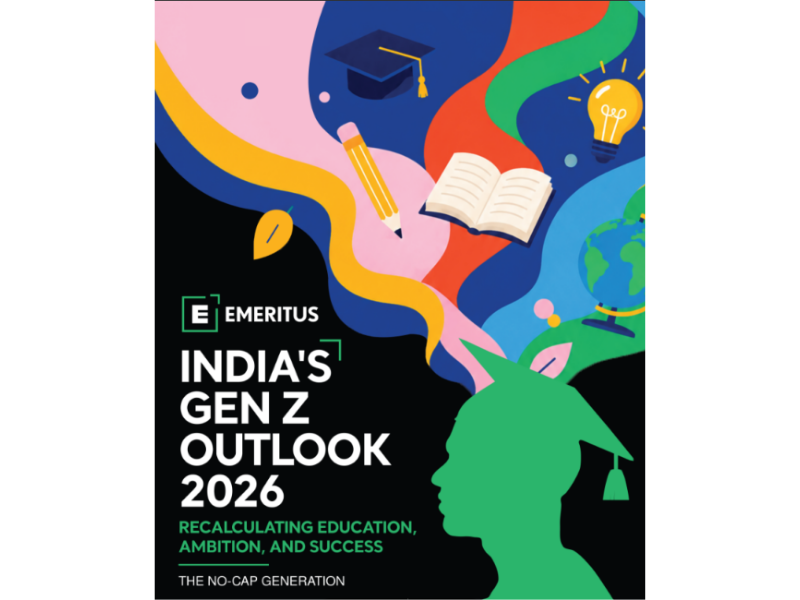
The India’s Gen Z Outlook 2026 report surveyed 1,010 respondents aged 15-28 across major Indian cities, covering pre-college students, those transitioning to higher education and early-career professionals.
Among respondents considering overseas education, 48 per cent said their interest had declined over the past year due to costs, visa requirements and uncertainty over post-study work opportunities. The United States recorded the largest decline in interest.
Meanwhile, 87 per cent of pre-college respondents and 92 per cent of transitioning students said they were likely to study programmes offered by internationally ranked universities in India. About 69 per cent of transitioning students preferred India-based international programmes to avoid visa uncertainty.
Interest is also growing in programmes that combine study in India with semester exchanges or short-term exposure at an overseas campus. Preference for this model rose from 27 per cent among pre-college respondents to 39 per cent among transitioning students.
“It took 30 years to build a predictable outward migration path. The reversal is happening much faster. Policies are moving, universities are arriving, families are taking note — and brain drain is turning,” said Ashwin Damera, co-founder and CEO of Emeritus.
The report also found that 82 per cent of respondents use AI or generative AI tools at least once a week to learn or develop skills. Among early-career respondents, 65 per cent said a degree alone was insufficient to succeed in the job market.
About 74 per cent prioritised work-life balance over leadership titles, while 65 per cent said career success did not require becoming an executive. Although 60 per cent reported feeling burned out by the pressure to continuously upskill, 75 per cent believed that learning the right skills would help them remain competitive.
The study also found that 79 per cent wanted their careers to contribute positively to the environment.
Also read: August sees protests across top higher education institutions











Add comment