






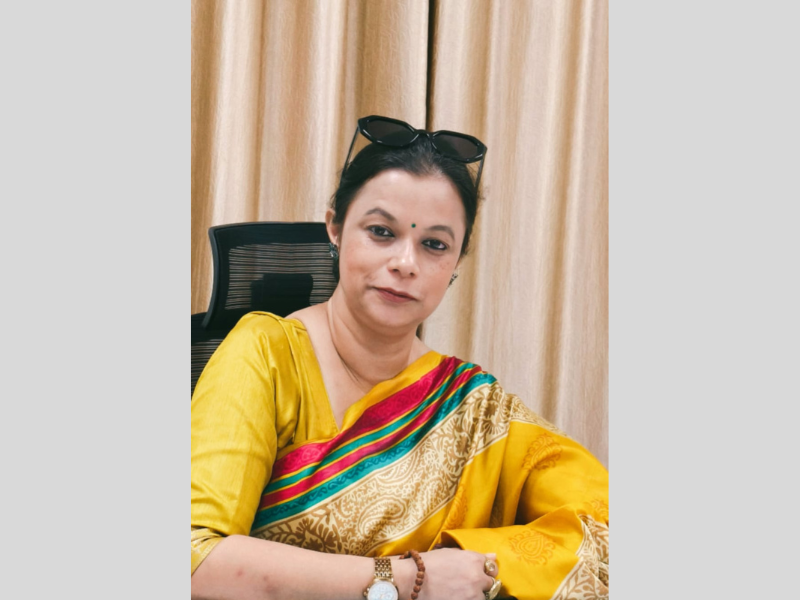
The human side of education at Ecole Global School
– Pooja Dixit, Pastoral Head, Ecole Global School
“Education is not the filling of a pail, but the lighting of a fire.” — W.B. Yeats
As the Pastoral Care Head at Ecole Global School, I often reflect on what it means to educate young people in today’s world. The students in our classrooms are growing up in circumstances very different from those experienced by previous generations. While many of us witnessed the rise of technology, Gen Z and Gen Alpha were born into a digital world. Information, communication and opportunities are available to them on an unprecedented scale.
This reality often prompts conversations about how different today’s children are. However, I believe the more important question is not how different they are from us, but how willing we are to understand them.
For many educators, learning was shaped by patience, experience and limited access to information. Today, students can find answers instantly. They learn differently, communicate differently and often challenge ideas more readily. Rather than viewing these differences as obstacles, educators must see them as an invitation to evolve.
The role of a teacher is no longer limited to imparting knowledge. In a world where information is abundant, our responsibility is to help students develop the skills needed to use that knowledge wisely. The most effective educators are those who continue to learn, adapt and grow alongside their students while remaining rooted in values that never lose their relevance.
This brings us to a quality that is becoming increasingly important in education: emotional intelligence.
One belief deeply shaped by my upbringing is that most problems can be resolved through meaningful communication. Misunderstandings, conflicts and emotional struggles often arise not because solutions do not exist, but because people struggle to express themselves clearly or listen with empathy.
I am reminded of a thought shared by Ashutosh Rana: “We learn to speak by the age of two, but it takes a lifetime to learn when to speak, how to speak and where to speak.” These words capture the essence of emotional intelligence.
Emotional intelligence is about much more than understanding emotions. It is the ability to regulate them, communicate them appropriately and respond thoughtfully rather than react impulsively. It fosters self-awareness, empathy, patience, resilience and perspective—qualities that influence every aspect of life, from personal relationships to professional success.
A simple story illustrates this reality.
During a lunch break, a teacher observed her students sitting together, absorbed in their phones. As she thought about her own childhood, filled with outdoor games and face-to-face conversations, she quietly wondered whether young people had forgotten how to connect.
A student then approached her and proudly showed her an app he had been developing.
“What does it do?” she asked.
“It helps students understand and track their emotions,” he replied.
His response surprised her. The following day, she asked her students whether having unlimited access to information made life easier.
One student answered thoughtfully, “Sometimes we know many things, but we still struggle with our feelings, friendships and failures.”
In that moment, the teacher realised that the real challenge arises when we stop listening to one another. This understanding lies at the heart of our philosophy at Ecole Global School.
We believe emotional intelligence is not an optional addition to education; it is a fundamental part of it. Through pastoral care, mentorship, meaningful conversations and a supportive school culture, we strive to help students understand themselves and appreciate the perspectives of others. We encourage them to communicate effectively, navigate challenges with resilience and build relationships founded on respect and empathy.
These skills will remain relevant regardless of how much the world changes.
Artificial intelligence is already transforming industries and reshaping the future of work. Yet qualities such as empathy, integrity, emotional awareness, adaptability and resilience will continue to distinguish exceptional individuals and leaders. Academic achievement will always matter, but emotional intelligence enables people to thrive within families, workplaces and communities.
One of the most valuable lessons I have learnt as an educator is that children respond best when they feel understood. Before correcting them, we must connect with them. Before expecting them to listen, we must make them feel heard. Strong relationships create safe environments in which students can learn confidently, make mistakes and discover their potential.
Ultimately, the future will not belong only to those who know the most. It will belong to those who can adapt, collaborate, empathise and lead with integrity.
As educators, our role is not simply to prepare students for examinations. It is to prepare them for life. That journey begins with us—by remaining learners ourselves and recognising that every generation deserves to be understood before it is judged.
Also Read: Inclusion at Ecole Globale International Girls’ School











Add comment