





– Dipta Joshi (Mumbai)
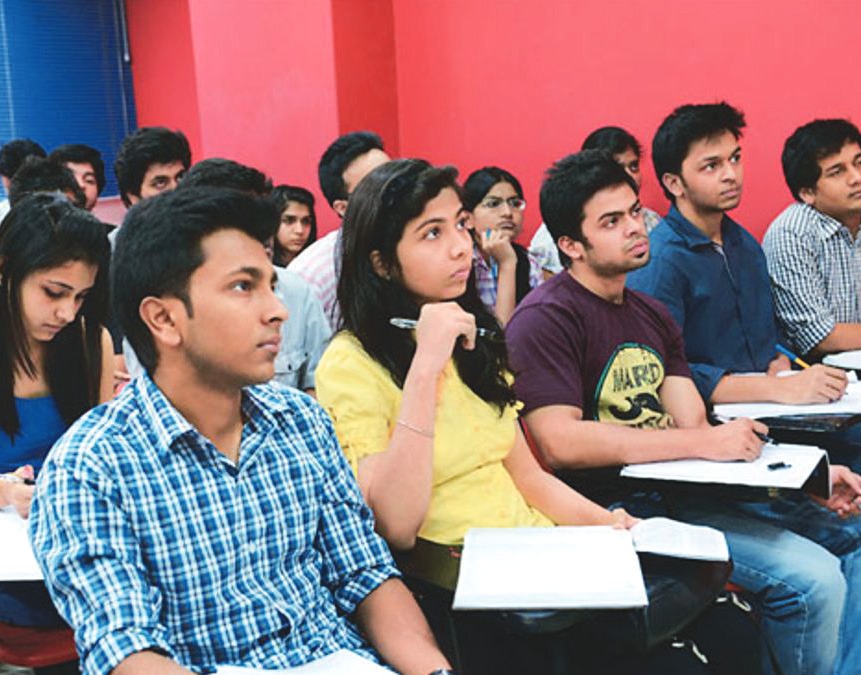
Coaching class: multi-billion industry
The bharatiya janata party (BJP)-led coalition government’s Maharashtra Private Coaching Centres (Registration and Regulation) Bill, 2026 has aroused stiff opposition from promoters/managers of the state’s estimated 8,960 coaching schools. The state’s private coaching sector claims the government’s draft regulations are draconian and will lead to closure of 50 percent of coaching schools statewide.
In Maharashtra (pop.129 million) private coaching and test-prep is a massive multi-billion-rupee industry comprising listed companies (such as the Mumbai-based Mahesh Tutorials/MT Educare Ltd) and informal neighbourhood tutoring enterprises.
Private coaching schools bridge the gap in academic education quality provided by mainstream schools and colleges, and the learning/expertise required to top olympiads, competitive public entrance examinations such as JEE, NEET and MHT-CET, for admission into the country’s much-too-few IITs, medical colleges and top-ranked state-level engineering colleges.
However, reports of coaching schools exerting excessive academic pressure and providing inadequate safety arrangements while levying exorbitant fees has raised a hue and cry over protection of students. In January 2024, the Union ministry of education issued national guidelines to regulate coaching schools following which several states proposed specific rules regarding tuition fees chargeable.
The Maharashtra government’s 2026 Bill to regulate private coaching schools is a third attempt to make them transparent and accountable. The first draft regulations introduced in 2000, met with stiff resistance from coaching schools, who challenged the Bill in court and secured a stay on its implementation. A second attempt in 2017 also failed to materialise with the state government withdrawing the proposed regulations. Now once more unto the breach, the state government has drafted a new regulatory Bill.
The proximate cause is a series of public entrance examination paper leaks and scandals in which coaching institute managements have been implicated as prime accused, middlemen and masterminds. Investigations into major public examination scandals have repeatedly pointed the needle of suspicion towards coaching school operators suborning paper setters and correctors to gain competitive advantage. For instance, the NEET-UG 2026 controversy, which forced 2.2 lakh students in Maharashtra to rewrite the examination, and the Maharashtra Teacher Eligibility Test (TET) 2026 scandals were traced to coaching schools in Latur, Nashik and Pune. On May 14-15, CBI (Central Bureau of Investigation) arrested coaching school teachers/professors as suspects for prematurely leaking NEET-UG question papers.
Among the key provisions of the Bill are restrictions on admitting young children below age 13; a ban on employment of teachers against whom FIRs have been registered; and forcing coaching schools to upload comprehensive, transparent websites. However, coaching school promoters argue that several of these provisions are impractical and “disconnected from the realities of Indian education.” They question the proposed age restriction, contending that many children from economically disadvantaged families attend neighbourhood coaching classes from as early as class V because of poor quality public primary education, and academically gifted students often enrol for olympiads preparation at young age. The proposed ban on coaching schools employing anyone against whom an FIR has been registered has drawn particular ire. Industry representatives contend that an FIR is not proof of guilt, and that thousands of cases are registered by the police which don’t result in convictions.
“If the draft regulations are imposed, our operational costs will rise by at least 50 percent resulting in closure of smaller test prep centres catering to students in poor neighbourhoods. We will be going back to licence raj scenario,” says Narendra Bhambwani, Founder-member and legal adviser of Maharashtra Class Owners Association.
Dispassionate educationists believe that the growth/expansion of the multi-billion rupee coaching and test prep industry is rooted in the poor quality of education being dispensed in India’s 1.40 million primary-secondary schools and/or misalignment between public/institutional entrance exams and the mainstream school education system. Instead of reforming the country’s moribund school examination system — only 4,000-5,000 primary-secondary schools ranked in the annual EducationWorld India School Rankings (EWISR) are of minimally acceptable global standard — the Central and state governments are focused on regulating private schools and test prep enterprises. This policy is not only clouding the future of India’s 240 million in-school children, but it’s also likely to exacerbate corruption within an already notoriously corrupt educracy.










Add comment