




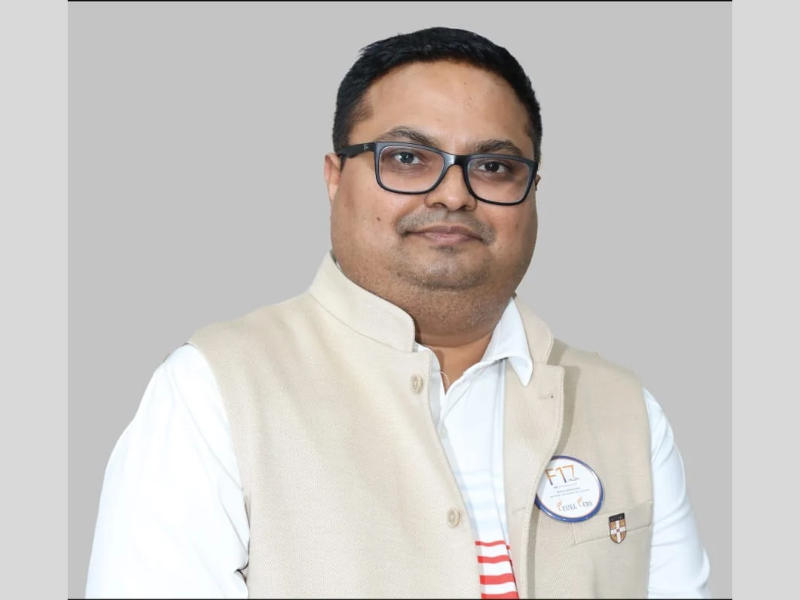
– Dr. Ketan Deshpande, Founder & Chairman, FUEL (Friends Union for Energising Lives)
For decades, access to education has played a vital role in India’s growth story. More students are enrolling in schools, more young Indians are pursuing higher education, and educational opportunities are reaching populations that previously had limited access. However, as India prepares its young population to enter the workforce in a rapidly changing economy, discussions about education must progress beyond access to outcomes. Access is only the first step towards education. The bigger question is whether education equips young people with the knowledge, skills and confidence needed to participate effectively in the world of work. This is what makes employability a key element of education.
From classrooms to capabilities
The world of work has changed tremendously. Technology has transformed industries, reshaped job roles and responsibilities, and increased the need for both knowledge and practical skills. Communication, problem-solving, teamwork, adaptability, digital literacy and the ability to learn throughout life are as essential as academic qualifications. This means that education can no longer be measured solely by syllabus completion and degree attainment. It must also give young people an understanding of how knowledge can be applied. However, this does not mean that education should focus exclusively on job training. Rather, employability should go hand in hand with academic learning, giving students opportunities to acquire practical knowledge and experience. Several initiatives can help bridge the gap between academic learning and its practical application.
Why the journey holds added importance for underserved groups
Underserved communities are likely to face additional challenges when transitioning from education to employment. The problem is not merely access to quality education. Exposure to career opportunities, professional networks, technology, mentoring and opportunities to gain practical experience can also influence an individual’s understanding of what is possible. A student may have the talent and determination to become a specialist in a particular field but may not have access to someone who can guide them towards that goal. This is where an outcome-oriented approach to education becomes important. Providing students with career counselling, digital literacy, communication training, industry exposure and opportunities to apply their knowledge can broaden their horizons. Notably, such an approach does not mean categorising young people according to their backgrounds. What matters is ensuring that their circumstances do not become a barrier to their opportunities.
Creating a link between education and opportunity
India’s demographic advantage offers significant opportunities. However, transforming its large young population into an economically productive workforce requires stronger links between education, skills and employment. This calls for cooperation between educational institutions, industry, governments, civil society organisations and local communities. Such collaboration can give students opportunities to interact with professionals, explore new career paths, solve problems and acquire skills that extend beyond theoretical learning. Private companies, in particular, can contribute by providing mentorship, internships, apprenticeships and workplace exposure. Civil society organisations can help extend these opportunities to individuals who might otherwise be unable to access them. Educational institutions must strengthen the transition from theoretical learning to practical experience. Together, these efforts can create a comprehensive ecosystem in which education extends beyond the classroom.
Measuring what education makes possible
In discussions about education, it is becoming increasingly important to measure success from multiple perspectives. Enrolment and graduation are two important indicators, but they tell only part of the story. We should also ask: What skills have students developed? Are they confident in applying what they have learned? Do they understand their career options? Can they access opportunities? Will they be able to adapt as industries change? These questions shift the focus from the number of students entering the education system to what the system enables them to achieve. Education can transform lives and drive economic and social progress. However, this transformation becomes more meaningful when learning is connected to opportunity. The objective, therefore, should not be limited to securing a place for every child in a classroom. It should also be to ensure that every young person can build a bright future through the opportunities that education provides. Access opens the door. Learning builds the foundation. Skills create possibilities. And employability helps turn those possibilities into outcomes.
Also Read: India needs graduates who can connect disciplines, not just master one







Add comment