





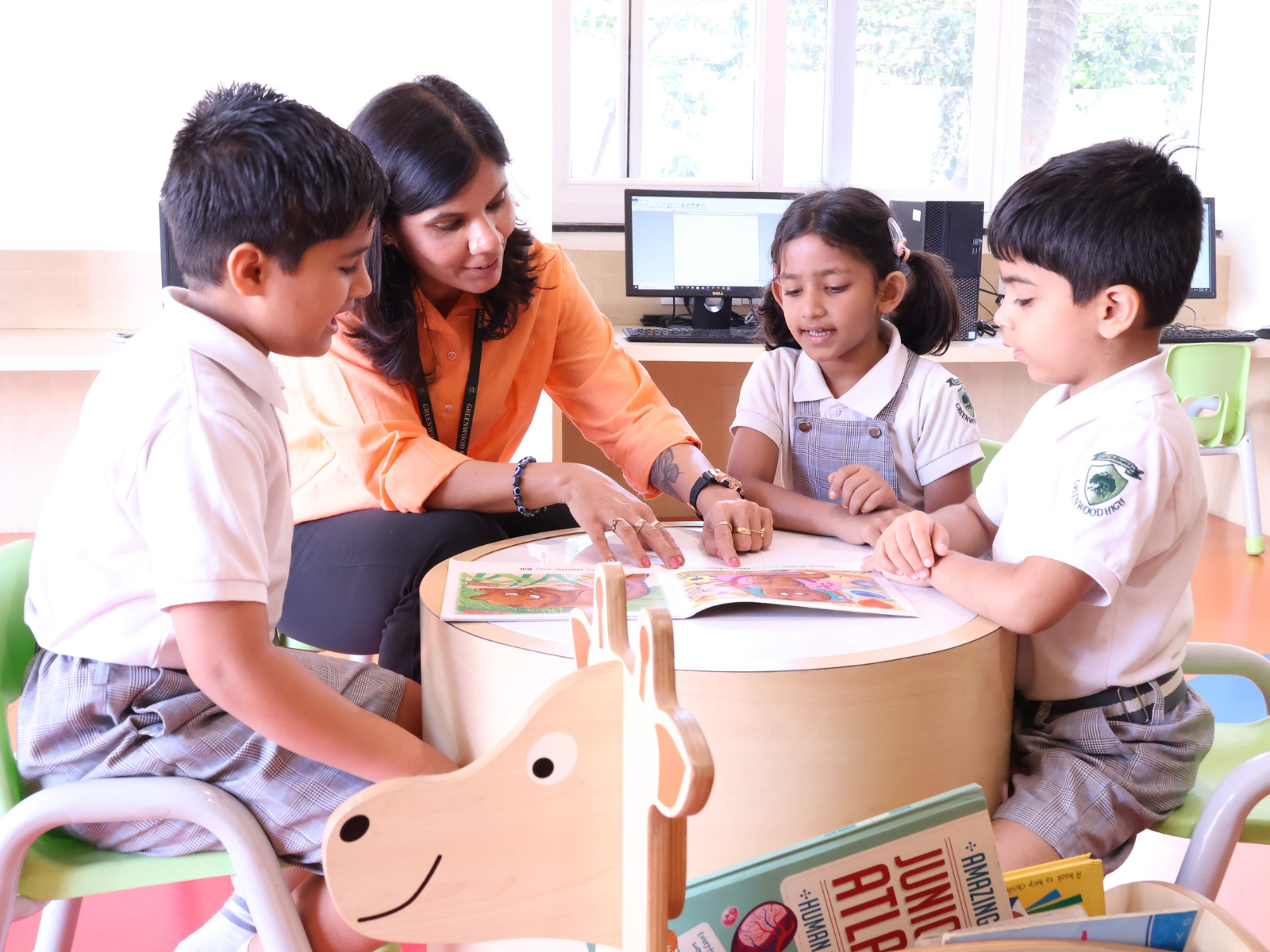
By the time a child celebrates their sixth birthday, nearly 90% of brain development has already taken place. Long before examinations, report cards and university aspirations enter the conversation, the most extraordinary learning journey is already underway. The early years are not simply preparation for school—they are the foundation upon which confidence, curiosity and a lifelong love for learning are built.
For parents, choosing a preschool is often viewed as the first school decision. In reality, it is one of the most important educational decisions they will ever make.
More Than ABCs: The True Purpose of Early Education
A remarkable preschool experience is not measured by how early a child learns to read or count. It is measured by something far more lasting: how a child feels about learning.
Do they ask questions without hesitation? Do they see mistakes as opportunities rather than failures? Are they encouraged to explore, imagine and solve problems independently?
Research consistently shows that children flourish when early education nurtures cognitive, social and emotional development together. Language, numeracy and motor skills certainly matter, but so do empathy, resilience, collaboration and self-expression. These qualities become the invisible strengths that support academic achievement throughout childhood.
In other words, the foundation years do not simply teach children what to learn—they teach them how to learn.
What Parents Should Look for in a Preschool
With countless early learning options available, beautiful classrooms and colourful brochures rarely tell the whole story. The strongest foundation programmes tend to share a few defining characteristics:
- Curiosity-led learning that encourages exploration rather than memorisation.
- Play with purpose, where imagination becomes a pathway to deeper understanding.
- Individual attention that recognises every child develops differently.
- Social-emotional learning alongside literacy and numeracy.
- A seamless transition into primary school through a consistent educational philosophy.
Parents often ask, “Will my child be ready for Grade 1?” An equally important question is, “Will my child still love learning when they reach Grade 5?”
The Greenwood High Foundation Years
At Greenwood High, early childhood education is designed as the beginning of a continuous learning journey rather than a standalone preschool experience. Through its network of Preschool Activity Centres across Bengaluru—including Koramangala, Jayanagar, Whitefield, Sarjapur, Bannerghatta and Electronic City—families gain access to the same child-centred philosophy close to home.
A Foundation Built for Lifelong Learning
| Area | Greenwood High Approach |
|---|---|
| Learning philosophy | Inquiry-led, curiosity-driven early education |
| Core development | Literacy, numeracy, social and emotional growth |
| Learning environment | Play-based exploration with purposeful experiences |
| Personal growth | Creativity, communication and independent thinking |
| Future pathway | Smooth progression into Greenwood’s national and international curricula |
Rather than viewing preschool as an isolated stage, Greenwood High treats it as the first chapter of a coherent educational journey that continues through primary, middle and senior school.
Why Continuity Matters
One of the greatest challenges children face is adapting to completely different learning environments as they move between schools. A child who has spent years exploring through inquiry can struggle when suddenly expected to memorise, while another may find it difficult to transition into independent thinking after a highly structured early experience.
Greenwood High’s early years are intentionally aligned with the principles of inquiry and reflective learning that continue into its primary classrooms. As children grow, the language of questioning, investigating and discovering remains familiar. Instead of relearning how to learn, they deepen the habits they have already developed.
This continuity allows confidence to grow naturally, making the transition into formal schooling both smoother and more meaningful.
The Parent-School Partnership
A child’s strongest classroom extends beyond school walls. During the foundation years, children closely observe how adults respond to challenges, curiosity and mistakes. When parents celebrate effort instead of perfection, ask open-ended questions and encourage exploration at home, they reinforce the same mindset cultivated in the classroom.
Simple conversations such as “What surprised you today?” or “How did you solve that problem?” often contribute more to a child’s growth than asking, “What did you score?”
The most successful early education programmes recognise that meaningful learning happens when school and home work together.
Small Beginnings, Lasting Impact
The true value of early education rarely appears immediately. It becomes visible years later in the child who confidently shares ideas, embraces unfamiliar challenges and approaches problems with curiosity instead of fear.
These qualities are not accidental. They are built through thousands of everyday moments—building towers, telling stories, asking “why,” collaborating with friends and discovering that mistakes are simply part of learning.
The first five years may be the shortest chapter of childhood, but they are undoubtedly among the most influential. When children are given a foundation rooted in curiosity, confidence and compassionate guidance, they gain something far more valuable than an early academic advantage—they gain the mindset to thrive in school, university and life.









Add comment