
No products in the cart.






Madhya Pradesh The Heart of India
– ANIL THAKORE
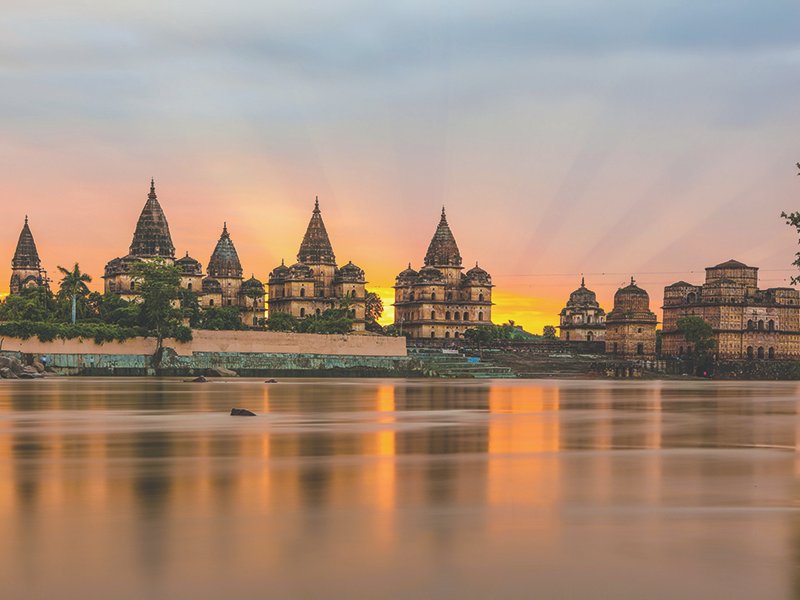

Khajuraho Temples
From the majestic gorges of Marble Rocks in Bhedaghat and the tranquil expanses of the Narmada River to the tiger-inhabited wilds of Kanha, Bandhavgarh and Pench national parks and stunning Khajuraho temples, MP is a living canvas of India’s diverse geographic landscapes, wildlife and architectural splendour
For many years, a holiday meant a trip abroad, usually to western countries that advertised picturesque locales, historical wonders, clean and orderly cities, exotic cuisine, and luxury shopping. However, after some very satisfying experiences travelling in India, I have arrived at the conclusion that everything the world’s most sought-after destinations promise, India also offers, and often with greater charm and authenticity.
Therefore, I wasn’t surprised that our recent family holiday to Madhya Pradesh (MP, pop.88 million) exceeded all expectations. Located at the very heart of India, MP is the country’s second-largest state by area (after Rajasthan) offering its rich history, heritage, and natural splendour. Sprawling across plateaus, riverine valleys, and dense forests, MP presents a a excellent mix of architectural grandeur and scenic vistas. From the majestic gorges of Marble Rocks in Bhedaghat to the tranquil expanses of the River Narmada to the tiger-inhabited wilds of Kanha, Bandhavgarh, and Pench national parks, MP is a living canvas of India’s diverse geographic landscapes, wildlife and architectural splendour.
Madhya Pradesh, which literally means ‘central province’, reflects its geographic position at the crossroads of Indian culture and civilization. The state hosts Unesco World Heritage Sites such as the stunning Khajuraho temples, ancient Buddhist monuments of Sanchi, and rock shelters of Bhimbetka. Its cities — Bhopal, Indore, Gwalior, and Ujjain — blend old-world charm with modern vibrancy, inviting travelers to experience majestic forts, sacred ghats, handloom traditions, and memorable local cuisine.
In Part I of this leisure & travel dispatch on MP, we explored Bhopal, Sanchi, Pachmarhi, Jabalpur, and Kanha National Park.

Upper Lake, Bhopal
Bhopal
Our first stop was Bhopal, the administrative capital of the state. The city was established by Raja Bhoja Rao (1010–1055), the legendary king of the Malwa region who named it Bhojapal. His majestic statue stands tall in the Upper Lake. Over the next few centuries, the city evolved from a fortified settlement into a princely state, flourishing under the rule of the famous Nawabs and Begums of Bhopal.
Today, Bhopal (pop. 2.7 million) is a modern city that blends regal heritage and architectural grandeur with contemporary urban development, busy markets, and serene lakes. Aka the ‘city of lakes’ because it is dotted with numerous natural and man-made lakes that shape its landscape and climate. The two most prominent are the Upper Lake (Bhojtal), one of India’s oldest man-made lakes created in the 11th century, and the Lower Lake, built during the Mughal era.
A historical city, it hosts an astounding 422 palaces, most in a state of ruin. However, the Taj Mahal, Jehan Numa, Gohar Mahal and Sadar Manzil are worth a visit. The largest mosque in India, Dar-Uloom Taj-Ul Masjid, a massive 19th century construction built of red sandstone with white marble-topped domes, is a landmark. Another must-visit is the Van Vihar, a natural protected habitat sited between the shores of the Upper Lake and lush green mountain slopes. Van Vihar is home to tigers, deers, hyenas, leopards, a centre for vulture conservation and breeding, butterfly park and tortoise reserve. On the way out, stop at the Boat Club and take a boat ride on the Upper Lake to witness evening lights cast their glow over serene waters.
Bharat Bhavan, Bhopal’s premier multi-arts complex inaugurated in 1982 by Prime Minister Indira Gandhi, provides visitors an interesting introduction into the history and culture of MP. Designed by renowned architect Charles Correa, it houses four main cultural centres: the Museum of Fine Arts, which displays magnificent urban, tribal and folk paintings; Anhad, a cultural centre which houses music archives and stages concerts of classical and folk music; Rangmandal, a repertory, and Chhavi, which hosts Indian cinema archives.
Accommodation. Jehan Numa Palace Hotel (Rs.7.000-11,000 per night)
Some of the most famous historical wonders of MP are situated near Bhopal. A 60- minute drive takes you to Vidisha, once a flourishing merchant town in the 6th and 5th centuries BCE. It hosts the magnificent Heliodorus pillar (“Khamba baba”) built in 113 BCE by Heliodorus, the ambassador of the Indo-Bactrian King Antialcidas of Taxila and the Vidisha Museum, which houses relics of the Sunga period and Parmar artefacts.
Not to be missed, just 5 km away, are the 20 Udayagiri caves, carved in the 5th and 4th centuries CE during the reign of King Chandragupta II (AD 382–402). Cave No. 4 has a rare carving of the Ekmukha Shivalinga and Cave No. 5 a massive carving of Vishnu in his Varaha avatar, holding the Earth Goddess Prithvi aloft on one tusk.

Great Stupa of Sanchi
Sanchi
Driving towards Sanchi (46 km), we crossed the Tropic of Cancer near Salamatpur — a diagonal line marked by the state tourism authorities. A Unesco World Heritage Site, Sanchi host an ancient Buddhist complex — stupas, relics and archaeological artifacts are strewn all around. A highlight is the Great Stupa of Sanchi, built by Emperor Ashoka in honour of his wife, and one of the oldest stone structures in India. The Sanchi museum houses many invaluable artefacts, including the Lion Capital of the Ashoka pillar.
Our next stop was the Bhimbetka caves, 95 km from Sanchi on the super expressway. A Unesco World Heritage Site, it comprises 750 awe-inspiring rock shelters/caves scattered across 10 km and seven hills. Some of the caves were inhabited for more than 100,000 years until the second century BCE. Fifteen caves are open to the public and depict the lives of prehistoric hunter-gatherers. The cave paintings are mainly executed in red and white, with touches of green and yellow, and were probably painted by combining manganese, haematite, coal and red stone.
Fifty km from Bhimbetka is Bhojpur, founded by Raja Bhoja, in whose memory stands the majestic Bhojeshwar temple (‘Somnath of the East’). It soars 66 ft high and features a richly carved dome supported by four elegantly shaped pillars. Nearby is a poorly maintained museum housing ancient archaeological sculptures and carvings.
Accommodation. MP Tourism Gateway Retreat — a charming hotel featuring cottages amid lush greenery. (Rs.3,600-4,500 per night)
Pachmarhi
From the historical to the natural wonders of MP, we headed 150 km east to Pachmarhi, the queen of hill stations. Sited in the Satpura hills, the Pachmarhi Biosphere Reserve is a Unesco-listed site and hosts rare species of flora and fauna, dense forests and water bodies.
Bee Fall (Jamuna Prapat). A short walk through lush, shaded forests leads to a stunning lookout point where Bee Fall plunges dramatically over rocky ledges and thick shrubs into the valley nearly 300 m below. Reaching the base of the waterfall requires descending about 300 steep steps — a rewarding but strenuous route recommended only for the fit and sure-footed. Nearby are two other charming natural attractions: Apsara Vihar (Angel Falls), a serene pool ideal for a refreshing dip, and Rajat Prapat (Big Fall), a towering, silver-streaked cascade visible from a distance.
Mahadeo Cave Shelters. Dating back to 500-800 CE, they feature spectacular rock paintings of the Mesolithic and Chalcolithic periods, depicting animals and humans, but in a different style (Gond) from Bhimbetka. Paintings of hunting and battle, rituals and worship, and fantastical creatures adorn the caves. However, the caves are poorly maintained by the Archaeological Society of India (ASI).
Dhoopgarh. The highest point in the Satpura hills, Dhoopgarh is ideal for witnessing sunsets. From its wide, rocky vantage point, the horizon opens into sweeping layers of forested ridges that glow gold and crimson as the sun dips behind them.
Accommodation. MP Tourism Glen View Hotel (Rs.6,000-10,000 per night)

Marble Rocks, Jabalpur
Jabalpur and Bhedaghat
The expressway is the swiftest route to reach Jabalpur from Pachmarhi (288 km). Jabalpur (pop.1.85 million) is an excellent base for excursions. A short 23 km journey brings you to Bhedaghat — the famous site of the magnificent Marble Rocks. Here, the Narmada River winds its way through towering marble cliffs on either side, some soaring up to 100 ft. On a scenic boat ride between these cliffs, the sunlight dances across pink, white and blue marble, streaked with veins of dark green and black, creating a mesmerizing spectacle. Nearby, the Dhuandhar Falls command attention as the Narmada plunges 30 ft into its basin, spraying fine droplets that give the falls a smoky, ethereal appearance.
Other places of interest around Jabalpur are the Chausath Yogini Temple, the largest yogini temple (female deities) in India; Madan Mahal or Rani Durgavati Fort (11th century) and the Kachnar City Shiva Temple with one of the tallest statues of Lord Shiva (23 m). The Military College of Materials Management, with its museum showcasing over 250 years of India’s military legacy, is also well worth a visit. Its galleries display rare weaponry, uniforms, documents and logistics innovations that shaped the evolution of the armed forces
Accommodation. MP Tourism Hotel (Rs.3,500-4,000 per night)
Kanha National Park
Kanha National Park, 125 km from Jabalpur, is one of India’s best-conserved tiger reserves. (En route, take the bypass to MPT Bargi, overlooking the enormous Bargi Lake and dam, and stop for breakfast).
Spread across the Maikal range of the Satpuras, Kanha is a breathtaking landscape of dense sal forests, sun-drenched meadows and winding streams. Described as the inspiration for Rudyard Kipling’s Jungle Book, it is hosts an extraordinary richness of wildlife ranging from tigers, leopards and wild dogs to massive gaur herds and the graceful barasinghas. Dawn safaris are magical: the forest stirs awake in soft amber light as deer call alerts and the jungle air hangs with the scent of mahua blossoms.
Beyond its wildlife, Kanha offers an immersive experience of wilderness. The vast meadows open into sweeping vistas framed by forested hills, and each safari route reveals a shifting palette of landscapes. Skilled guides help visitors read the forest’s subtle signs — a pugmark in the dust, a sudden hush among langurs, a distant sambhar alarm call. Don’t miss visiting the Bamni Dadar or Sunset Point, offering a panoramic view of the vast forest.
Kanha Museum displays skeletal exhibits of reptiles and animals, offering visitors a deeper appreciation of the dedicated efforts of the forest department and its staff in preserving this forest habitat.
Accommodation. MP Tourism Safari Lodge (Rs.4,000-5,000 per night)
Travel tips
Getting there: Bhopal is well-connected by air/train/road.
Preparation: Good footwear, rain protection apparel, sun protection headwear and cream. Pack binoculars and all essential medicines, as they are not easily available in the smaller towns.
Best season to visit: October-May.
Guides: Hire the services of guides who will enhance your holiday with historical background, cultural context, and practical tips.
P.S. We used the services of the MP Tourism Board to arrange all travel, board and lodging.







Add comment