
No products in the cart.






Physical activities for children guidelines & benefits

Dr. Tarun
For growing children, in particular, exercise is vital for strengthening bones and muscles, enhancing motor development, emotional regulation, and laying the foundation for healthy lifelong habits
Physical exercise is arguably the most efficient, affordable, and wide‑ranging intervention, providing numerous health and development benefits. Beyond “burning energy”, daily physical exercise boosts the immune system, stimulates cognitive development, and is also a catalyst for learning social skills. For growing children, in particular, exercise is vital for strengthening bones and muscles, enhancing motor development, emotional regulation, and laying the foundation for healthy lifelong habits.
Numerous child development research studies cite a correlation between regular physical activity with improved brain and cognitive development. A 2025 meta‑analysis of 39 trials (____________) indicates that physical‑activity programmes improved children’s overall executive function (“a set of mental skills, controlled by the brain’s frontal lobe, that help you manage daily tasks, plan, focus, remember instructions, and handle emotions to achieve goals”) by 0.6 standard deviations — equivalent to promoting a typical child from the 50th to the 75th percentile in planning, self‑control and working memory.
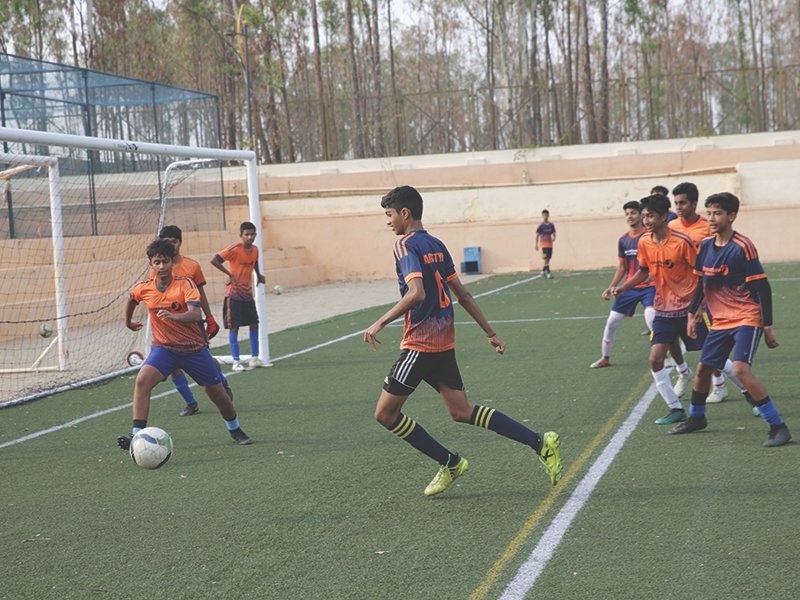 Moreover, when children participate in group physical activity and/or organised sport, the benefits multiply. A recent meta‑analysis study (____________) based on 30 randomised trials found that moderate‑to‑vigorous exercise reduces stress, improves self‑esteem and boosts social competence, with the best effects seen in adolescents who exercised at least twice a week. Observational studies echo these findings: children who participate in team sports report fewer symptoms of depression.
“Daily physical exercise and engagement in formal sports benefit children’s growing bodies in many ways. It aids healthy musculoskeletal development, strengthens immunity, and supports the efficient functioning of vital body organs. For instance, weight-bearing games such as jumping, hopscotch and skipping build stronger bones, while resistance activities such as rope climbing, tug-of-war or simple push-ups prompt muscle fibres to enlarge and reinforce postural stability. Cardiovascular workouts — cycling, running — strengthen the heart, expand lung capacity and keep blood pressure levels in check. More intense bouts of play and sports mobilise ‘surveillance’ leukocytes that patrol for pathogens and block chronic inflammation, a known cause of obesity, diabetes and even certain cancers. Modern immunomics studies now show that when children exercise, their blood cells activate protective genes that strengthen the immune system. Moreover, after exercise, children also sleep soundly, creating a virtuous cycle of hormonal balance and tissue repair,” says Dr. Tarun Singh, pediatrician and neonatologist at Kalpavriksh Healthcare, Delhi.
According to Dr. Singh, there’s a consensus that children and adolescents (5‑17 yrs) need at least 60 minutes of moderate‑to‑vigorous activity daily, mixing aerobic and muscle‑strengthening movements on three or more days each week. Unfortunately, as per the World Health Organization (WHO), 80 percent of adolescents worldwide fail to cross this threshold.
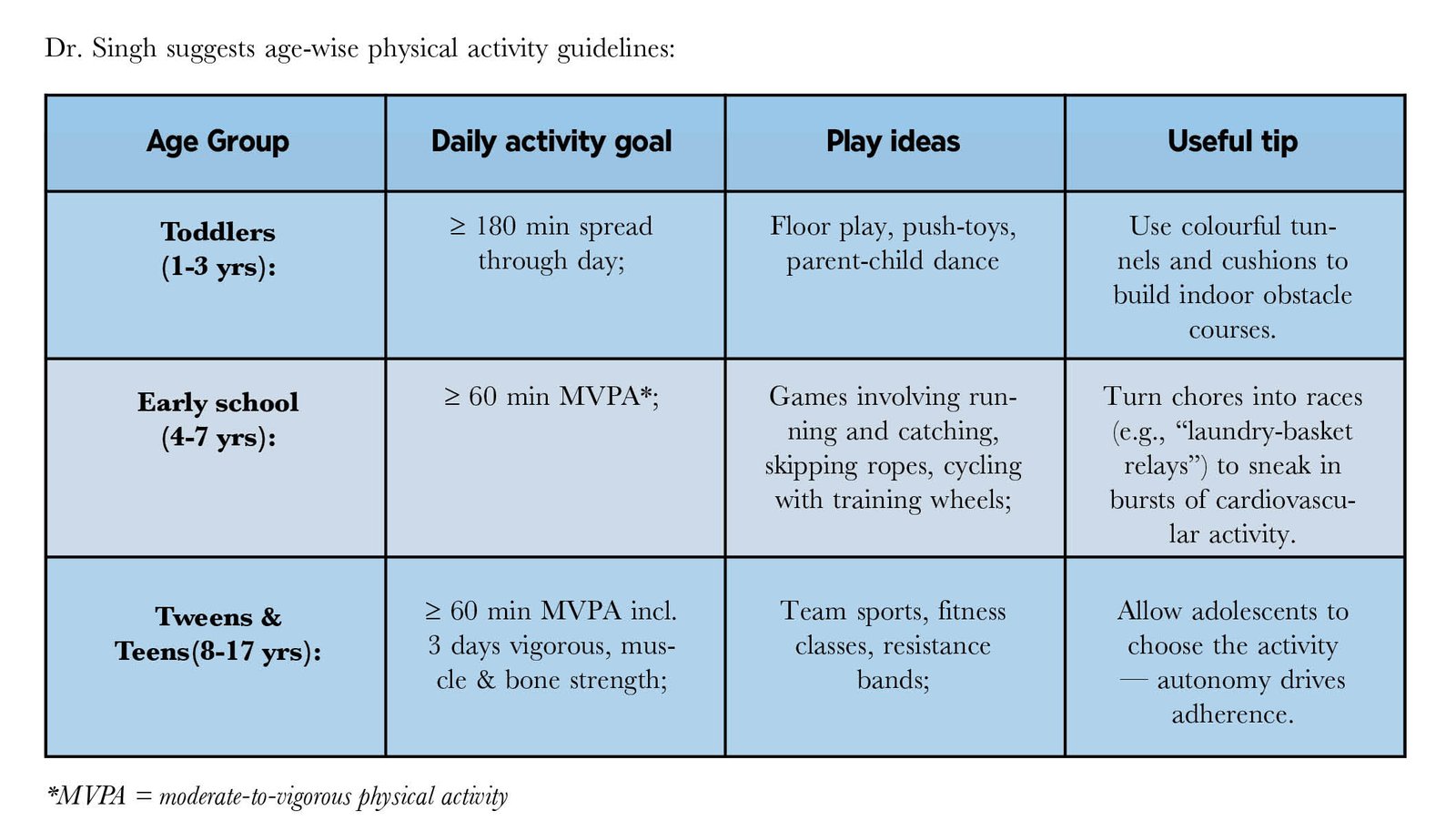 “Every minute a child spends moving guards against a spectrum of physical and mental ailments. It’s an important duty of parents to encourage and provide children every opportunity to exercise and play sports,” concludes Dr. Singh.







Add comment