
No products in the cart.






Teaching numeracy through play
– Priyanka Sethi is a Gurugram based psychologist, special educator and Director of Arambh — The Learning Space
Priyanka Sethi
When numbers are taught through games, stories, and everyday moments, learning becomes enjoyable for youngest children
The early years are crucial for building children’s foundational numeracy skills. And children learn best through play. When numbers are taught through games, stories, and everyday moments, learning becomes enjoyable. Research has shown that children develop a deep understanding of mathematical concepts when they are embedded in everyday contexts.
Here are some ways parents can use play to teach children foundational numeracy skills.
Count with toys
Toys are a child’s best friends and also their first teachers. Arranging toy cars in a line, stacking blocks, or sorting dolls by colour naturally builds one-to-one correspondence and counting skills.
For instance, a child lining up cars can count: “One car, two cars, three cars.” Create playful challenges such as “Who can count blocks the fastest?”
Numbers in motion
Children love to move. Let numbers move with them. A hopscotch grid with chalked numbers invites children to jump, skip, and count aloud. Beyond simple sequencing, playful variations such as hopping only when even numbers are called out teach children advanced concepts such as categorization and number patterns.
This blend of kinaesthetic action and cognitive recall reinforces learning.
 Rhythm and maths
Music and rhythm are a great way to teach numeracy. Clapping games, where each clap is paired with a number, weave together motor coordination and auditory memory. Variations such as clapping louder when big numbers are called out keep children engaged while improving their body flexibility.
Snack-time math
Children love snack time. This daily ritual is also a perfect opportunity for math-in-action. Encourage them to count biscuits, divide fruit slices equally and subtract them as they are eaten. This activity introduces concepts of addition, subtraction, and division in an enjoyable, rewarding way.
When children see math taught at the dining table, they understand that numbers are not confined to books but are applied in everyday life.
Treasure hunts and stories
Children learn quickly and enjoyably through adventure and imagination. Organise a treasure hunt for hidden number cards or ask your child to pair each number with real objects (finding ‘5’ next to five pencils).
Stories, too, work wonders. “Three rabbits went into the forest, and two more joined them…” Suddenly, addition is not just math, it’s part of an unfolding tale. Narratives capture emotion, and when numbers are part of the story, children learn and remember better.
Children are natural storytellers. A tale of “three rabbits hopping into the forest, joined by two more” makes addition an adventure, not an equation.
Block play
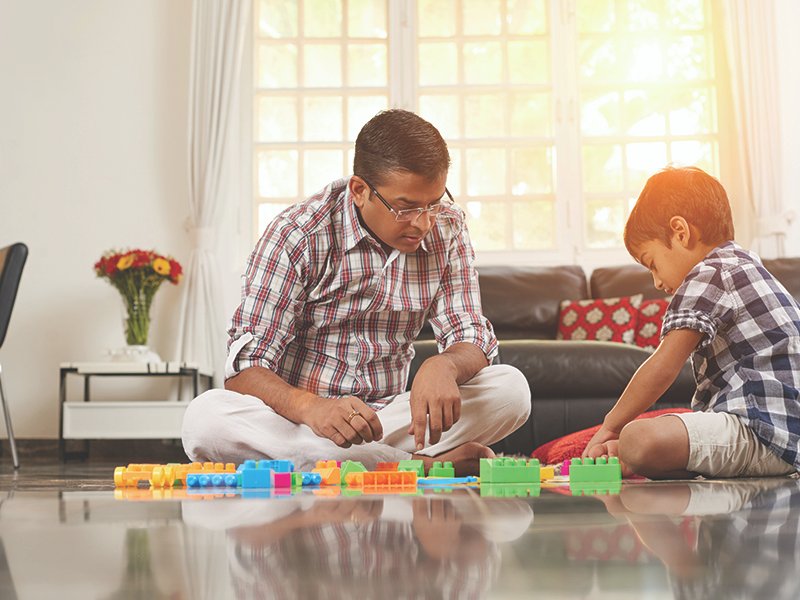
Block play isn’t just entertainment; it’s mathematics in disguise. Counting blocks in a tower, comparing which structure is taller, or combining sets by colour introduces concepts of addition, measurement, and comparison.
 Musical numbers
From “One, Two, Buckle My Shoe” to child-invented rhymes, songs are a great way to embed number sequences into rhythm and melody. These playful repetitions strengthen memory and develop children’s liking for math.
Drawing numbers is another way to learn joyfully. Transforming 2 into a swan or 3 into a butterfly gives numerals a personality. This art-based approach turns abstract shapes into familiar friends, making recognition and retention easier for children.
Everyday moments
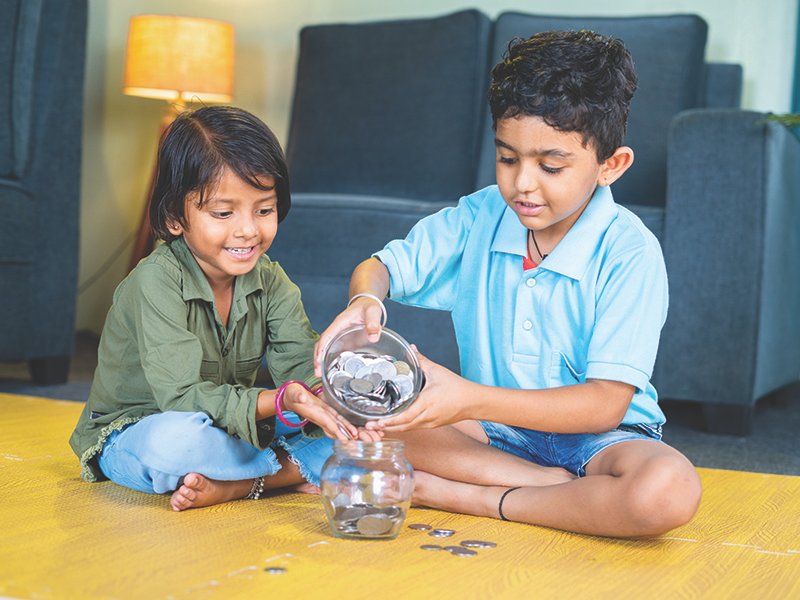
Beyond structured activities, numeracy can be taught through everyday moments. For instance, encouraging children to read public bus numbers, count loose change/coins at a mall, or read the clock. Make an effort to highlight these small ‘live moments’ to reiterate to children that numbers are not an abstract concept but integral to everyday life.
Using play to teach children numeracy skills builds their confidence and liking for math. Children who learn numbers through song and dance are less likely to develop math anxiety in primary-secondary school. When math is taught through play, it ceases to be intimidating and becomes a language of discovery and joy for children.







Add comment