






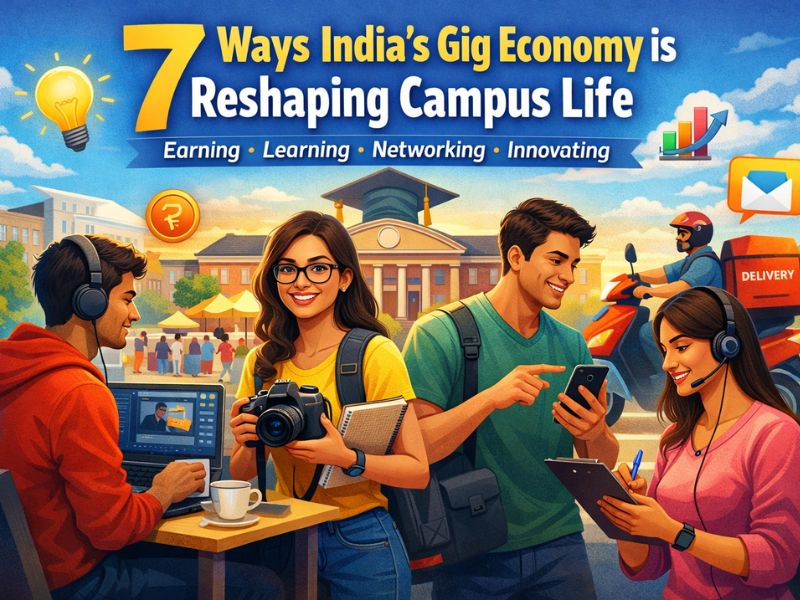
7 Ways India’s Gig Economy Is Quietly Reshaping Campus Life
– Mythri Kumar, Co-founder of Timbuckdo
India’s gig economy is no longer limited to delivery services or freelance designers. It is steadily becoming a defining feature of campus life across the country. From engineering colleges to liberal arts universities, students are increasingly turning to gig platforms not just for pocket money, but for independence, skill-building, and early career clarity.
What was once considered a side hustle is now reshaping how students experience college itself.
Here are seven ways India’s gig economy is quietly transforming campus culture:
1. Pocket Money Has Turned Into Financial Independence
For decades, campus life meant depending largely on family support. Today’s students are earning while learning.
Micro-gigs in content creation, research assistance, campus promotions, social media management, event coordination, and backend operations allow students to generate consistent income streams. Even earning ₹5,000–₹10,000 a month can significantly change a student’s sense of autonomy and confidence.
Financial participation is no longer delayed until graduation.
2. Internships Are No Longer the Only Path to Experience
Traditional internships are limited in number, often unpaid, and highly competitive. Gig platforms have introduced an alternative: outcome-based work.
Students now build portfolios through real assignments rather than waiting for formal internship cycles. Platforms like TimBuckDo connect students with short-term, skill-based opportunities that provide practical exposure alongside academics.
Work experience is becoming decentralised and more accessible.
3. Skill-Building Is Happening in Real Time
The gig economy rewards practical capability over theoretical knowledge. Students are learning:
● Communication and client management
● Time management under deadlines
● Digital literacy and AI-assisted workflows
● Problem-solving in real business contexts
This exposure builds confidence that classrooms alone often cannot provide.
4. Campus Peer Culture Is Changing
The conversation on campuses has shifted.
Instead of only discussing exams or placements, students now talk about:
● “What gigs are you doing?”
● “Which platform pays faster?”
● “How do I price my skills?”
Entrepreneurial thinking is entering everyday campus dialogue. Being “resourceful” is becoming more aspirational than being merely “academically strong.”
5. The Definition of Work Experience Is Expanding
Earlier, work experience meant a structured office environment. Now, students are:
● Managing digital marketing campaigns remotely
● Conducting market research projects
● Supporting startups in operations
● Creating content for brands
This decentralised model has broadened what qualifies as professional exposure.
Recruiters increasingly value demonstrable outcomes over traditional internship certificates.
6. Financial Awareness Is Improving Early
Students engaged in gig work start thinking about:
● Savings
● Taxes
● Budgeting
● Investment basics
Earning even modest amounts fosters financial literacy earlier than previous generations experienced.
This early exposure can positively influence long-term money management habits.
7. Wellness and Work-Life Boundaries Are Becoming Key Conversations
However, the gig revolution is not without challenges. Balancing academics, gigs, social life, and personal well-being requires discipline.
The flexibility of gig work can sometimes blur boundaries, leading to overcommitment and burnout. This is where student-focused ecosystems matter. Responsible platforms, including TimBuckDo, are increasingly recognising the need to support not just earning opportunities but also student well-being through integrated services and structured engagement.
The future of campus gig work will depend on balancing opportunity with sustainability.
The Bigger Shift: Campuses as Micro-Economies
India’s gig economy is projected to grow significantly over the next decade, and students are not passive observers. They are active participants shaping its evolution.
Campuses are quietly transforming into micro-economies where students:
● Earn
● Learn
● Network
● Experiment
● Build portfolios
● Test entrepreneurial ideas
This shift is redefining what it means to be a college student in India. The gig economy is no longer something graduates enter—it is something students are already navigating, reshaping ambition, independence, and career readiness along the way.
And this transformation is only just beginning.
Also Read: MBA vs Digital Marketing Course: Which Path Leads Faster to CMO?











Add comment