






Telangana: Exemplary cooperation
– Priyanka Edupuganti (Hyderabad)
In a rare case of inter-state cooperation, the telangana Council of Higher Education (TGCHE) and Andhra Pradesh State Council of Higher Education (APSCHE) convened a high-level meeting in Hyderabad on January 23 to deepen regional cooperation in higher education.
The chairmen — Prof. V. Balakista Reddy (TGCHE) and Prof. K. Madhu Murthy (APSCHE) — led discussions focused on academic excellence, joint research ecosystems, and student development. The meeting builds on earlier consultations held last year to strengthen institutional partnerships between these two Telugu-speaking states.
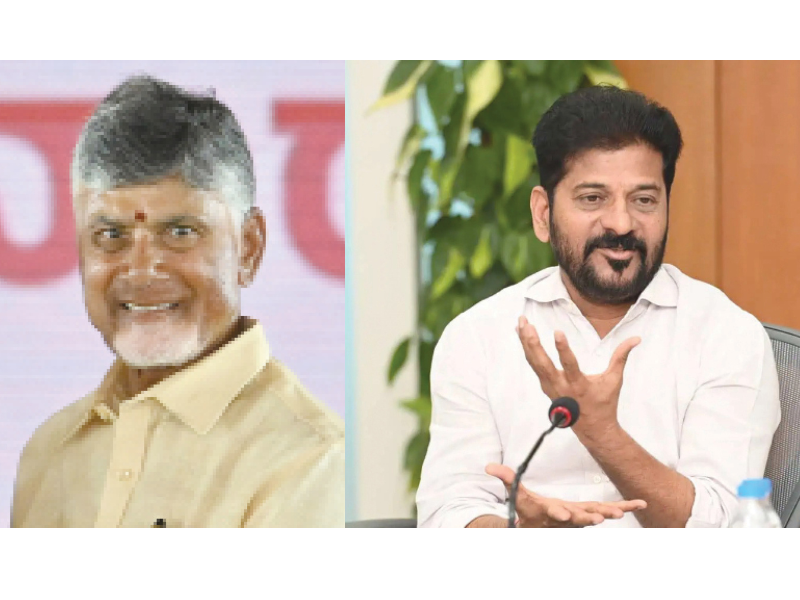
This cooperative endeavour is striking and exemplary because it is a bipartisan initiative. Telangana (pop. 35 million) is currently ruled by a Congress government under Chief Minister A. Revanth Reddy, while Andhra Pradesh (49 million) is governed by the Telugu Desam Party (TDP) under Chief Minister N. Chandrababu Naidu, whose party is a constituent of the BJP/NDA government at the Centre and bitterly opposed by Congress on every issue. Bipartisanship at the Centre is rare.
Since he was returned to power in Andhra Pradesh in 2024, Chandrababu Naidu has prioritised education and technology placing it at the centre of the state’s development strategy. Together with his son Nara Lokesh, an IT and business management alum of America’s blue-chip Carnegie Mellon and Stanford universities, the duo is spearheading higher education reforms with special focus on AI and quantum technology integration, industry-aligned curricula, Centres of Excellence, digital learning expansion through platforms such as NPTEL, and stronger academia-industry linkages to enhance employability and research output.
Likewise, Chief Minister A. Revanth Reddy, a dark horse who unexpectedly catapulted the Congress to power in Telangana in December 2023, has placed education directly under his control and is driving reforms that include drafting a new state education policy, upgrading government schools, establishing Advanced Technology Centres (ATCs), introducing skill-linked scholarships, and promoting AI-driven and technology-enabled governance measures in education institutions. Together, both leaders are set upon empowering their states through technology-led education transformation and workforce competitiveness.
The January 23 meeting of higher education leaders of the two neighbouring states with a shared history — the two states constituted united Andhra Pradesh until Telangana was hived off into a separate state with Hyderabad as its admin capital in 2014 — resulted in an agreement to initiate joint research, coordinated faculty development programmes, and knowledge-sharing mechanisms. Moreover, the deliberations explored how shared digital platforms could standardise academic delivery and reduce disparities in higher education quality and shared laboratory networks to reduce the cost of advanced research infrastructure.
Comments Prof. Satish Kumar, Vice Chancellor of SRM University, Andhra Pradesh: “Academic collaboration between APSCHE and TGCHE opens pathways for integrated research, advanced curriculum design in AI and STEM fields, and student exchanges that will enrich both states. By breaking institutional silos, we will create a regional talent pool ready to lead in frontier technologies and drive socio-economic progress.”
Prof. Aldas Janaiah, Vice Chancellor, Telangana State Agricultural University, Hyderabad, concurs. “Collaboration between higher education institutions of Telangana and Andhra Pradesh isn’t just about sharing resources — it’s about co-creating breakthrough research to address global challenges. By aligning our strengths in AI, emerging technologies, and interdisciplinary research, we will empower students and faculty to innovate together, forging a stronger knowledge ecosystem for both states and for India,” says Prof. Janaiah.
This region has a history of development and empowerment through education. In the US, the 1.2 million-strong highly educated Telugu speaking community has emerged as the most affluent, prosperous and influential within the Indian diaspora. The TGCHE-APSCHE agreement transcending party politics is an indicator that the US experience of Telugu speaking people collaborating may well be replicated back home in India.









Add comment