





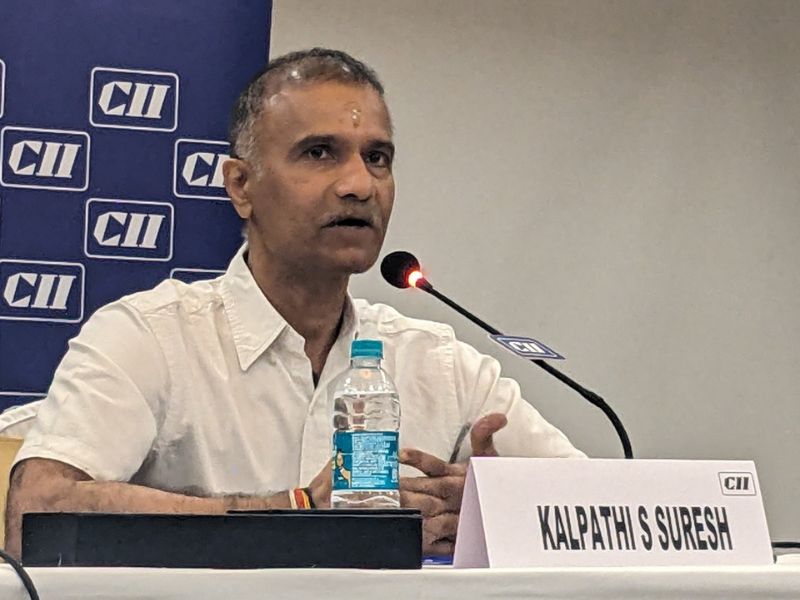
How Leadership & Management Programmes Must Evolve for Gen Z & Alpha
– Suresh Kalpathi, Executive Director and Chairman, Veranda Learning Solutions
A generational reset is unfolding in our workplaces. As Gen Z enters leadership pipelines and Gen Alpha is not far behind, organisations must contend with a fundamental question: Do today’s leadership and management programmes meet the needs of the future, or are they rooted in the past?
The traditional model of leadership development was built on hierarchy, tenure, and authority. But for Gen Z and Gen Alpha, brought up in a hyperconnected and socially aware world, leadership looks different. To them, influence matters more than title, impact outweighs power, and performance is driven by purpose. To stay relevant, leadership programmes must evolve from predefined, static modules that cannot deliver knowledge in real time into adaptive arms of an ecosystem dedicated to agile, purpose-driven growth.
New Leadership DNA: What Gen Z & Alpha Care About
1. Purpose Over Position Gen Z and Gen Alpha want deeper meaning in their work. They aspire to build organisations that stand for more than quarterly earnings. Leadership programmes must therefore place purpose articulation, ethical decision-making, and stakeholder thinking at their core.
2. Collaboration Over Command Both generations have grown up in intensely networked, collaborative digital environments. They value influence earned through dialogue rather than authority defined by rank. The future of leadership development must therefore focus on problem-solving, emotional intelligence, interpersonal skills, and the ability to influence without formal authority.
3. Continuous Feedback and Growth Annual appraisals feel archaic to generations accustomed to real-time digital feedback. Leadership development should incorporate coaching loops, peer reviews, and agile goal-setting systems that enable continuous growth.
4. Autonomy with Accountability The next generation of leaders seeks flexibility along with responsibility. Autonomy must be balanced with clearly defined accountability structures. Programmes should teach empowerment alongside disciplined decision-making.
Reimagining Leadership & Management Programmes
1. Use Technology as a Learning Co-Pilot Technology is foundational for digital natives. A blend of human facilitation and AI-powered coaching, immersive simulations, adaptive platforms, and gamified scenarios can transform leadership development. These tools enable personalised learning and provide safe environments to practise complex decision-making. Data-driven interventions can also help identify and develop high-potential talent at an early stage.
2. Champion Inclusion and Psychological Safety The days of using “inclusion” as a catchy tagline are over. It is now a workplace imperative. Leadership programmes must emphasise cultural intelligence, empathy, and strong listening skills to build psychologically safe environments.
3. Purpose-Driven Leadership: The Need of the Hour Gen Z and Gen Alpha are unlikely to remain with organisations they do not believe in. Leadership programmes must therefore embed sustainability, stakeholder equity, social impact, and ethical decision-making into their frameworks. These generations look up to leaders who align business performance with a larger sense of purpose and who galvanise teams, customers, and investors through empathy and vision.
4. Build Flexibility and Adaptive Mindsets These are uncertain times. Leaders must know when to change direction while staying anchored to their vision. Training must prioritise adaptability and cognitive agility. Reframing failure as experimentation—and teaching that mindset—forms the foundation of lifelong learning and resilience.
From Programmes to Leadership Ecosystems
Leadership development must shift from episodic training to embedded organisational growth. It should become part of everyday work through mentoring, cross-functional exposure, and continuous feedback. Programmes must act as talent catalysts—nurturing growth, modelling values, and creating conditions where autonomy and accountability can thrive.
Gen Z and Gen Alpha are not interested in outdated leadership models; they want to build new ones. Organisations that redefine development as an adaptive human process—at the intersection of purpose-driven ambition and technologies such as AI, big data analytics, social media, and cloud-based learning platforms—will cultivate leaders who can face the unknown with confidence and poise.
Also Read: Data privacy in children’s edtech apps and why on-device voice technology matters










Add comment