






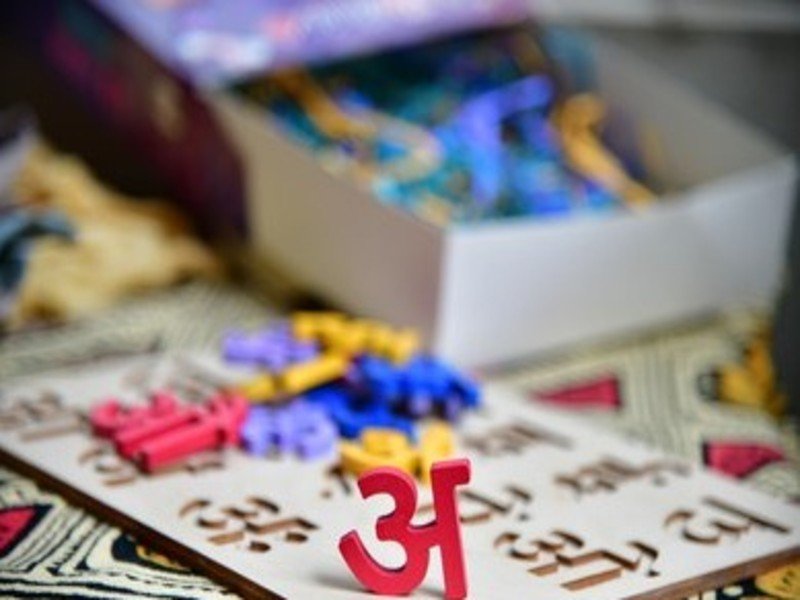
School education minister calls for implementation of Marathi in all Maharashtra schools
– Ronita Torcato
Maharashtra’s school education minister Dadaji Bhuse has directed the strict implementation of the rule making Marathi language mandatory across schools of all boards, mediums and managements.
Minister Bhuse was chairing a meeting at the Mantralaya Secretariat in Mumbai on Tuesday which was attended by principal secretary Ranjitsinh Deol, education commissioner Chandrakala Singh, district collectors, chief executive officers of Zilla Parishads, municipal commissioners, and senior officials from the education department.
The authorities had earlier warned private and minority schools that fail to comply with Marathi language requirements with severe penalties, including the cancellation of their license.
But the state government seems to be unaware that English medium schools run by the Christian minority have been teaching Marathi from the primary section itself since inception. English-medium, Christian minority schools treat Marathi as a compulsory subject which continues through the middle and high school years. (In the secondary section, foreign languages like French are also taught.)
Interestingly, Marathi was made a compulsory subject in all schools, including unaided and minority-run institutions, across all boards including SSC, CBSE and ICSE following the implementation of the Maharashtra Compulsory Teaching and Learning of Marathi Language in Schools Act, 2020.
This mandate applies to all boards, including those operating under linguistic (English, Urdu, Gujarati)
and religious minority statuses. Hindi has been mandated as the third language in Marathi and English medium schools.
There are nearly 18,000 minority schools in India, the largest –over 12,000– of which are madrasas.
Of the 1,731 private schools across Mumbai, 950 are classified as minority institutions, making 55 percent of private schools.
Following an initiative by the Maharashtra State Minority Commission, Marathi was made a mandatory subject from Class I in Urdu medium schools from the 2025-26 academic year. There are 3,500 Urdu schools across the state.
(It may be noted that the inclusion of compulsory Marathi in linguistic minority schools has sometimes raised legal and constitutional debates since Article 30 (1) of the Constitution grants minorities the right to establish and administer educational institutions.)
At the meeting, Bhuse commended Zilla Parishad schools in the state for “doing excellent work in imparting knowledge” and instructed Department officers to visit schools regularly and stressed the need for the effective implementation of student safety schemes.
He said that Corporate Social Responsibility (CSR) funds and the cooperation of alumni associations should be leveraged for school development.
“The focus should be on elevating the standard of government schools and increasing student enrollment. ”
Starting anganwadis (pre-schools) within the premises of Zilla Parishad ( district) schools will help increase student enrollment, he said.
Balbharti has already delivered 80% of the textbooks to schools, and care should be taken to ensure the remaining books arrive before schools reopen, he said.
Bhuse also suggested implementing the ‘Ek Ped Maa Ke Naam’ (A Tree in the Name of the Mother) initiative in schools, aligned with prime minister Narendra Modi’s appeal for tree plantation and the state government’s intention to plant 300 crore trees.
The minister called on schools across Maharashtra to celebrate the annual student admission festival (Praveshotsav) at the commencement of the 2026-27 academic year and “provide high-quality uniforms to students on their very first day.”
He recalled that the Praveshotsav festival had received an enthusiastic response last year and that the governor, chief minister, deputy chief minister, guardian ministers, and government officials, had issued statements welcoming the students to school on their first day.
This year too, students should be welcomed with the same vigour, he said.
“Proper planning for cleaning school premises must be done before they reopen. The uniforms provided to students must be of high quality.”
Along with providing physical infrastructure in schools, attention must be paid to the personal hygiene of students, provision of drinking water, clean toilets, painting and repairs of premises, and setting up ‘Pink Rooms’ for female students, he said.
He called for the timely completion of the teacher recruitment process, regular meetings of school committees and the need to improve scholarship exam results.
He also said that government schools should emulate the Jawahar Bal Bhavans and emphasize art, acting, music, and elocution.
Citing the example of a school in Gardarewadi, Daund taluka, Bhuse urged other schools to “follow the model of such institutions and teachers who perform outstanding work.”
He concluded by congratulating those involved in achieving a world record last year of a mass drill performed to patriotic songs, and praised Kolhapur district for securing top marks in the nationwide Performance Grading Index (PGI) rankings.
Also read: Government Repatriates CBSE Secretary Himanshu Gupta; Varun Bhardwaj Appointed Successor









Add comment