






“We want to be an integral part of India’s higher ed ecosystem”
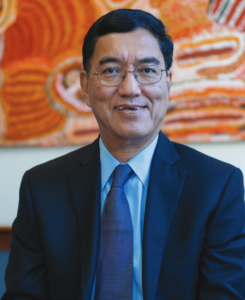 An alumnus of the Algerian Petroleum Institute and University of British Columbia, Bangladesh-born Prof. Amit Chakma is Vice Chancellor of the University of Western Australia (UWA, estb. 1911), ranked among the world’s Top 100 universities (#77) in the QS World University Rankings 2026. UWA is all set to inaugurate its first two international campuses in India — Mumbai and Chennai — this September. Autar Nehru interviewed Prof. Chakma in Delhi. Excerpts:
What would you say are the distinguishing features of UWA education?
UWA was deliberately designed differently. We are a mid-sized university, and our founders were very thoughtful. They believed students not only needed strong foundational education — whether in arts, sciences, engineering, or business — but also capability to solve region-specific challenges. Consequently, interdisciplinary pedagogy was conceptualised and practiced in UWA much before it became an education strategy globally.
Moreover, we don’t approach education merely from the perspective of making students “job-ready”. We prepare our students to become future-ready — capable not just of succeeding after they graduate but also to learn continuously and adapt to changing situations throughout their lives.
Yet because we are a relatively small university, over the past century we have learned to bridge knowledge and research deficits through collaboration, transforming constraints into opportunities. This capability to integrate disciplines and work collaboratively explains UWA’s strong national and global reputation. And this is the educational philosophy we want to bring to India.
Today, UWA is among Australia’s top public universities, with over 10,000 students including 1,500 from India.
What considerations prompted UWA to establish its first offshore campuses in India?
Currently, India is the world’s most high-potential country. Any dispassionate scholar tracking global developments will forecast India’s rise — economically, technologically, strategically and demographically. The country possesses a large industrial base, extraordinary entrepreneurial energy and a young population seeking growth and development opportunities. Moreover, UWA has established longstanding relationships with Indian students and their families. We have a large cohort of Indian students, particularly from southern India at UWA.
Moreover, we have chosen to open two campuses — in Mumbai and Chennai — because the two cities complement each other. Chennai has a strong technology and engineering base, while Mumbai is India’s commercial capital. This dual-city model creates additional advantages for student internships and industry partnerships.
What does UWA intend to contribute to India’s higher education ecosystem?
We want to bring our education philosophy and become an integral part of India’s broader education ecosystem rather than operate in isolation. We are working closely with the Central and state governments, industry and MSMEs. For instance, we already have a flourishing partnership with HCL Technologies Ltd.
It’s also pertinent to bear in mind that UWA is also globally recognised for its expertise in mining, particularly sustainable mining and resource technologies. This creates significant opportunities for collaboration beyond traditional classrooms. We are also well-qualified to provide micro-credentials, industry-led learning modules, and applied education experiences for industry.
India’s higher education landscape is evolving rapidly, with many new private universities and international institutions entering the higher ed sector. In such an increasingly competitive environment, how does UWA plan to differentiate itself?
We are not entering India to compete with Indian universities. Our approach is partnership-oriented. Certainly, there will be competition among international education institutions. But healthy competition among them for best students, faculty and research assignments will drive higher standards. UWA has entered India with exceptional seriousness and long-term commitment. We aren’t prepared to compromise on quality. That’s why we don’t like the descriptive ‘branch campus’. Our universities in Mumbai and Chennai are not peripheral extensions. They are designed to become integral to our parent university. We are making a significant continuous and adaptable commitment with an upfront investment of $75 million (Rs.717 crore) in India.
What message would you like to share with Indian students and parents?
UWA provides Indian students a great opportunity to access world-class higher education in their home country without confronting major visa, finance and cultural adaptation experiences. There will be many collaboration opportunities — short-term exchanges, academic immersion weeks, research partnerships, and joint learning programs — with our parent university.
We are also setting fee structures carefully against domestic expectations while maintaining international-quality education. Scholarships are also an important focus area. We have already earmarked Rs.13 crore towards scholarships for our India campuses.










Add comment