





Iran: Universities as war targets
Staff and students at universities across the Middle East are hoping that a temporary ceasefire in the Iran war leads to more stability within the region after fears that attacks on institutions are becoming “normalised” in the latest round of fighting.
Israel, the US and Iran have agreed to a pause in the conflict after tensions escalated over the closure of the Strait of Hormuz, leading to a spike in oil prices worldwide. Experts say the pause represents a fragile peace but it marks a brief respite for various countries’ education systems, which have increasingly been targeted amid the fighting.
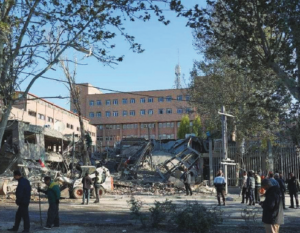
Bombed Sharif University of Technology, Tehran: educide charge
Last month Iran announced that it saw American university campuses in the Middle East as “legitimate targets”, after claiming that US and Israeli strikes had hit several of its universities.
According to television news channel Al Jazeera, 30 universities in Iran have been damaged by US-Israeli strikes since the war began, with the country’s top institution, Sharif University of Technology, struck on April 6. Ongoing Israeli strikes in Lebanon — which Israel has said is not included in the ceasefire — have also seen academics killed and universities hit, and follows the destruction in Gaza, where Israel has been accused of conducting an “educide”.
The targeting of universities in conflict is “strategic”, according to Maia Chankseliani, professor of comparative and international education at the University of Oxford, who adds that the consequences would be long-term, and result in the “degradation of a society’s capacity to educate and produce knowledge”. “What we are witnessing, from the widespread destruction of higher education in Gaza to the bombing of Sharif University of Technology, one of the most distinguished scientific institutions in the region, suggests a deeply troubling pattern. Perhaps most alarming is the rhetorical shift we are now seeing, with universities being seen as legitimate targets in war. This signals a potential normalisation of their inclusion within the strategic logic of conflict,” says Chankseliani.
Recovery is likely to be slow despite the ceasefire, he says, because infrastructure is only “one part of the challenge”, and “restoring academic communities, international partnerships and student confidence takes many years”.
In the latest conflict, the Israeli and US governments have attempted to justify such attacks by claiming that the universities “are connected to military research”. This shows there were “no rules” in the current conflict, says Mayssoun Sukarieh, senior lecturer in the department of international development at King’s College London, and it sets a precedent. “According to this logic, all American universities as well as Israeli universities are legitimate targets of destruction, as they are all involved in military research.”









Add comment