




What students and parents should prioritise while choosing education pathways
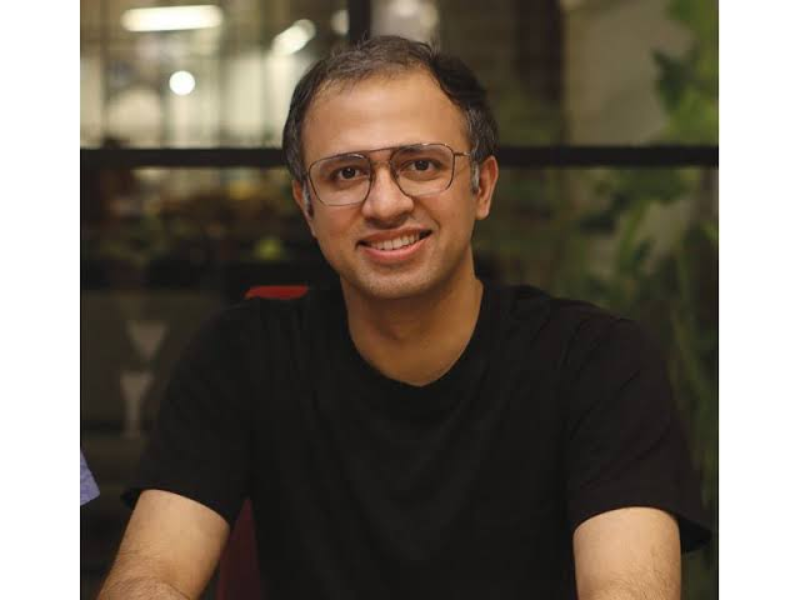
– Varun Satia, CEO & Founder, Kraftshala School of Business
Recent remarks by India’s Chief Economic Advisor, V. Anantha Nageswaran, suggesting that degrees alone may no longer guarantee employability have reignited an important conversation. They have challenged one of India’s longest-held beliefs—that academic credentials are the safest route to career success.
For decades, the formula was simple: study hard, secure admission to a reputed college, earn a degree, and a good job would follow. That formula served previous generations reasonably well, as employers hired largely based on qualifications.
That world no longer exists.
Today, businesses are hiring for adaptability as much as academic achievement. Technology, automation, and artificial intelligence are compressing learning cycles and changing expectations of professionals much earlier in their careers. Employers increasingly expect graduates to arrive not only with conceptual knowledge but also with the ability to apply it, adapt quickly, and contribute meaningfully from day one. As a result, employability is becoming less dependent on academic qualifications alone and more dependent on demonstrated capability.
That does not mean formal education has become irrelevant. Rather, it means its role is evolving. This shift should not be interpreted as an argument against MBAs or traditional degrees. The reality is more nuanced. Strong academic programmes continue to create enormous value through structured thinking, foundational understanding, and exposure to different ways of solving problems. Business education, engineering, commerce, liberal arts, and other established pathways will continue to remain important.
What is changing is the expectation attached to the qualification. Employers now expect graduates to demonstrate problem-solving ability, communication skills, commercial understanding, digital fluency, and the confidence to work in ambiguous environments.
The degree has become the starting point, not the destination. This shift explains why graduates from similar institutions often experience vastly different career outcomes. The differentiator is no longer where they studied but what they can actually do.
The reason these expectations are changing so rapidly is, in large part, the rise of artificial intelligence. AI is not simply automating tasks—it is reshaping how work gets done and, consequently, what employers value. There is understandable anxiety that AI may reduce opportunities for young professionals, but history suggests that technological shifts rarely eliminate value creation; they redefine it. The professionals who benefit most are often those who learn to use new tools to increase the scale and quality of their contribution.
That pattern is already becoming visible across industries. Tasks that previously required larger teams can now be completed faster with the support of AI. This raises expectations of individuals, but it also expands what they can achieve. Employers increasingly reward professionals who combine domain expertise with speed, adaptability, and technological fluency.
For students choosing education pathways today, this means evaluating institutions through a different lens. Instead of asking only which course carries the strongest reputation, students should ask what capabilities they will build over the duration of the programme. Will they work on real business or industry problems? Will they have opportunities to experiment, build, present, and execute? Does the curriculum evolve with changing industry realities? Will they graduate with evidence of their abilities, not just proof of attendance?
Parents, too, may need to rethink some of the filters traditionally used in education decisions. Prestige and familiarity remain important, but they cannot become substitutes for outcomes. The strongest education choices are often those that maximise long-term adaptability rather than immediate social validation. This also requires revisiting perceptions of vocational and practical learning, which have historically received less attention despite creating highly employable and future-ready pathways.
The next decade is unlikely to reward those who simply collect credentials. It will reward those who continuously build capability, remain curious, and adapt to change. Students entering higher education today are not choosing a single profession for life; they are choosing how prepared they will be to navigate multiple careers over the course of their lives. That makes the choice of an education pathway more important than ever. It should be evaluated not only by the qualification it awards but also by the outcomes it enables and the capabilities it builds. The institutions that recognise this shift will shape not only successful graduates but also a more competitive and future-ready India.
Also Read: What Gen Z Students Expect from Campus Life Beyond Academics








Add comment