





How project-led learning and access to global mentors is already changing what students think they are capable of
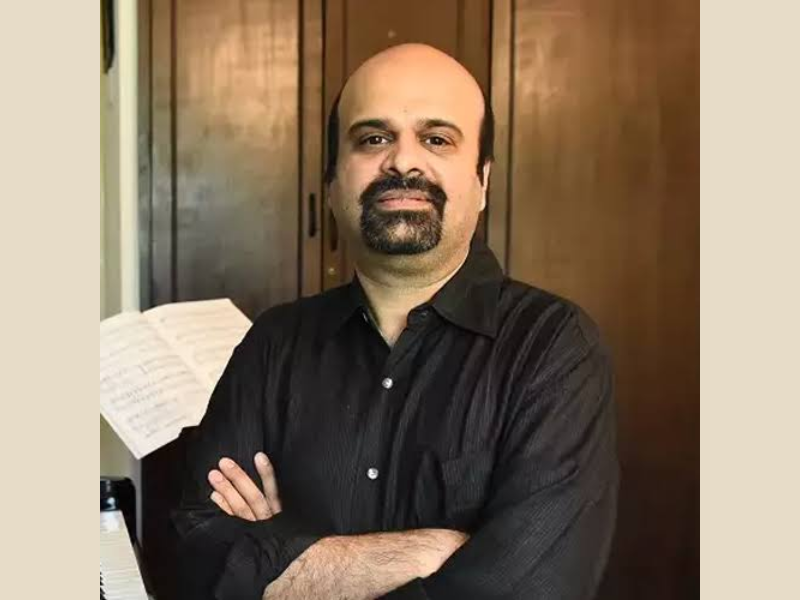
– Anil Srinivasan, Founder of KRUU and the Rhapsody Foundation; Visiting Professor, Krea University
I have been in a lot of classrooms: government schools in Tamil Nadu, where the benches are crowded and the windows let in more noise than light; international schools, where the facilities would embarrass most universities; and everything in between — across fourteen countries, over two decades of work that started as a music programme and became something harder to name.
One thing has remained constant across all of them. The moment a child stops performing for a teacher and starts working on something real, for someone real, the room changes. You can feel it. The quality of attention shifts. The questions become different: more urgent, more specific. Less “Will this be on the exam?” and more “But what actually happens when you do that?”
That shift is what project-based learning is really about. Not the projects. The someone real.
For a long time, we’ve spoken about PBL as a pedagogical method — a different way of organising curriculum, sequencing activities, and assessing what students know. And it is all of those things. But the version of it that is actually changing outcomes, in measurable and visible ways, is the version where a learner is working on a genuine problem and has access to someone who has navigated that problem professionally.
A student in Coimbatore designing a water-harvesting system. A student in Nairobi calculating the carbon cost of her city’s waste logistics. A student in Manila building a microfinance simulation for a local cooperative. These are real projects from real programmes. What they share isn’t a subject or a curriculum framework. They share a structure: a problem that matters, a process that demands thinking, and a mentor who is not performing expertise but actually bringing it.
That last element is the one we keep underinvesting in.
The global mentor is, I believe, the most underutilised resource in contemporary education. Not because people aren’t generous — they are, remarkably so — but because we haven’t built the infrastructure that makes generosity actionable. A hydrologist in Singapore giving up an afternoon to talk through a water problem with a fourteen-year-old in India isn’t a feel-good story. It is, when done with structure and seriousness, a fundamentally different kind of education.
What the expert brings that a textbook cannot is judgment. Not just knowledge, but the texture of how knowledge is actually used: what gets prioritised when you can’t have everything, what gets revisited when the first approach doesn’t hold, and what it feels like to be uncertain inside a problem and still have to move forward. That is the part of professional life that education has never quite managed to teach. The mentor makes it visible.
Across 800,000 learners in fourteen countries, the pattern holds. The students who work with global mentors don’t just perform differently on assessments. They ask different questions. They are less frightened of what they don’t know because they have sat with experts who were openly uncertain about things and watched them think their way through. That is a different relationship with knowledge from anything a well-designed syllabus can produce.
This shift in self-belief is the part that matters most. Students who once doubted their own competence begin to see themselves differently — not as recipients of knowledge, but as capable contributors to real problems. That quiet recalibration of what feels possible, more than any single assessment score, may be the most lasting outcome of project-based learning with global mentors.
There is something else worth naming because it doesn’t come up often in the learning outcomes literature. The mentor relationship is reciprocal in ways that are difficult to quantify but impossible to miss. I have watched senior professionals — lawyers, scientists, architects, musicians — leave a session with a group of students visibly energised. Not in the patronising way of someone who enjoyed explaining things. In the way of someone who had just been made to think carefully about something they hadn’t examined from first principles in a long time.
This is what education could be: not a one-way transmission of expertise from a credentialled adult to a compliant young person, but a genuine intellectual encounter across differences — of age, context, and what each party stands to gain. The young person learns that knowledge is lived, not stored. The expert remembers why the problem was interesting in the first place.
When we say PBL is changing learning outcomes, we mean this. Not the project. The encounter. The world that becomes slightly more legible to a young person because someone who knew it well agreed to show them around.
That is what we are building. And it turns out it was available all along. We just hadn’t asked properly.
Also Read: Why AI-Integrated MBA Programmes Are the Future of Management Education








Add comment