






Delhi: Dog-in-manger mindset
– Autar Nehru (Delhi)
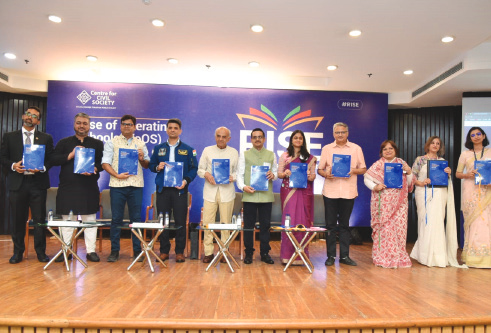
EoOS Index 2026 launch in Delhi: hostile environment for private initiatives
Promoting and running private unaided (financially independent) schools — aspirational destinations of children countrywide — is very difficult.
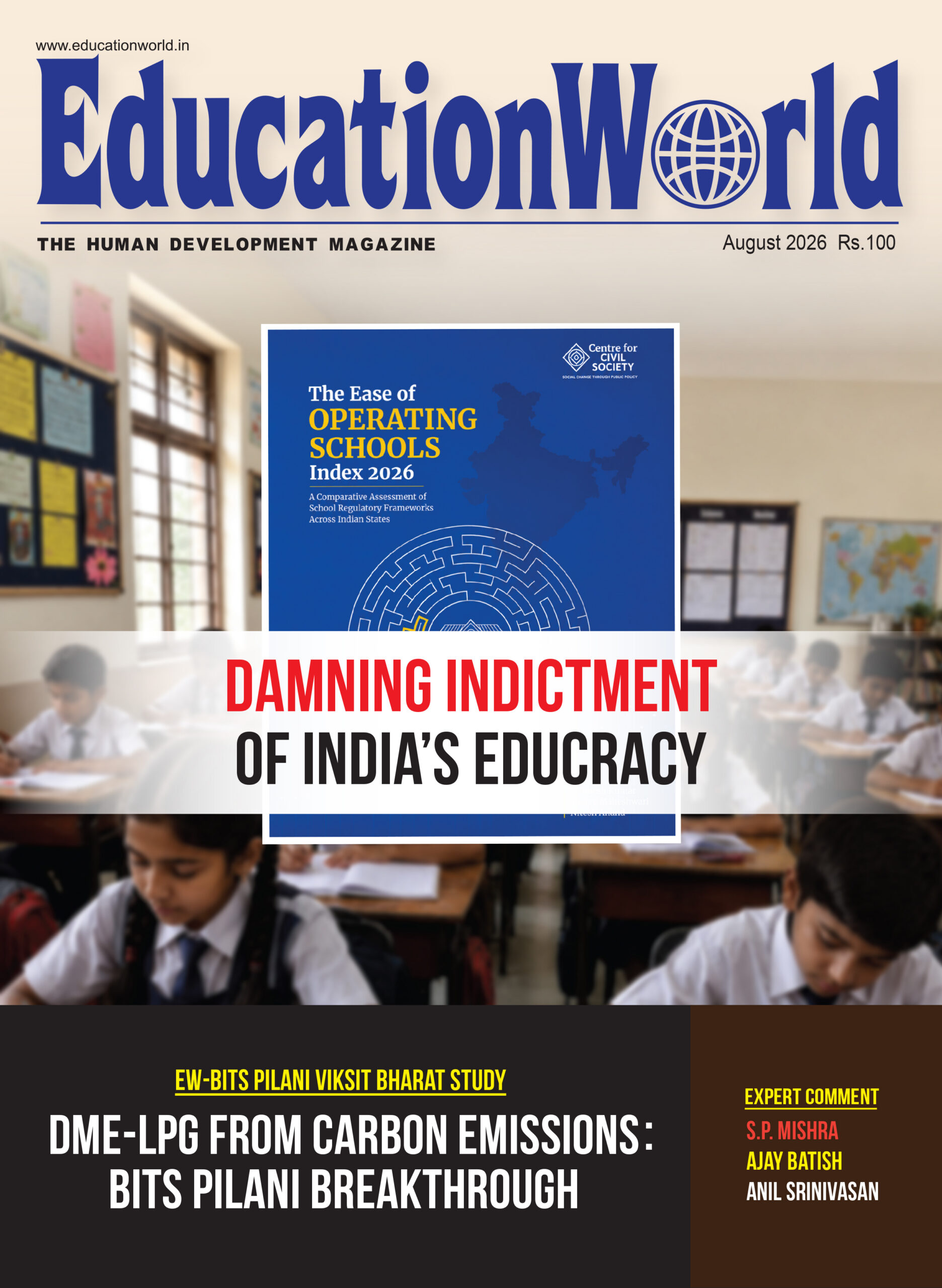
This is the conclusion of the country’s first-ever Ease of Operating Schools (EoOS) Index 2026 released on June 19 by the Centre for Civil Society (CCS), a Delhi-based public policy think-tank focused on education, livelihoods, and governance. EoOS Index 2026 ranks the newly demarcated (2014) southern state of Telangana (pop.38.6 million) with an EoOS score of 29.69 percent as the easiest state to operate private schools and Sikkim with a score of 13.97 percent, the most difficult. That despite all noises about liberalisation of education, contemporary India offers a hostile environment for private school initiatives is indicated by the national average score of 20.86 percent.
To compile the rankings of states most conducive for promotion and operation of private unaided (financially independent) schools, CCS researchers focused on six domains of school governance — Regulatory Clarity, Regulatory Compliance, Protection Against Arbitrary Regulatory Action, Financial Sustainability and Resource Mobilisation, School Lifecycle Operations, and Institutional Autonomy. CCS researchers studied state education legislation, rules, exam board regulatory circulars, government notifications, and other documents available in the public domain, supplemented by information obtained through the Right to Information (RTI) Act 2005.
The EoOS rankings reveal not only disparities between states, but also the overall complexity and anti-private schools mindset of state governments and regulators countrywide. Authored by an in-house team comprising Dr. Animesh Kumar, Shaivy Maheshwari, and Nitesh Anand, the report posits that “the future challenge for school regulation in India is not simply improving compliance or strengthening oversight… ultimately, schools can only deliver educational outcomes if they are not merely regulated, but also empowered to succeed”.
That the country’s 1.1 million public/government schools defined by crumbling infrastructure, mass teacher truancy, abysmal learning outcomes and large number of students dropping out, are not empowered to succeed is a well-known verity, officially confirmed by a recent (2026) report of NITI Aayog, the Central government’s think-tank. But instead of focusing their attention on mending the broken government school system, educrats in every state countrywide steeped in the control-and-command mindset of the socialist era, are doing their damndest to discourage private initiatives in education, especially K-12 education.
“India’s education system is still governed by the controller mindset. Starting a school or college remains a bureaucratic obstacle course…The licence-permit-quota raj did not disappear after 1991, it migrated into education,” writes Dr. Parth J. Shah, Founder and Chairman of CCS in an essay included in EoOS 2026.
One of the report’s major focus areas is financial viability of private schools. While all states have legislated tuition fees regulation mechanisms — including fees-control laws, approval committees, fees determination authorities, restrictions on fee increases, and grievance redressal systems — the report highlights that they seem least bothered about the financial sustainability of private schools in which promoters are obliged to make huge — and rising — capital and entrepreneurial investment.
“The legal requirement to run privately-promoted schools as non-profit enterprises — trust, society or Section 8 — is a paradox of good intentions. Although school promoters are obliged to make large capital investment like any other genuine entrepreneur, this legal obligation has inadvertently transformed all but the most wealthy, into criminals. And then we are tasked to teach honesty and integrity to our students. The plethora of laws, rules and regulations discourage idealistic, talented, innovative and passionate entrepreneurs from venturing into education. It’s a huge loss for India and its children,” rues Vikas Jhunjhunwala, Founder-CEO of two BPS (budget private schools) Sunshine Schools in Delhi (aggregate enrolment: 900 children mentored by 60 teachers).
Amit Chandra, incumbent President and CEO of CCS, warns that the consequences of government and the judiciary turning a blind eye to the financial stability and viability of private schools which host 48 percent of India’s 260 million in-school children will have grave consequences in this new era of complex AI and digital education. “State governments across the country are actively disincentivising private capital and entrepreneurs from entering the education sector. It’s important for them to understand that ease of entry and operations of private schools is in the national interest. It will stimulate competition, raise teaching-learning standards and eventually drive down tuition fees in K-12 education. Meanwhile, the Central and state governments should focus on raising public school education standards. That’s the best way forward,” says Chandra.
That’s commonsense advice. But with the bureaucracy having transformed into gate-keepers of private education with a vested interest in the status quo, this advice is likely to fall on deaf ears.








Add comment