






Tamil Nadu: Policy disconnect
– Shivani Chaturvedi (Chennai)
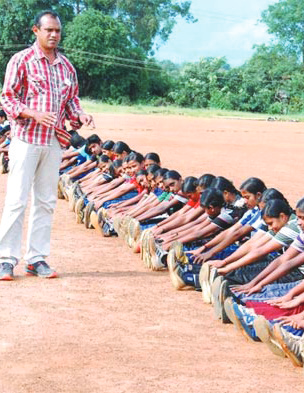
PE class: implementation doubts
In recent years with india having acquired the dubious distinction of transforming into the world’s most diabetic country and confronted with a major obesity problem within its 400 million-strong middle class, a consensus has emerged among educators that physical and sports education needs to be accorded equivalence with academic learning. Therefore, it’s surprising that a June 3 directive of the Tamil Nadu school education department to all government, aided and private schools statewide to make physical education (PE) compulsory for all students of classes VI-XII has aroused controversy.
Chennai-based educationists take pains to contend that the directive — which also instructs chief education officers (CEOs) and district education and officers (DEO) to ensure that PE periods are conducted regularly and to identify schools where playgrounds remain underutilised — is unmindful of a glaring policy disconnect. While the government has made physical education mandatory, it has not announced a corresponding plan to recruit physical education teachers (PETs), upgrade sports infrastructure and provide dedicated funding for equipment and maintenance of playgrounds and sports facilities, raising serious doubts about implementation of this directive
Tamil Nadu has one of India’s largest school education systems, with more than 58,000 schools — including around 37,000 government, 8,000 aided and nearly 13,000 private schools — hosting 12 million children. “Mandating compulsory physical education across such a vast network requires not only policy intent but also adequate manpower, infrastructure and sustained financial support,” says Dr. Sakthi Rekha, a Chennai-based educationist and social activist.
This policy directive comes just months after the state spent Rs.338 crore on education infrastructure — constructing 1,232 classrooms in 217 government schools at a cost of Rs.296 crore and establishing 654 hi-tech laboratories in more than 600 aided schools at an additional cost of Rs.41.85 crore. While these investments have strengthened physical infrastructure, educationists contend that the priorities of the new TVK government headed by Chief Minister C. Joseph Vijay, are over-focused on visible capital expenditure to the neglect of soft infra — qualified teachers, coaches, etc. Teachers’ associations estimate that 3,000 PET posts are vacant in government schools, with many schools sharing one qualified instructor.
“The larger question is whether the state government is interested in investing in people who make schools function,” says Advocate M.J. John Arokia Prabhu, vice president of the Tamil Nadu Private Schools Association and head of the legal team of the Delhi-based National Independent Schools Alliance (NISA). “Buildings do not teach children. Laboratories do not improve learning on their own. Unless the government fills teacher vacancies, recruits adequate physical education teachers, strengthens teacher training and improves classroom practices, these announcements will remain cosmetic. Educational quality is determined far more by what happens inside the classroom than by the number of buildings inaugurated,” he adds.
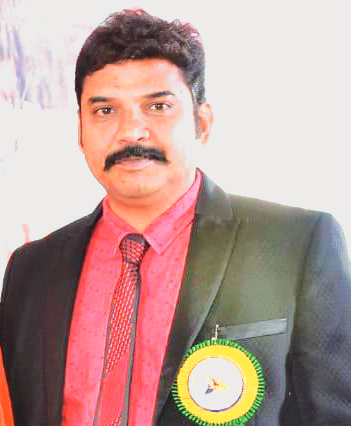
John Arokia Prabhu
Such criticism is not without foundation. In many schools, PE periods are routinely diverted for mathematics, science and board examination coaching. Even where playgrounds exist, they are often inadequately maintained or lack basic sports equipment. Last year in Secretary, S.R.P. Middle School vs. State of Tamil Nadu & Others, Justice P.T. Asha of the Madras High Court, Madurai Bench, observed that “without physical education, the overall development of a child would be seriously impeded,” and questioned the state government’s policy of sanctioning PET posts only in schools with a minimum enrolment of 250 students.
Meanwhile PE teachers have also reported delays in receiving revised textbooks, inadequate sports equipment and lack of dedicated grants for maintaining playgrounds or purchasing sports materials. Evidently, making PE compulsory without simultaneously making provision for corresponding deficiencies risks reducing this overdue reform to another cosmetic exercise.










Add comment