






Karnataka: Alarming dropout rate
– Reshma Ravishanker (Bengaluru)
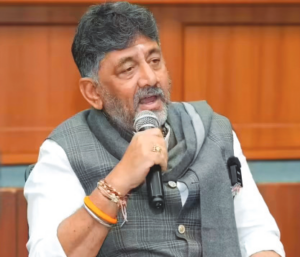
Chief minister Shivakumar: unenviable distinction
In congress-ruled karnataka (pop.69 million), the education sector has been neglected for over the past two months, with the crucial school education and higher education portfolios still without ministerial heads. Although D.K. Shivakumar assumed office as chief minister on June 3 mid-way through the Congress term of office, the preoccupation of the Congress high command (Gandhi dynasty) in Delhi with the unprecedented countrywide Gen Z protests over the NEET-UG exam paper leak delayed cabinet formation and appointments under the new chief minister. Earlier a prolonged leadership tussle paralysed policy formulation and decision-making at a time when the state’s performance under education indicators in national surveys is steadily deteriorating.
The latest evidence of this decline is Karnataka’s unenviable distinction of recording the highest secondary school (classes IX-X) dropout rate among India’s 28 states, according to the Unified District Information System for Education Plus (UDISE+) 2025-26 report. Per the report, published by the Central government’s Department of School Education and Literacy on July 7, Karnataka recorded a dropout rate of 18.1 percent in secondary education — nearly twice the national average of 9.5 percent. Shockingly, the report indicates that the educationally backward BIMARU states of Bihar (9 percent), Madhya Pradesh (13 percent), Rajasthan (8.8 percent) and Uttar Pradesh (8.4 percent) have outperformed Karnataka — long celebrated as India’s Silicon Valley and ICT hub — under this parameter.
According to Prof. A.S. Seetharamu, former professor of education at the Institute for Social and Economic Change (ISEC), Bengaluru, Karnataka’s alarming secondary school dropout rate is substantially driven by a legal loophole that permits children to enter the workforce after age 14. “Karnataka’s high secondary dropout rate should be a matter of grave concern. A major contributory reason for this is the legal framework governing child labour. Once a child completes 14 years of age, he is no longer protected by the blanket prohibition of child employment under the Child and Adolescent Labour (Prohibition and Regulation) Act, 1986, as amended in 2016. This law prohibits the employment of children below 14 years in all occupations and processes. But it permits adolescents aged 14-18 years to work in non-hazardous occupations and sectors, subject to certain conditions. If we are genuinely committed to universalising secondary education, policy intervention must prohibit children in all employment until 16 years so they can complete class X. Unless this legal loophole is plugged, reducing dropout rates in secondary education will remain a formidable challenge,” says Seetharamu.
Child labour laws and adolescents seeking employment apart, a rising number of students are dropping out of secondary schools, particularly government schools, because of inadequate infrastructure and facilities, poor-quality teaching and abysmal learning outcomes. According to the Annual Status of Education Report Beyond Basics 2023, 31 percent of class IX and X children in Karnataka cannot read a class II textbook, 41 percent couldn’t read simple English sentences and only 38 percent could solve basic division problems. Moreover, there are a mere 15,900 government secondary schools statewide.
Comments Nagasimha G. Rao, a Bengaluru-based child rights activist and former director of NGO Child Rights Trust: “One of the main reasons for the high secondary school dropout rate is that the 25 percent Right to Education Act free-of-charge admissions quota for poor children stops at class VIII, after which many families cannot afford private school fees. Admission quotas under the Act’s s.12 (1) (c) should be extended until completion of class X. Moreover, there are insufficient government secondary schools in the state and children in rural areas are unable to travel long distances to reach secondary schools because of poor transport networks. Most government secondary schools also lack proper facilities, trained teachers and counsellors to address adolescents’ psychological needs.”
Quite clearly, as the recent nationwide Cockroach Janata Party protests have indicated, Gen Z is frustrated with the country’s broken education system. Karnataka’s Congress government would do well to heed the message and urgently prioritise provision of accessible, high-quality and contemporary secondary education for children beyond age 14.









Add comment