






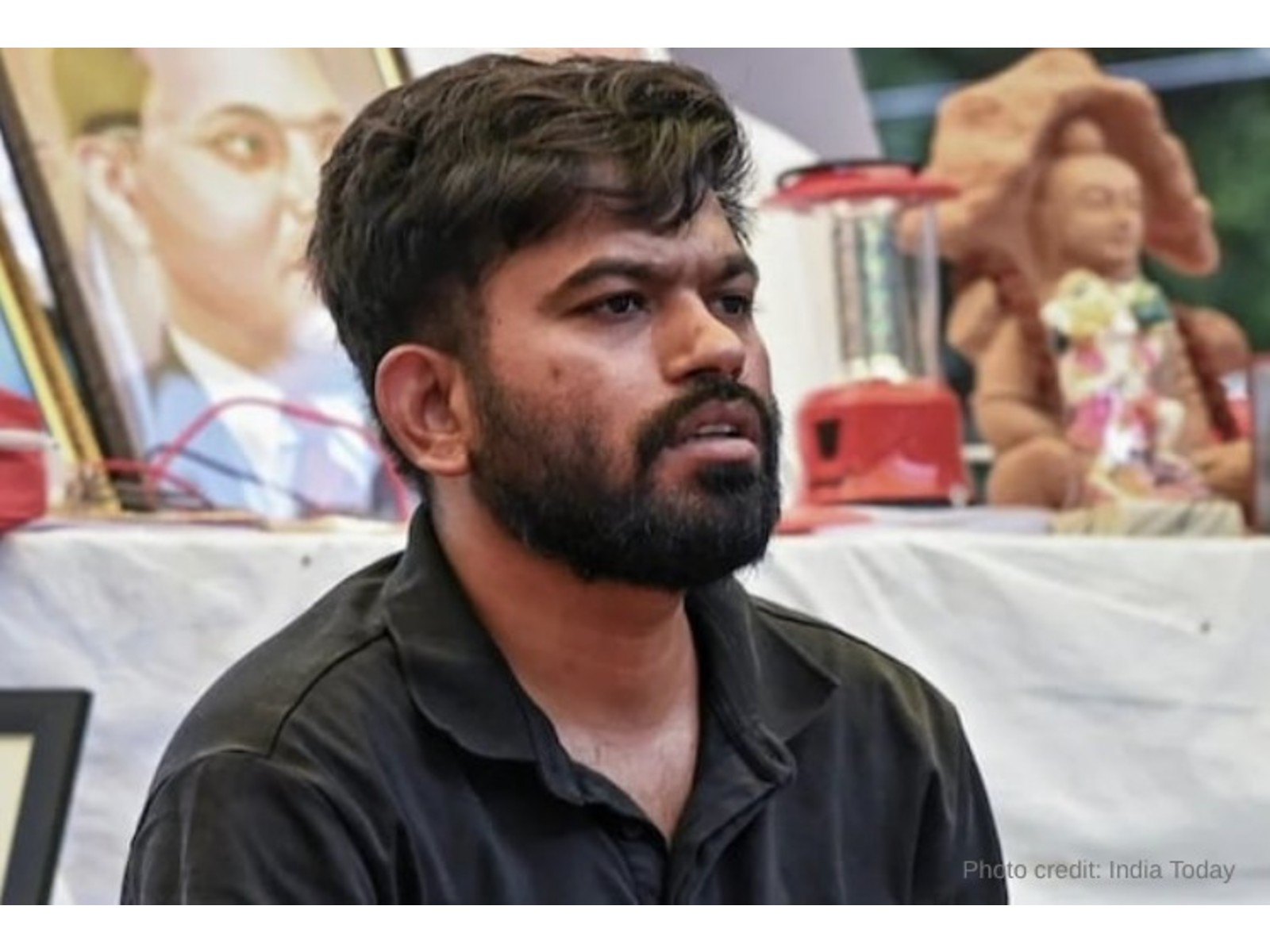
Exclusive interview: CJP is not for sale: Abhijeet Dipke
“CJP is not for sale,” says Abhijeet Dipke, founder and national convener of the Cockroach Janta Party (CJP), firmly dismissing speculations about political ambitions and electoral alliances.
Speaking to Dipta Joshi, correspondent, EducationWorld, Dipke says CJP is positioning itself as a public pressure group focused on issues affecting ordinary citizens. Following its campaign that culminated in education minister Dharmendra Pradhan’s resignation amid the NEET-UG 2026 controversy, CJP has now shifted its focus to government schools across the country. Its ‘School Thik Karo’ campaign has CJP volunteers documenting the condition of classrooms, toilets, drinking water, mid-day meals and other basic facilities before publishing a structured set of policy demands.
Following the NEET issue, the ‘School Thik Karo’ campaign is auditing government primary schools. How does the campaign fit into CJP’s larger objectives?
After Dharmendra Pradhan resigned on July 25, our team came together to discuss the next critical issues to raise. Education is the most important, most fundamental issue plaguing our country today. Demanding the resignation of the education minister was a step toward seeking accountability because, under his watch, India’s education system has spectacularly collapsed over the last 12 years—leading to the tragic loss of young lives to suicide due to incompetence and corruption at the top.
However, we have always known that the rot starts at the very bottom as well. Government primary schools form the base layer of our education system, where a majority of children in India continue to receive their education. Yet, successive governments have systematically neglected them. In my own village in Hingoli, classrooms lack basic benches. Toilets are in such disgusting conditions that children—especially young girls—are forced to go back home just to use the bathroom. The rooms where mid-day meals are cooked have leaking roofs and filthy surroundings. In one school in my village, a principal was coming to school drunk every day, yet no action was taken for months despite complaints from villagers.
These are not complex, macro-level policy dilemmas; these are basic infrastructural failures. Until we solve these fundamental issues, we cannot hope to fix the broader education system. Basic infrastructure, cleanliness and safety may not guarantee quality learning on their own, but they are necessary conditions for children to even attend school. It is the government’s primary mandate to provide free, high-quality public education, and they are failing miserably. That is why the ‘School Thik Karo’ campaign was launched.
The campaign uses a 10-point audit checklist covering water, toilets, safety, mid-day meals and more. What has the actual data shown so far, and which state or district has surprised you the most?
We are currently compiling the nationwide data, but the response has already been overwhelming. So far, more than 20,000 people across various states, districts, cities and villages have uploaded video audits on Instagram. For instance, a young filmmaker in Mumbai personally organised 170 volunteers to audit BMC schools across the city. People everywhere are stepping forward for their local communities and schools. This is what a true mass movement looks like—awakening citizens to raise their voices for their rights.
Following the victory of securing the education minister’s resignation, there is immense energy among the public, and we wanted to channel it into lasting grassroots change.
Across the audits, recurring issues include a total lack of basic infrastructure—benches, clean toilets, drinking water and electricity—poor-quality mid-day meals, severe teacher shortages and teachers being burdened with non-educational duties such as SIR work. In several villages, residents told us they had to pool their own money to fund basic school operations because the government failed to provide adequate funds. The ground reality revealed by these audits is even worse than what we had anticipated.
What specific policy changes are you asking for through the “School Thik Karo” campaign?
We will formally release our policy demands soon as we complete this initial phase. Currently, our focus is on executing social audits across the country. Based on our empirical findings and feedback from citizens and experts, we will publish a structured set of policy demands.
At this initial stage, our primary focus areas are fixing basic infrastructure, guaranteeing adequate funding, eliminating teacher shortages and relieving teachers of non-teaching administrative duties.
In Rampura Kanwarpura, Jaipur, the CJP team was attacked and driven away. While some news outlets quote villagers saying they themselves drove your team away, you have called it a BJP-orchestrated attack. Can you walk us through exactly what happened, and why you believe it was politically motivated?
To understand what happened, you have to look at the school itself: it is literally being run inside a buffalo shed. Children sit on the floor next to cattle fodder under broken, leaking roofs, making it impossible to hold classes when it rains. Over a year ago, our team member Ashutosh Ranka, then an education activist in Jaipur, visited this school and exposed these pathetic conditions. As part of ‘School Thik Karo’, he returned to highlight the issue again and demand that the government build a proper school building instead of forcing children to study in a cattle shed.
On their way to the audit, the CJP team was confronted by a group of people who instigated an argument, physical assault and a chase. Ashutosh’s shirt was torn, an AI engineer volunteering with us suffered hand injuries, and a woman volunteer, Rekha, was also injured. The attackers threw a heavy concrete brick through the car window, shattering the glass.
We believe this attack was politically motivated and orchestrated by the BJP because we have photos and videos identifying the attackers as active BJP workers. Furthermore, right after the incident, the education minister of Rajasthan publicly defended the attackers, claiming villagers were “protecting the children.”
Protecting them from what? CJP volunteers carrying audit clipboards? If anyone needs protection, it is the children who need protection from a government that forces them to study in unsafe buffalo sheds under collapsing roofs.
Is this kind of resistance at Rampura Kanwarpura, Jaipur, becoming a pattern for your school visits? How do you evaluate the ground reality when school managements bring in temporary school facilities or students before your team visits?
No, this is definitely an exception, not the pattern. In the vast majority of villages across India—whether in Maharashtra, UP, Assam or Rajasthan—we are welcomed with open arms. When we arrive in a village, we hold a community meeting, organise the residents and conduct the audit jointly with them. This campaign is not about CJP; it is about the villagers fighting for their children’s rights.
People welcome us because they recognise our genuine intent. We are not visiting to seek votes or advance personal political agendas; we are here to ensure that local public schools are fixed. That is a universal, basic demand that resonates with everyone.
Are private schools’ fees going to be questioned too by CJP? The Supreme Court judgment in T.M.A. Pai Foundation and subsequent rulings have recognised the autonomy of private unaided schools to determine their fee structures and generate a reasonable surplus for development and expansion. How do you draw the line between what you are calling excessive fees and what the law permits as reasonable surplus?
India already has sufficient laws and Supreme Court guidelines regarding fee regulation. The core problem is a severe conflict of interest: many politicians own or hold financial stakes in private schools. When the executive branch is led by private school owners, we cannot expect them to regulate themselves.
Today, we see private schools charging lakhs of rupees annually even for kindergarten. What unique value warrants such exorbitant fees compared to a school charging standard rates? This unchecked profiteering exists primarily because government schools have been allowed to collapse, leaving parents with no alternative but to turn to private institutions.
The long-term solution to excessive private-school fees is building high-quality, fully equipped government neighbourhood schools. When parents have access to excellent public education for free, private schools will naturally be forced to keep their fees reasonable to compete.
You have had invitations to align with the BJP-led NDA that you refused. With the level of ground presence and social-media reach CJP has, will it eventually contest elections?
The hypocrisy of the BJP is on full display. After labelling us “anti-national”, “Pakistani” and “foreign-funded”, the exact same leadership turned around and invited us to join them. It is utterly shameless to invite people you branded as anti-nationals just a month prior. CJP is not for sale; we will not succumb to pressure or sell out our principles.
Regarding electoral politics, the current political ecosystem is deeply skewed. The ruling party has cornered immense political resources, while systematically harassing opposition figures through state agencies or buying off elected representatives. In an environment where political mandates are routinely subverted, forming a traditional political party is not the most effective route for us.
What India urgently needs right now is an uncompromising public movement and pressure group that forces the political establishment to address real public issues. Our goal is not simply to enter office or win seats; our goal is to fundamentally transform the political discourse of the nation.
After the Jantar Mantar protest and now the ‘School Thik Karo’ campaign, what is the actual endgame strategy for CJP?
Our next step is embarking on a nationwide listening tour. We do not believe in imposing top-down agendas; we want to listen directly to the public to understand their priority concerns. Broadly, our focus remains on education and unemployment, as these directly determine the livelihoods and future of India’s youth.
Simultaneously, we will highlight the systemic weakening and erosion of democratic institutions, including the media, judiciary and electoral processes.
Our ultimate endgame is to build sufficient public pressure to drive long-term structural and governance reforms—ensuring better public infrastructure, quality health and education, and a decisive rejection of divisive politics.
Would CJP ever back specific candidates or contest even a handful of seats—say, in Maharashtra where you are strongest—without registering as a full-fledged party?
No. We are not going to get into electoral politics, nor will we support or endorse any political candidates or parties for elections. That is not our mandate or focus.
Also read: Parliamentary panel unanimously adopts report on NTA reforms








Add comment