






Developing MBAs with the right skills
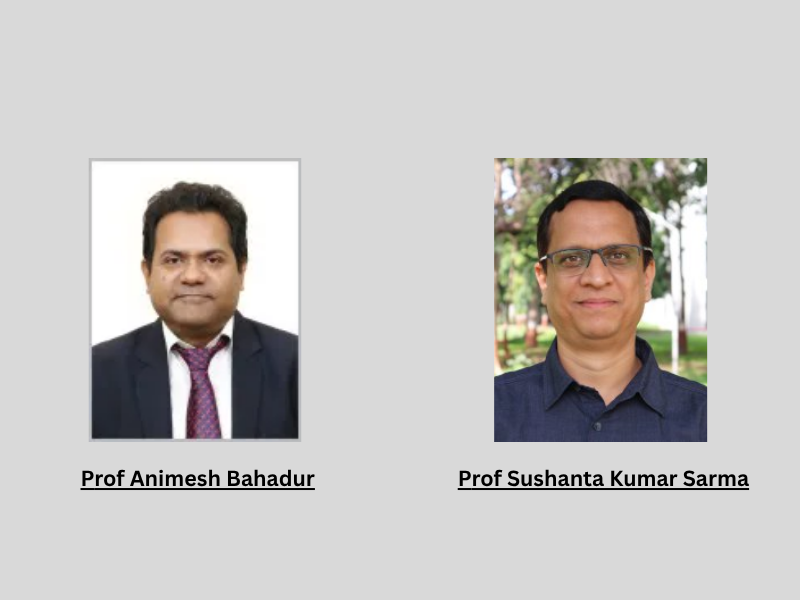
– Prof Animesh Bahadur, Professor, T A Pai Management Institute, Manipal Academy of Higher Education (MAHE), and Prof Sushanta Kumar Sarma, Professor, Tribhuvan Sahkari University, Anand
Industry today displays a guarded acceptance of MBA graduates. The convergence of technology and management roles has led opinion-makers such as Nikhil Kamath to describe MBA aspirants as ‘idiots’. This cynicism is not entirely unfounded. At a time when occupational trades are receiving greater attention from policymakers, expensive professional degrees such as an MBA need to justify their value.
Companies continue to need MBA graduates, albeit for roles that combine technological proficiency and an interdisciplinary outlook with commitment and empathy. Business schools (B-schools) are preparing MBA participants for this shift in roles and the new skills it demands. However, ensuring workplace readiness requires closer collaboration between industry and academia. Several models of such collaboration already exist, but the relationship needs to become more complementary.
Workplace readiness is not confined to the requirements of a particular company or sector. It encompasses a broader set of skills highlighted in major surveys and studies. For example, the India Skills Report 2026 points to a decline of more than 5 per cent in MBA employability within a year, alongside a shift towards cross-domain expertise.
Other emerging and resurgent skills have been discussed in the Graduate Management Admission Council’s (GMAC) Corporate Recruiters Survey 2026 Report and in a May 19 article published by Quacquarelli Symonds (QS). Written by Martin Serrano, Diego Santos and Esteban Veintimilla, the article is titled ‘Are Business Graduates Being Prepared for Today’s Labour Market?’ The scope of these discussions is global and extends well beyond analytics and artificial intelligence.
The GMAC survey emphasises communication skills, adaptability and decision-making. Skills whose importance has increased by more than 10 per cent since last year include grit, coachability and lifelong learning. The QS article, citing a review of 23 million job postings and a major employer survey, highlights the need for greater self-motivation, self-development and critical thinking among graduates. It also notes that these skills are underrepresented across more than 280,000 B-school syllabi.
Both sources highlight recruiters’ concerns about professionalism, particularly accountability. These findings matter not only because of their global context but also because they identify the skills required for emerging job profiles while drawing attention to existing gaps.
The skills listed above are not surprising in themselves. Industry has long emphasised many of them. The concern lies in the limited emphasis placed on qualities such as grit and self-development within the existing education system. Traditionally, these qualities were cultivated through rigorous coursework and high performance standards. Although the rigour remains, conventional approaches such as the case method have become less effective in the AI era.
There is also a wider systemic challenge. With shorter programmes, including one-year MBAs, how much can institutions offer without compromising domain-specific content? Moreover, how can an institution excel in student development when its resources and performance are largely evaluated on the quality of its research?
It is also unfair to place the entire responsibility for skill development on B-schools. The effort must be collective, with industry playing a major role.
Some experts may propose addressing the skills gap through the admissions process. Unfortunately, many of these skills cannot be assessed effectively, even through the most comprehensive screening systems. On the positive side, B-schools use co-curricular and extracurricular activities, outsourced career-preparation services and dedicated courses, wherever feasible, to develop these capabilities. However, such initiatives often achieve limited success because competing stakeholder pressures constrain institutional responses.
Today’s B-schools actively engage with industry to bridge the skills gap. They have expanded internships and live projects, while experimenting with models such as weekly engagement with a particular company, rotations across industries and geographical regions, and executive mentoring. However, no single approach can bridge the gap entirely.
Most employers understand this reality. They need to work closely with B-schools and complement their efforts by offering more on-site experience and co-teaching courses that combine academic knowledge with industry practice.
The emerging workplace needs MBA graduates who can take on leadership roles. The skills required for these roles can best be developed through collaboration. B-schools need to create opportunities for industry to contribute in areas where they face limitations. Industry, meanwhile, must understand the constraints under which B-schools operate and set realistic expectations.
Such collaboration can provide a way forward, improving both graduate employability and organisational productivity.
The authors are faculty members at the TA Pai Management Institute, Manipal Academy of Higher Education, Manipal, and Tribhuvan Sahkari University, Anand, respectively. The views expressed are personal.
Also Read: Beyond marks: Why financial literacy belongs in India’s education curriculum









Add comment