






Before We Fix the Classroom, We Must Prepare the Teacher In It
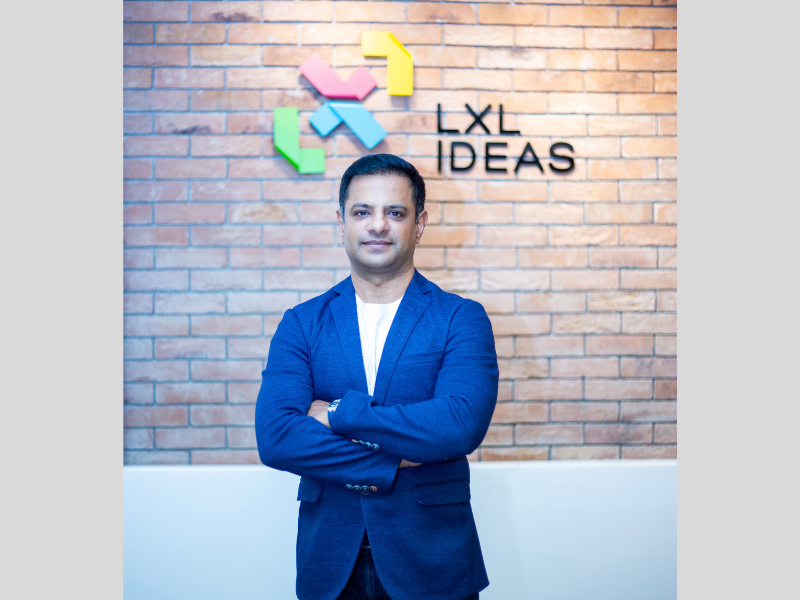
– Syed Sultan Ahmed, Chairperson, The Association of International Schools of India (TAISI), and Founder & Chief Learner, LXL Ideas
A few months ago, in Sochi, I sat in a room full of Russian schoolchildren watching a School Cinema film. Neither they nor I shared a common language. And yet, within minutes, I could see the film doing its work: faces changing, a hand going up, a child leaning towards a friend to whisper something urgent. The story had crossed a barrier that words could not.
What stayed with me that day was not the film. It was what happened after it ended. A teacher walked in, sat the children down and began asking questions not about the plot, but about what they had felt and why. Within twenty minutes, a screening had become a conversation about fairness, about fear and about what the children themselves would have done differently. The film had created a moment. The teacher turned that moment into learning.
I think about that scene often now because Indian classrooms are living a version of it every single day, except at a scale and speed that Sochi never had to contend with. Today’s children, the ones we loosely call Gen Alpha, spend more of their waking hours inside visual and digital worlds than any generation of Indian schoolchildren before them. Reels, games, YouTube explainers, AI tools that answer before a question is even finished — this is the raw material their minds are being shaped by, whether or not a school ever switches on a screen. The adult standing in front of them is very often still being trained the way we ourselves were trained twenty years ago.
NITI Aayog’s school education policy roadmap, released this May, names something school leaders have known quietly for years: teacher professional development in India remains largely fragmented, delivered through occasional, lecture-based programmes rather than continuous, practice-oriented learning. This gap becomes especially visible in emerging areas such as AI, where many educators are still finding their footing. We have been renovating the classroom faster than we have been preparing the person standing at the front of it. A smartboard does not create a smart classroom. An AI tool does not create personalised learning. A beautifully designed curriculum does not automatically create understanding. All of it depends on what the teacher does with it. Otherwise, a smart classroom simply becomes a very expensive traditional one.
There is a deeper shift hiding inside this problem, and it goes beyond training hours. For generations, a teacher’s authority rested partly on access: the teacher usually knew what the child did not. That world has quietly ended. A child today can ask an AI tool almost anything and get an answer in seconds. This does not make the teacher less important. It changes what makes the teacher important. The teacher’s value may no longer lie in being the person who knows the answer, but in being the person who knows which question to ask next: Why do you believe this? Whose perspective is missing? How does this connect to something in your own life? Those are the questions a search bar cannot ask a child. Only a teacher who has been prepared to ask them can.
This is exactly what I mean when I say that a film, a story or a striking piece of content can spark something in a child — curiosity, emotion, a half-formed question — but a spark left alone simply flickers and fades, or settles into the child as entertainment and nothing more. It takes a teacher to turn that spark into reflection. Cinema and teaching were never rivals. One brings the world into the classroom; the other helps a child make sense of what has just walked in. The tool is rarely the pedagogy. What the teacher does with the tool is.
So, what should India’s next education reform actually prioritise? A shift in how we prepare teachers for this role: from someone who delivers information to someone who helps children question, interpret and connect what they are constantly seeing to their own lives. That shift will not arrive through a circular or a one-day workshop. Teaching is a craft, and crafts improve through practice, not presentations. Professional development needs to look far more like the learning we want children themselves to experience: continuous rather than occasional, practical rather than theoretical, built on watching, trying and being observed rather than sitting and listening. A certificate tells us a teacher attended a programme. It does not tell us whether anything changed inside the classroom — whether a child was asked a better question this week than last.
This is the principle we have tried, in our own modest way, to build into School Cinema over the years, using film not as content to consume but as material for a teacher to work with in schools across the country. The next frontier for that work, I believe, is regional-language government schools, because a story, unlike a syllabus, does not need to wait for a translation to reach a child.
None of this is an argument against technology in the classroom. It is an argument against mistaking technology for the reform itself. As India marks another Teacher’s Day, perhaps the truest tribute we can offer is not another message thanking teachers for shaping the future, but the preparation, time and trust required for them to actually do it.
India’s next education transformation will not be decided by how intelligent our technology becomes. It will be decided by how deliberately we prepare the adult standing beside the child who is using it.
Also Read: AI won’t replace finance professionals. It will replace routine finance skills










Add comment