






Karnataka panel seeks sweeping overhaul of private school recognition rules
Karnataka panel seeks sweeping overhaul of private school recognition rules
The Karnataka Legislative Council’s Special House Committee on private aided and unaided schools has recommended a overhaul of the state’s school recognition and renewal system, calling for separate norms for older institutions, faster online approvals and substantial relaxation of several compliance requirements.
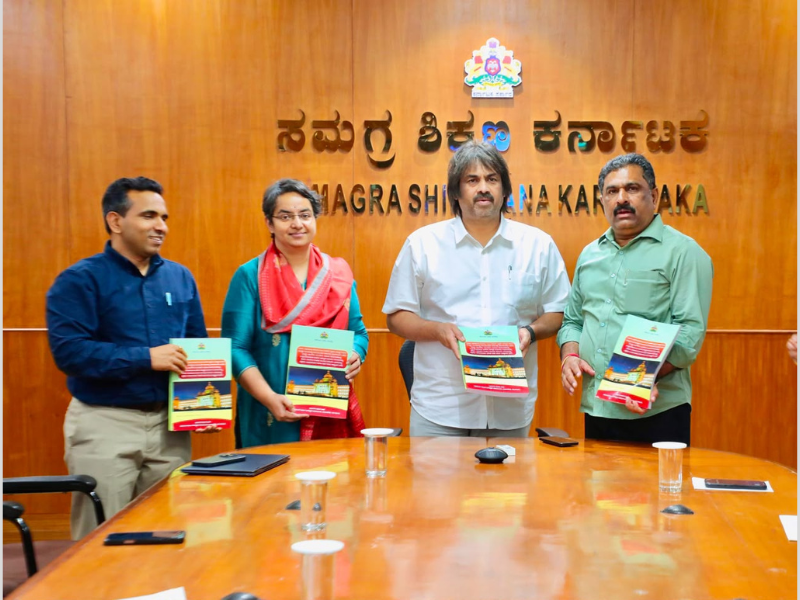
Chaired by Legislative Council member Puttanna, the committee was constituted after concerns were raised in the Council that schools established years ago were being subjected to requirements designed for new institutions. In its interim report submitted to school education and literacy minister Madhu Bangarappa on Wednesday, they sought that some rules must be separate for schools established before the 2017-18 academic year to eliminate administrative delays and hardship.
They proposed a separate recognition-renewal procedures for pre-2017-18 schools and new schools, with separate online portals, checklists and documentation requirements. Its report notes that although the latest rules state that the security deposit requirement does not apply to renewal of recognition of existing institutions, some officials have reportedly continued to demand deposits of ₹3 lakh, resulting in files being held up.
The committee has proposed a “natural growth” provision allowing recognised schools to add classes as they expand—for instance, from Classes 1-5 to 1-8 or from 1-8 to 1-10—without treating the institution as a new school. They sought than rather than shutting down institutions immediately where separate permissions are absent, the committee has proposed a “Safe Exit Rule”, under which admissions could be frozen and one grade phased out each year.
Reiterating long standing demands of the Associated Managements of Primary and Secondary Schools in Karnataka, the committee said that educational buildings between 15 metres and 24 metres be inspected by fire authorities and that appropriate fire-safety certificates be issued. It also notes that the National Building Code 2025-26 has raised the high-rise threshold from 21 metres to 24 metres. For older educational buildings below 15 metres, the committee has proposed certain relaxations relating to sprinklers, water tanks, pumps and alternative power supply.
The committee has recommended simplifying recognition and structural-safety rules for older schools. It proposes accepting original building-plan sanctions or self-affidavits as proof of age, allowing registered engineers/architects to issue safety certificates within 10 days, and reducing the renewal minimum from 25 to 20 students.
It also seeks timely RTE reimbursements, annual rate revisions, uninterrupted teacher salaries during administrative delays, acceptance of existing leases, regulation of unregistered pre-primary centres, and an end to unjustified recovery of reimbursements. Property-tax and inter-departmental disputes should not automatically block renewal.
Overall, the panel favours flexible, differentiated norms for older institutions, with online processing and better coordination. The recommendations require government approval before implementation.
Also Read: Bengal govt to introduce inter-university transfer of teachers bill









Add comment