





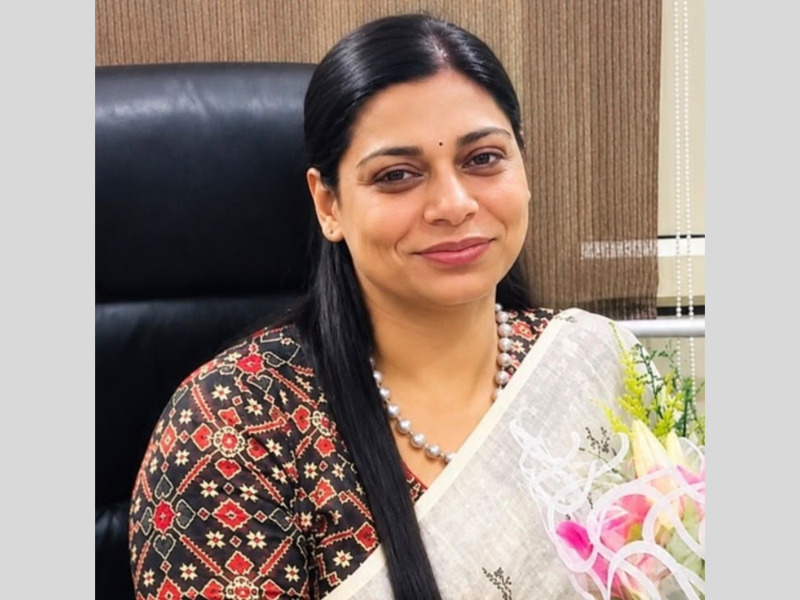
– Tanvi Sharma, Special educator and centre head, Ignited Minds Special School & Therapy Centre, Delhi
Education is often measured through grades, worksheets, reading, writing and academic milestones. However, when discussing children with special needs, we need to ask a more important question: Are we preparing children only to perform in a classroom, or are we preparing them to participate meaningfully in life? As a special educator and centre head working with children and young adults with diverse developmental, learning, behavioural and communication needs, I have observed that academic achievement is only one aspect of a child’s development. For many children with special needs, communication, self-regulation, social interaction, sensory processing, functional academics, independence and activities of daily living are equally important for their long-term quality of life.
Moving beyond the academic checklist. Every child deserves opportunities to learn, but not every child learns in the same way or at the same pace. A child may struggle to read a paragraph but may be able to identify objects, follow a visual schedule, communicate a need or complete a daily routine independently. These are equally meaningful achievements. Instead of asking only, “What class-level academic work can this child complete?”, educators should also ask, “What skills does this child need to develop greater independence?” For some children, learning to write their names may be an important academic goal. For another, learning to communicate “I need help” may be a more meaningful first step. For yet another, learning to manage a school bag, eat independently, follow instructions or participate safely in the community may have a greater impact on everyday life. This does not mean academics should be ignored. Rather, academic learning should be individualised and connected to functional outcomes.
The power of an integrated approach. Children with special needs often require support across multiple developmental areas. Special education cannot always work in isolation. Occupational therapy can support sensory processing, fine motor skills, attention and independence. Speech and language therapy can help develop communication and comprehension. Behavioural interventions can help children develop self-regulation, appropriate responses and social skills. Physiotherapy can support mobility, strength and physical independence. When these professionals work together with special educators and parents, children receive more consistent and meaningful support. For example, if a child has difficulty sitting and paying attention in class, simply asking the child to “focus” may not resolve the problem. Educators need to understand whether sensory needs, communication difficulties, motor challenges, anxiety or environmental factors are contributing to the difficulty.
Communication is more than speaking. One of the biggest misconceptions is that communication necessarily means speaking in sentences. For a non-speaking child, communication may involve gestures, pictures, augmentative and alternative communication (AAC) systems, facial expressions, sign language or other alternative communication methods. The goal should not simply be to make every child speak, but to ensure that every child has a reliable way to communicate. When a child can communicate that they are hungry, uncomfortable, scared or tired, or that they need help, we are doing more than teaching communication skills—we are giving the child greater control over their own life.
Behaviour is also communication. Challenging behaviour is often treated as something that simply needs to be stopped. However, behaviour can also communicate an unmet need or difficulty. A child may hit, scream, withdraw, run away or refuse to participate in an activity because they are unable to communicate a need, feel overwhelmed by sensory input, do not understand an instruction or are struggling with a task that is beyond their current abilities. Instead of asking only, “How do we stop this behaviour?”, we should ask, “What is the child trying to communicate through this behaviour?” This change in perspective can transform the way educators support children.
Parents and teachers must work as a team. Progress becomes more meaningful when skills learned at school are reinforced at home and in the community. Teachers can help a child follow a routine at school, while parents can reinforce the same skills at home. Therapists can work on functional communication, while teachers can create opportunities for children to use those communication skills throughout the school day. Parents also need to understand that progress may not always involve a new academic milestone. A child eating independently, dressing without assistance, asking for help, waiting for a turn or managing a daily routine can represent significant progress.
Preparing children for real life. Ultimately, education should prepare children not only for the next class, but also for the next stage of life. For children with special needs, success may look different for each individual. It may mean completing a worksheet independently, making a choice, communicating a need, making a friend, travelling safely, managing personal hygiene, handling money, following a routine, developing vocational skills or participating in the community. Our responsibility as educators is therefore to broaden the definition of achievement. The question should not only be, “How much can this child learn?” It should also be, “How can what this child learns help them lead a more independent, confident and meaningful life?” When education moves beyond academics and focuses on the whole child, learning becomes more than a classroom exercise. It becomes preparation for life.










Add comment