






Australia: Visa fees hike deterrent
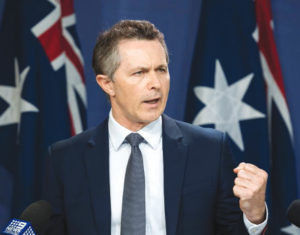
Education minister Jason Clare: against political tide
Australia’s government has quietly added another 25 percent to the cost of work visas for overseas graduates, just four months after doubling it, while fees for most student visas have risen 20 percent.
Application costs for subclass 485 temporary graduate visas now start at A$5,750 (Rs.3.8 lakh), according to the Department of Home Affairs website. The price rise, imposed on the first day of the new financial year, comes after the fees were doubled to A$4,600 on March 1. Both increases were applied without warning or explanation.
Documents from the May federal budget show that the government expects to reap A$1.2 billion (Rs.8 crore) over five years from the March fee hike, suggesting the latest rise could earn it another A$300 million or so.
Most subclass 500 student visa fees have risen A$500 to A$2,500, with the cost of visas for stand-alone English language and “non-award” study rising to A$2,050. Foreign school students on exchange in Australia can now obtain visas for free.
The latest increases come amid predictions that the government will introduce further measures to reduce international education student flows, as it battled political pressure over perceptions that it has allowed unbridled migration.
The Council of Australian Postgraduate Associations (Capa) says the increases to post-study work visa costs are wrongheaded. “This is a fee on the exit door, not the front door,” says Capa president Jesse Gardner-Russell. “If the aim is to manage who comes in, charging the people already on their way out is the wrong instrument. The only thing a higher 485 fee reliably manages is revenue. International students are not just another resource to be mined, their value extracted and then shipped offshore, like iron ore. They are a critical component of Australia’s global soft-power and part of our multicultural community.”
The price hikes have emerged on the day numerous measures kicked in to relieve cost pressures on Australians. They include a boost to minimum wages, an extension to a fuel tax exemption and new rules to prevent excessive profiteering by major supermarkets.
Education minister Jason Clare initially advocated for more international students to remain in Australia and “help us fill some of those chronic skills gaps in our economy”, before the political tide turned against international students amid concerns over housing availability.
Capa vice-president Richard Lee believes the fee hikes will discourage overseas graduates from contributing to the Australian workforce. “Every increase in the cost of staying, delivered without warning, tells the best graduates that Australia is an unpredictable place to build a future.”
(Excerpted and adapted from The Economist and Times Higher Education)










Add comment