






Big feelings: 5 ways to teach kids emotional regulation
– Sheri Madigan is Professor, Canada Research Chair in Determinants of Child Development, Owerko Centre at the Alberta Children’s Hospital Research Institute, University of Calgary; Marissa Nivison and Gizem Keskin are postdoctoral research fellows at department of psychology, University of Calgary
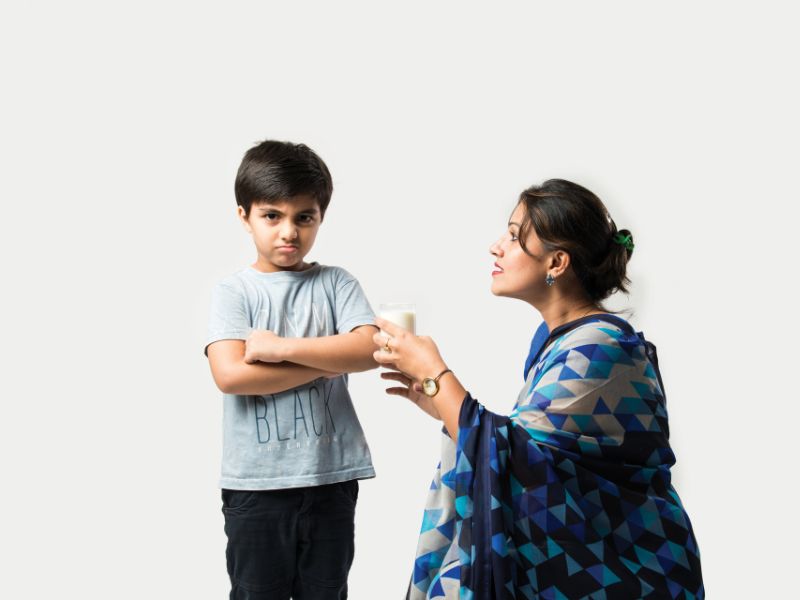
Big feelings are strong emotions, such as anger, frustration or excitement, that children are not always able to regulate on their own
 Parenting can be hard and can feel especially overwhelming when children have strong emotions, such as anger, frustration, excitement, that they are not always able to regulate on their own.
Although children may struggle to manage strong emotions, parents play a critical role in helping them navigate them.
Drawing on our work with children and families, we share practical tips and resources to help parents support their children through emotional ups and downs — big feelings.
Development of processing emotions
Children are not born knowing how to regulate their feelings — it’s a skill they learn as they grow. The ability to process emotions is often learned from modelling, including watching how parents deal with their own emotions.
 In infancy, we see that babies’ cries are a form of emotional communication. For example, this is how babies let their parents know that they are in distress, such as being hungry or needing a diaper change.
As toddlers, children often experience new and more complex emotions that they cannot always identify. For example, a two-year-old may experience anger and jealousy when introduced to a new baby sibling because her parent’s attention is suddenly focused on the baby instead of her. With limited understanding of her big emotion, she may act out by directing anger toward the baby sibling or parent.
As children grow older, they gradually develop their own skills to manage big feelings. Parents can help to build up children’s “emotional tool kit” through modelling good emotion regulation strategies as well as explicitly teaching children these skills.
Big feelings aren’t necessarily negative. Children often have difficulty regulating big, positive emotions as well, such as excitement or joy.
How parents can help
There are several ways that parents can help children learn how to manage big feelings.
Stay calm. Children are sensitive to the emotions of the adults around them. When possible, approaching your child’s big feelings with calm presence can help them feel safe and supported. Of course, staying calm is not always easy, especially in the middle of a stressful moment. Many caregivers find that strong emotions can feel contagious or overwhelming.
If you notice this in yourself, it can help to take a short pause. Taking slow, deep breaths, leaving the room momentarily (if possible) or turning away from your child to give yourself time to collect your own emotions can be a valuable reset.
The good news is that there are several resources — many of which are free — that can help strengthen parents’ ability to regulate their own emotions and promote emotion processing in their children.
Praise positive behaviour. Noticing, recognizing and reinforcing positive behaviours is incredibly important. While it’s natural to react to negative challenging behaviours, it’s just as (if not more) important to acknowledge when your child is handling her emotions well. Reinforcing positive behaviour has been shown to reduce the number and intensity of children’s negative outbursts over time.
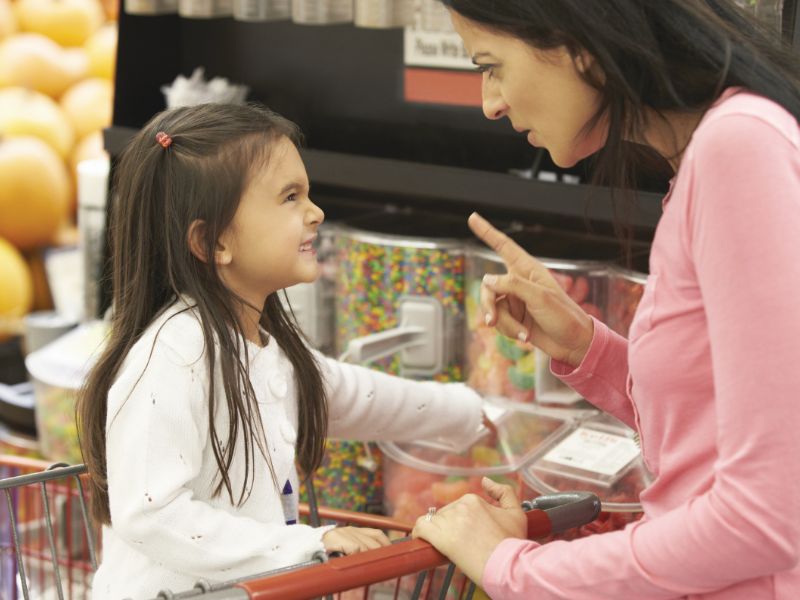 Identify and validate emotions. After a child has settled down from an intense emotional reaction, it can help if her parent explicitly identifies what the child was feeling — for example, “I know you are angry and sad because you cannot have a cookie before dinner.” By identifying their feelings, children are slowly learning how to recognize their own emotions. This is an important first step in knowing which skills to use to help them calm down.
For example, when a child recognizes she is angry, she may learn that taking deep breaths makes her feel better. This can also help children to feel that they are in a comfortable environment where they can actually express how they are feeling. Using an emotions wheel or chart that names and illustrates facial expressions of a range of feelings can help parents and children identify and validate emotions.
Practice. Take the opportunity to teach your children about emotions outside of their own feelings. For example, identifying emotions can be turned into a game by making different faces and asking your child what emotions they think you are experiencing. Parents can also pause during book reading and ask their child what the characters may be feeling. The Center for Early Childhood Mental Health Consolation at Georgetown University has put together an extensive list of activities that can help you teach your child emotions in everyday life.
Finally, know when to seek additional help. Temper tantrums, outbursts and emotional displays are very common in the toddler and preschool years. Young children are still developing cognition that supports self-regulation. However, if a child’s outbursts are unusually intense, frequent and prolonged, additional support may be helpful, such as from a family doctor or pediatrician.
(This article is republished from The Conversation under a Creative Commons license)










Add comment