






BITS Pilani-EW Viksit Bharat Study – DME-lpg from carbon emissions: bits pilani breakthrough
A dedicated team of faculty and students of the top-ranked Birla Institute of Technology & Science (BITS)-Pilani (Hyderabad campus) has developed a bifunctional catalyst which can convert carbon dioxide captured from power, steel, and cement plants into dimethyl ether (DME), a clean fuel to replace or supplement LPG. This has the potential to substantially reduce India’s annual LPG import bill of Rs.106,000 crore – Sounak Roy, B.M. Reddy & Satyapaul A. Singh
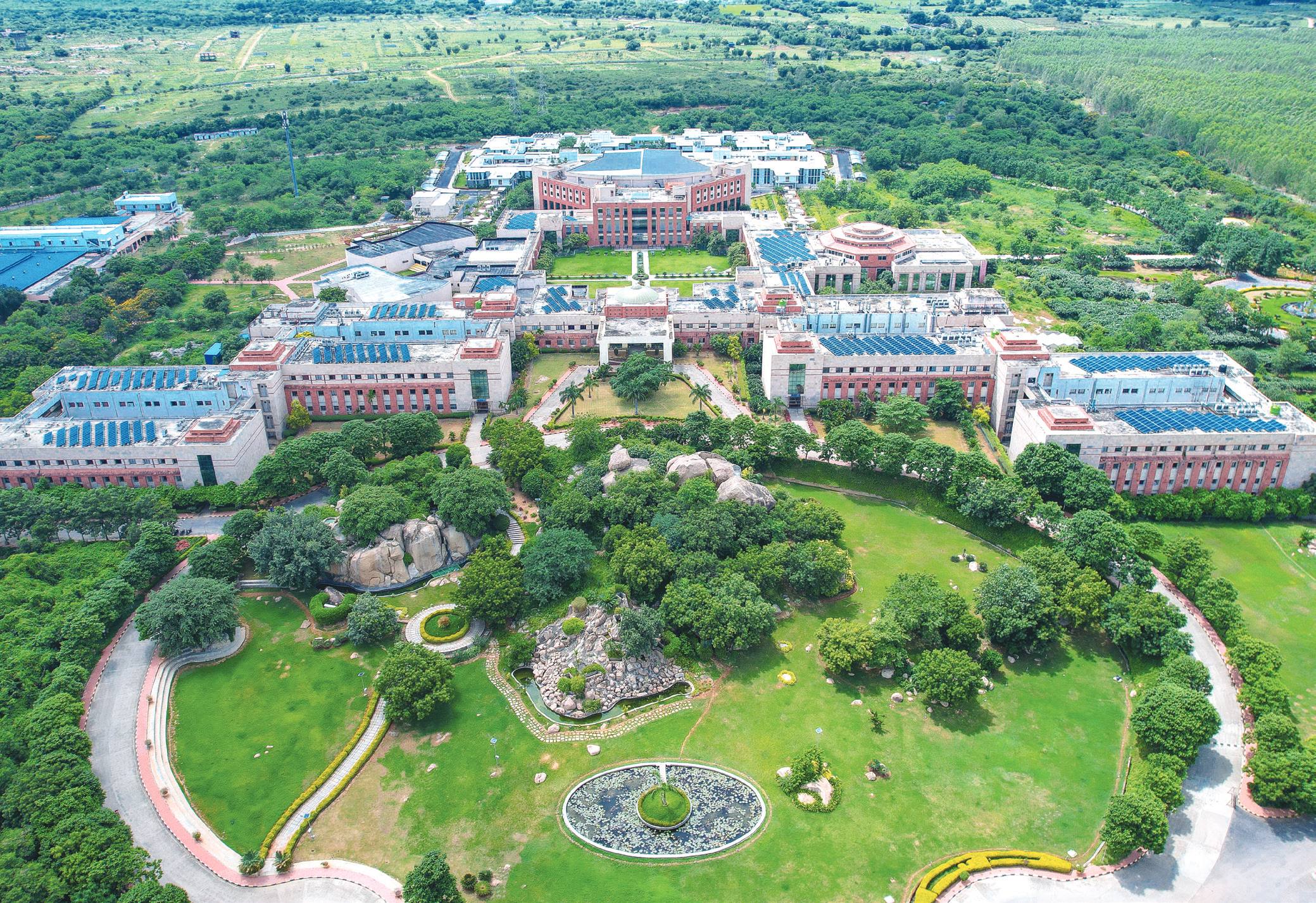
Last April, at the EducationWorld India Higher Education Rankings Awards 2025-26 conclave in Delhi, a panel discussion featuring vice chancellors and deans of India’s top-ranked universities debated ‘Why haven’t any of India’s 1,168 universities and 53,000 colleges invented/ideated a globally celebrated game-changer product or service in 77 years?’
The panelists conceded that research and development (R&D) in India’s higher education institutions (HEIs) is inadequate due to insufficient government and corporate funding for universities. However, some panellists vowed to initiate and intensify efforts to build a stronger institutional research culture and translate laboratory discoveries into viable game changer products and/or services.
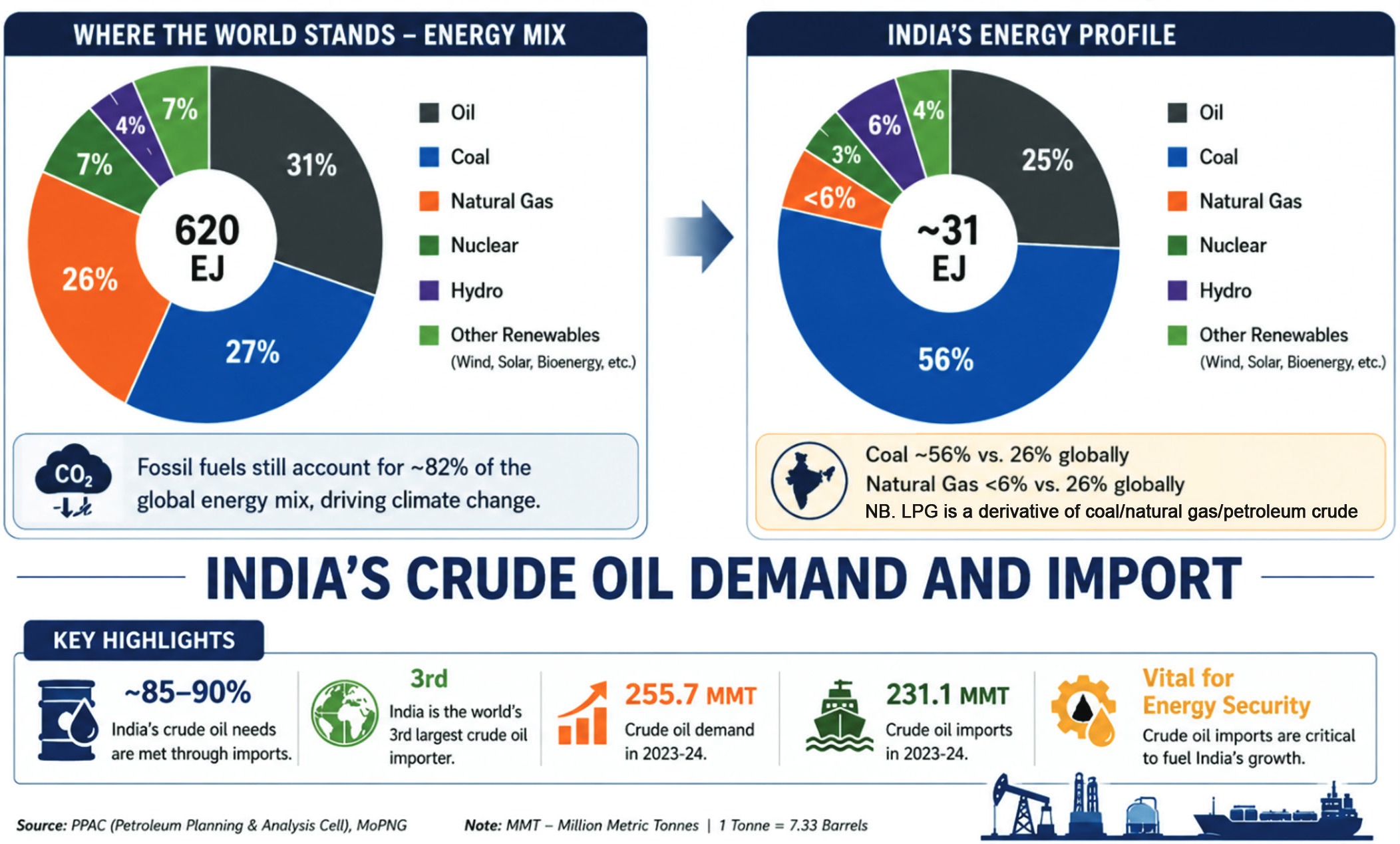
Currently according to the Economic Survey 2025-26, India’s national annual expenditure on R&D aggregates a mere 0.64 percent of GDP, cf. 3.4 percent in the US, 2.8 percent in China and 5.13 percent in South Korea. Of this expenditure less than half is contributed by private industry. During the discussion all panellists agreed that the immediate challenge is to stretch small budgets a long way to apply science and technology to resolve socio-economic problems such as air and water pollution, soil erosion, climate change and environment degradation.
Among the panellists was Prof. A.P. Singh, Dean of Academics (undergrad studies) at the Birla Institute of Technology and Science (BITS)-Pilani, ranked India’s #1 private engineering and technology university in the EducationWorld India Higher Education Rankings for the past several years. Prof. Singh agreed to place the subject matter of the panel discussion with Prof. Ramgopal Rao, Vice Chancellor of BITS-Pilani.
In BITS-Pilani’s Hyderabad campus, a 15-strong team of faculty and students led by Prof. Sounak Roy, Dean of Research and Innovation, Prof. B.M. Reddy and Prof. Satyapaul Singh were working on a project that converts environmentally harmful carbon dioxide (CO2) emissions released by power, steel and cement plants into Dimethyl Ether (DME), a bi-product similar to LPG (liquified petroleum gas) which fires up kitchens worldwide. Currently this project has completed laboratory trials and is ready for pilot trials and subsequent scaling. The potential is huge. Presently, India imports LPG valued at Rs.106,000 crore per annum.
In the pages following we present a narrative authored by Prof. Sounak Roy, Prof. B.M. Reddy and Prof. Satyapaul A. Singh of BITS-Pilani, Hyderabad, on how a team of faculty and students overcame numerous funding, personnel and academic challenges to bring this project to pilot trial stage. — Summiya Yasmeen

Sounak Roy: single fixed-bed reactor
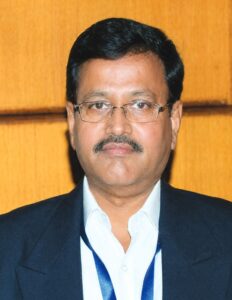
Reddy: triple benefit
In March this year, a team of researchers at BITS-Pilani, Hyderabad Campus (BPHC), made a breakthrough innovation with potential to significantly reduce India’s annual Rs.106,000 crore LPG (liquefied petroleum gas) aka cooking gas, import bill. The research team has invented a novel bifunctional catalyst that uses a single-step process to convert carbon dioxide (CO2) captured from power, steel, and cement plants into dimethyl ether (DME), a clean fuel to replace or supplement LPG. A clean-burning derivative of methanol, DME has combustion characteristics similar to LPG. LPG cylinders could potentially be filled or significantly supplemented by DME.
At BITS-Pilani, the Board of Governors, chaired by Kumaramangalam Birla, Chairman of the Aditya Birla Group, and Vice Chancellor V. Ramgopal Rao, deeply aware of the ground reality that India imports 89 percent of its annual crude oil requirements and 60 percent of its LPG consumption, prodded us to accelerate on-going research to reduce India’s heavy dependence on imported LPG. A breakthrough in this field would provide the double benefit of capturing carbon emissions from India’s power, steel, cement, and other industries which are the country’s largest contributors to air pollution and climate change. This mission brief inspired us to explore whether carbon dioxide could be converted into DME, which is conventionally manufactured from fossil-fuel-derived feedstocks such as natural gas and coal.
After five years of research, during which three faculty members, over ten undergraduate and postgraduate students, and Ph D scholars, co-opted from time to time, contributed to the project, we successfully developed a bifunctional catalyst capable of directly converting captured CO2 into DME in a single step. “Usually, DME production requires a two-step process: first, converting carbon dioxide into methanol, and then dehydrating methanol into DME using different catalysts and reactors. At BPHC, we have managed to combine both reactions in a single fixed-bed reactor, reducing process complexity, capital costs, energy consumption, and conversion loss between stages while making the technology attractive for commercial deployment,” says Prof. Sounak Roy, Dean, Research & Innovation, BITS-Pilani, Hyderabad campus.
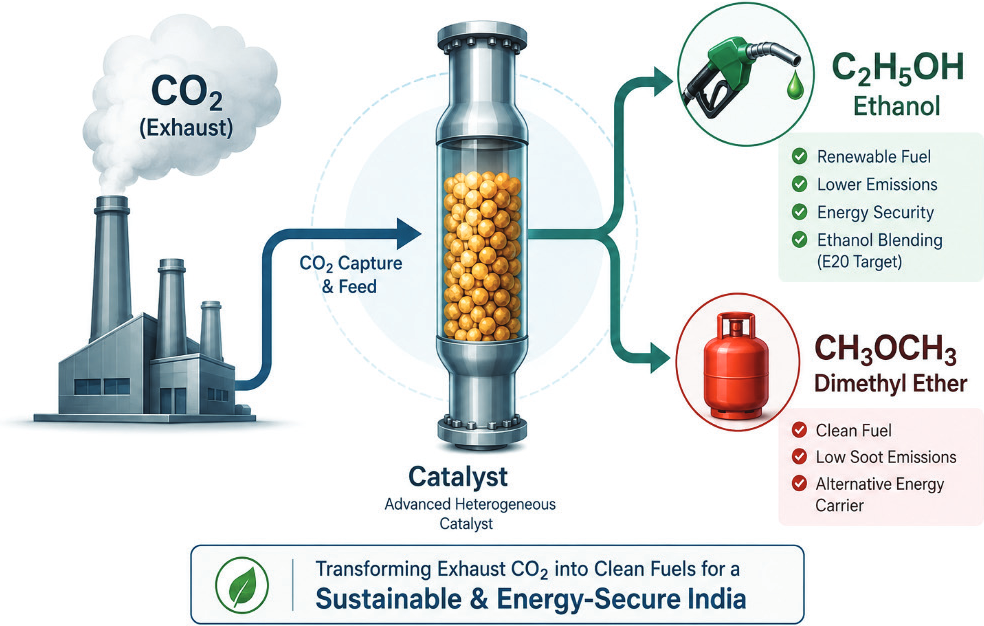
Instead of using traditional multi-step processes to source DME, we created a straightforward, single-step process that transforms simulated flue gas — exhaust released from burning coal and other fossil fuels in thermal power industries — directly into DME. “The core idea is simple in principle, if not in execution. Instead of allowing industrial waste gases to escape into the atmosphere, we captured them i.e, carbon dioxide, and reacted it with hydrogen to synthesize DME. This effectively converts a greenhouse gas into a resource, reducing air pollution while simultaneously easing India’s dependence on imported LPG,” explains Prof. B.M. Reddy, co-investigator and Senior Professor of Chemistry at BPHC.
 To make this conversion process work smoothly, two important inputs are required. First, hydrogen, which is produced by splitting water using clean, renewable energy. Second, a specially designed bifunctional catalyst, developed in the lab, that enables two chemical reactions simultaneously. One part turns carbon dioxide into methanol, and the other transforms the methanol into DME. By combining these reactions into a single catalyst system, the research team has streamlined the process, eliminating many intermediate steps typically required in traditional DME production.
Developing the chemistry however was only part of the challenge. Equally vital was ensuring the catalyst works reliably under real-world conditions, similar to those in industrial plants rather than controlled lab settings. To accomplish this, we created environments that closely replicate those inside power stations. We used a high-pressure fixed-bed reactor operating at a high Gas Hourly Space Velocity (GHSV), which effectively mimics the continuous, rapid flow of gases through industrial reactors.
Within this system, the numerous catalyst formulations were carefully tested to ascertain the most effective for single-step CO2 conversion.
The research team then fine-tuned reaction conditions such as temperature, pressure, gas flow rates, and feed composition to boost DME selectivity and a high conversion of methanol and eliminate production of unwanted by-products. Laboratory experiments have shown promising results, with good levels of carbon dioxide conversion and encouraging DME selectivity under optimised conditions.
The primary challenge is process design and fabrication. Careful design strategies incorporating robust safety features are essential, as the research must be performed with highly flammable H2 (hydrogen) under high-pressure conditions. This requires more than small reactor experiments; it involves numerous engineering calculations to determine the size of pre-heaters, reactors, furnaces, gas-liquid separators, and several other components operating under high pressure. Specialised high-pressure regulators had to be designed exclusively for this process. These regulators ensure all components can withstand pressures of 100 atm (atmosphere) and 500°C. However, despite the engineering design being ready, fabrication of the equipment was significantly impacted by the Covid-19 pandemic especially semiconductor shortages for chip design.
These chips are crucial for control panels and high-quality mass flow controllers. Finally, the bench-top equipment was installed at the Materials Centre for Sustainable Energy & Environment (MCSEE) of BPHC. This equipment was largely developed in India, with only minor components sourced from elsewhere.
Accessing research grants and funding can be relatively difficult for R&D projects in private institutions of India. However, we were fortunate to receive Rs.45 lakh in funding from the Anusandhan National Research Foundation (ANRF) of the Department of Science & Technology (DST), India, to initiate the work. We are very grateful to ANRF for this funding.
Another important factor that helped this project mobilise additional research funding was the VC office’s encouragement to engage openly with the media about this promising project. Coverage in several newspapers, including the Economic Times, The Hindu, and Telangana Today, as well as online platforms such as The New Indian Express, Manufacturing Today, Indian Chemical News, Chemical Industry Digest, and others, attracted interest from several highly credible, top-ranked corporates and startups. Some of these companies are interested in stepping in to support the project for CO2 emissions capture technology and its conversion to DME.

Satyapaul Singh: lab-industry objective
Moreover, a critical enabler of this innovation is the world-class research infrastructure of the Materials Centre for Sustainable Energy & Environment at BPHC. Constructed and equipped in 2021-22 at a cost of Rs.5 crore, the lab features state-of-the-art facilities for catalyst synthesis, materials characterisation, and high-pressure reaction engineering, enabling us to design, fabricate, and evaluate bifunctional catalysts under conditions that closely simulate industrial operations. Moreover the lab’s sophisticated analytical instruments enable study of the structural and chemical properties of catalysts at every stage of development. Simultaneously dedicated high-pressure reactor systems facilitated continuous testing under realistic temperatures, pressures, and gas-flow conditions. These integrated facilities significantly accelerated the optimisation of catalyst formulation and reactor parameters, transforming a promising scientific concept into a laboratory-validated technology ready for piloting and scaling.
The BITS-Pilani management’s objective, however, extends well beyond laboratory proof-of-concept, pure research, and demonstration. The idea is to move this project from laboratory to industry.
“Our objective is to market this technology to power plants, cement, and steel industries in the near term, enabling these industries to convert all or some of their carbon emissions into commercially valuable clean fuel instead of releasing them into the atmosphere. For this, we are mulling involving more faculty and students of BITS-P, Hyderabad to adopt this as a live project,” says Prof. Satyapaul A. Singh, co-investigator and Professor, Department of Chemical Engineering at BITS-Pilani, Hyderabad.
It bears repetition that DME burns cleanly, producing virtually no soot with significantly lower sulfur oxide emissions than conventional fossil fuels. Because its physical properties closely resemble those of LPG, DME can be blended into existing LPG supplies without requiring households to replace their stoves, cylinders, or cooking appliances. Therefore, consumers benefit from cleaner fuel without having to invest in new infrastructure. The Union education ministry recently recognised this as a highly promising technology and invited the team to showcase it at the prestigious Bharat Innovates-2026 event in Nice, France. The team demonstrated the technology to both Indian and French investors, highlighting its potential to address decarbonisation strategy for large industries.
 The DME-LPG compatibility has already received regulatory approval. The Bureau of Indian Standards (BIS) has notified standards that permit up to 20 percent blending of DME with LPG, creating an enabling policy framework for gradual to full adoption. NITI Aayog, the Central government’s think-tank, in its Methanol Economy Vision 2030, has also endorsed blending up to 20 percent DME as a first step toward lowering the country’s annual LPG import bill and facilitating the transition to cleaner household fuels. According to NITI Aayog, a 20 percent DME-LPG blend could save India Rs.6,000 crore annually on LPG imports and provide consumers with savings of Rs.50-100 per LPG cylinder. As the process stabilises, the DME blend could rise to 80 percent, enabling significant savings on the import bill and lowering LPG cylinder prices.
Moreover development of this process technology extends well beyond strengthening India’s energy security and supporting the broader goals of the Methanol Economy Vision 2030. It offers a practical pathway to reduce carbon emissions by transforming industrial waste gases into clean fuel.
According to the United Nations Environment Programme’s Emissions Gap Report, global greenhouse gas emissions reached a record 57.1 billion tonnes of carbon dioxide (CO2) equivalent in 2023, up 1.3 percent from the year before — a rate of increase faster than the average seen through most of the previous decade. Carbon dioxide emanating from the burning of fossil fuels is the largest driver of that total.
The consequences of this accumulating burden are no longer abstract or confined to climate models: the world has already warmed by more than 1.1°C above pre-industrial levels. This increase is behind the intense unprecedented heatwaves in Europe, and disrupted monsoons that hundreds of millions of South Asian farmers depend on, accelerating glacial melt in the Himalayas that feeds India’s major river systems resulting in frequent flooding and raised sea levels that threaten low-lying coastal cities from Kolkata to Mumbai.
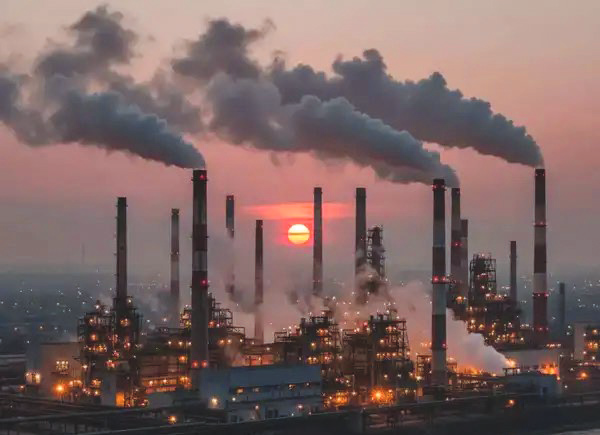
Carbon emissions from steel plant: feedstock for DME-LPG conversion
Rather than allowing CO2 to accumulate and intensify climate change, a catalyst developed by faculty and students at the Hyderabad campus of BITS-Pilani (ranked India’s #1 private engineering university in the EducationWorld India Higher Education Rankings 2026-27) uses it as a feedstock to convert it into DME. In doing so, it converts harmful greenhouse gases into a resource, reducing carbon emissions and advancing the concept of a circular carbon economy.
The steel manufacturing industry contributes an estimated 12 percent of the country’s total carbon dioxide emissions. Unlike power generation, where renewable energy can progressively replace fossil fuels, steel production depends upon high-temperature chemical reduction of iron ore, a process that inevitably generates CO2. Similar challenges exist in cement manufacturing, where emissions arise not only from fuel combustion but also from limestone calcination. Consequently, even with the rapid expansion of renewable electricity, these industries will require complementary decarbonisation technologies. Therefore, capturing and converting their CO2 emissions into useful fuels and chemicals offers a practical pathway to lowering industrial emissions while maintaining economic growth.
India is committed to achieving net-zero greenhouse gas emissions by 2070. This commitment reflects not only the country’s responsibility towards global climate action but also the growing recognition that unchecked climate change threatens India’s own development. Rising temperatures, prolonged heatwaves, erratic monsoons, glacier retreat in the Himalayas, and increasing coastal vulnerability are already imposing substantial economic and social costs. Reconciling sustained industrial growth with CO2 reductions is therefore one of the defining technology challenges of our time.
BITS-Pilani’s research, therefore, sits at the intersection of three national priorities. First, it enhances energy security by reducing the annual LPG import bill. Second, it helps fulfill India’s climate commitments by recycling industrial carbon emissions into useful products. Third, it supports the country’s aspiration to develop indigenous clean-energy technologies that create new manufacturing opportunities and high-value employment.
With regulatory standards already in place and laboratory validation completed, the next challenge is to scale the technology from laboratory bench-scale reactors to pilot plants —several private sector companies have already expressed interest in partnering with BITS-Pilani to pilot the technology — and finally to scale for commercial deployment, contributing simultaneously to India’s energy security, industrial decarbonisation, and Net Zero 2070 mission target. The next stage is for researchers to work with industry partners to scale up this technology in the national interest.
EW-Academy Viksit Bharat series
One of the major infirmities of India’s universities is research and knowledge application. Starting early this year EducationWorld has collaborated with top-ranked universities to report institutional knowledge application to provide solutions for deep-rooted national problems.
In March together with O. P. Jindal Global University, Sonipat faculty we published a roadmap to save and rejuvenate India’s judiciary overwhelmed with a backlog 50 million cases (https://educationworld.in/ew-foundation-viksit-bharat-research-study-saving-indias-collapsing-justice-system/).
In June we teamed up with Sanjay Gupta, Vice Chancellor of the World Design University, Sonipat to write a cover feature titled ‘Can India rediscover its fine design and aesthetic heritage (https://educationworld.in/can-india-rediscover-its-fine-design-aesthetics-heritage/).
In this issue we have collaborated with faculty of the top-ranked BITS-Pilani to report the university’s breakthrough in converting environmentally harmful carbon emissions into DME-LPG blend.
with Summiya Yasmeen











Add comment