






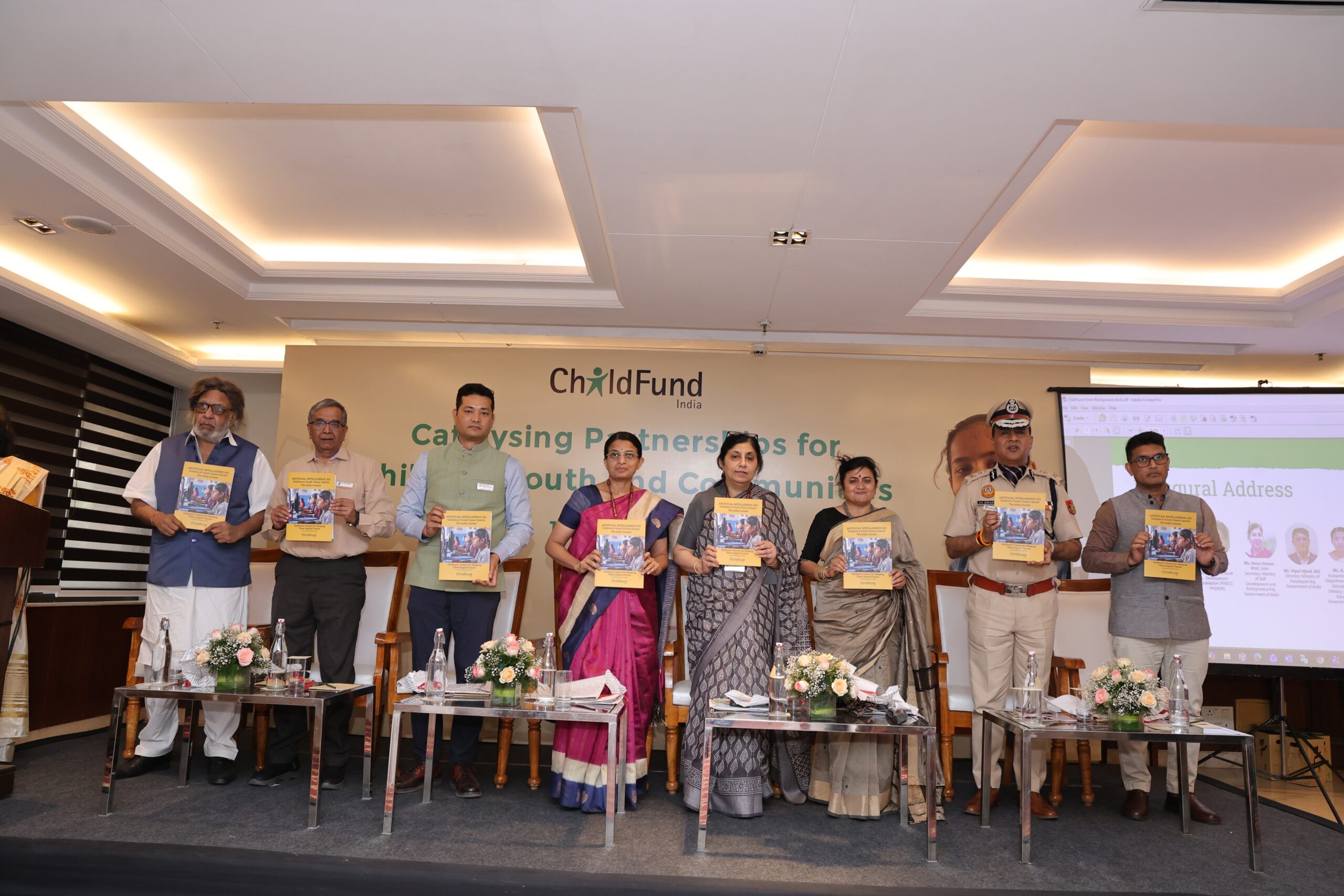
ChildFund India releases AI charter for children and youth, calls for cross-sector action
ChildFund India has released an Artificial Intelligence (AI) Children & Youth Vision Charter and a framework on 21st Century Life Skills for Young People, as part of a national dialogue on strengthening outcomes for children and youth across health, education, digital well-being and child protection.
The event, titled Catalysing Partnerships for Children, Youth, and Communities, brought together government officials, policymakers, educators, mental health professionals, legal experts and civil society representatives in New Delhi to discuss challenges affecting children and young people and identify priorities for future action.
Participants included Dr. Rashmi Singh, Secretary of the Women and Child Development Department, Government of Delhi; Devesh Chandra Srivastava, Special Commissioner of Police, Delhi Police; and Nuriya Ansari, Chief Executive Officer of the Bharti Airtel Foundation.
The AI Children & Youth Vision Charter was developed through consultations with children and young people from urban, rural and tribal communities across India. The document outlines 11 recommendations covering data privacy, online safety, prevention of abuse and exploitation, regulation of deepfakes and misinformation, non-discriminatory AI systems, mental health safeguards and youth participation in AI governance.
Addressing the gathering, Dr. Rashmi Singh highlighted the role of police departments, panchayats and anganwadis in identifying and supporting children at an early stage. She also referred to the Delhi Samarth Anganwadi-cum-Palna Scheme, which seeks to strengthen support systems for children and families through six intervention pillars.
Srivastava said Delhi Police continues to focus on community awareness programmes addressing crimes against women and children. He highlighted initiatives such as the ‘Nidar Betiya’ self-defence programme for girls and the ‘Yuva’ programme, which provides vocational training opportunities for young people.
Ansari said AI could support education by reducing administrative burdens on teachers and improving student engagement, while stressing the importance of addressing foundational literacy and numeracy gaps. She also called for stronger institutional systems within non-governmental organisations to improve the effectiveness of partnerships with corporate social responsibility programmes.
Anil Khaitan, Chairman and Member of the PHD Rural Development Foundation, said challenges facing children and young people require collaboration among families, schools, communities, governments, industry and civil society. He added that technology should serve as a tool for inclusion.
Anand Vishwakarma, Executive Director of ChildFund India, said the organisation had convened stakeholders to assess progress and identify future priorities as it marked more than four decades of work with children and youth.
The event also saw participation from representatives of the Ministry of Skill Development and Entrepreneurship, the Ministry of Panchayati Raj, the Ministry of Women and Child Development, the World Health Organization and the Gates Foundation. More than 30 speakers took part in discussions on health, online safety, digital well-being, mental health, education and skilling.
Participants emphasised the need for coordinated action involving government institutions, communities, civil society organisations and technology stakeholders to address emerging challenges affecting children and young people across India.
Also Read: Supreme Court Declines Interim Relief on Plea Against CBSE Three-Language Policy










Add comment