






Choosing a safe child Daycare centre
With India’s Female Labour Force Participation Rate (FLFPR) rising to 41.7 percent in 2023-24 and dual-income nuclear households now normative in urban India, a growing number of middle class parents are relying on workplace crèches and more often standalone daycare centres to care for their infants
CYNTHIA JOHN & KIRAN BALIMANE

A two-year-old toddler locked inside the drum of a washing machine. Another infant abandoned in a bathroom, crying, unheard. A third sprayed in the mouth with water from a toilet jet.
These are not scenes from a horror film. They are live case histories recently captured on video inside an upscale outsourced child daycare centre on the Bengaluru campus of French IT multinational Capgemini.
The videos, which went viral on social media on July 2 have since shocked and shaken the Silicon Valley community where dual income nuclear households are provided company-paid daily childcare facilities.
While the Bengaluru police are examining CCTV footage, shocked middle class parents are raising questions and demanding answers about the safety checks, regulatory oversight, monitoring mechanisms and quality standards governing crèches and child daycare centres across the country.
With India’s Female Labour Force Participation Rate (FLFPR) rising to 41.7 percent in 2023-24 and dual-income nuclear households now normative in urban India, a growing number of parents are relying on workplace crèches and more often standalone daycare centres to care for their infants. India currently hosts a mere 9,628 registered private child daycare centres catering to upper middle class households, while the Union/state governments own and manage 1.34 million anganwadis — free-of-charge early childhood care and nutrition centres for children from economically weaker sections.
Yet surprisingly in a society where demand for organised paid childcare is rising rapidly, crèches and daycare centres operate outside a uniform, comprehensive, enforceable regulatory framework. They are rarely subject to mandatory safety and hygiene protocols, staff background checks, prescribed caregiver-to-child ratios and CCTV-monitoring norms. Even corporates such as Capgemini typically outsource creche operations to third-party providers, with limited oversight of hiring practices, staff credentials and training in child development and psychology. The Maternity Benefit (Amendment) Act, 2017, mandates crèche facilities for companies and establishments employing 50 or more workers, but stops short of prescribing detailed safety, staffing, monitoring and quality standards. Standalone crèches are even less regulated, with parents often having little information about the credentials of caregivers and safety protocols.
With a rising number of households obliged to place infants in daycare, in 2024, the Union ministry of women and child development notified a National Minimum Standards and Protocol for Crèches (NMSPC). The protocol prescribes minimum standards for setting up and operating crèches, covers infrastructure, safety, hygiene, staffing, child-care practices and monitoring. However, with NMSPC prescribed as a national framework, most states are yet to adopt and enforce its provisions. Implementation is poor, uneven and reactive, with the issue surfacing only after children have suffered. For instance, in the Bangalore incident, the Karnataka State Commission for Protection of Child Rights responded to the public outcry by making CCTV cameras with live-streaming access for parents mandatory at privately-promoted daycare centres, expressing intent to map crèches across the state and frame minimum safety standards.

Dr. Swati Popat Vats
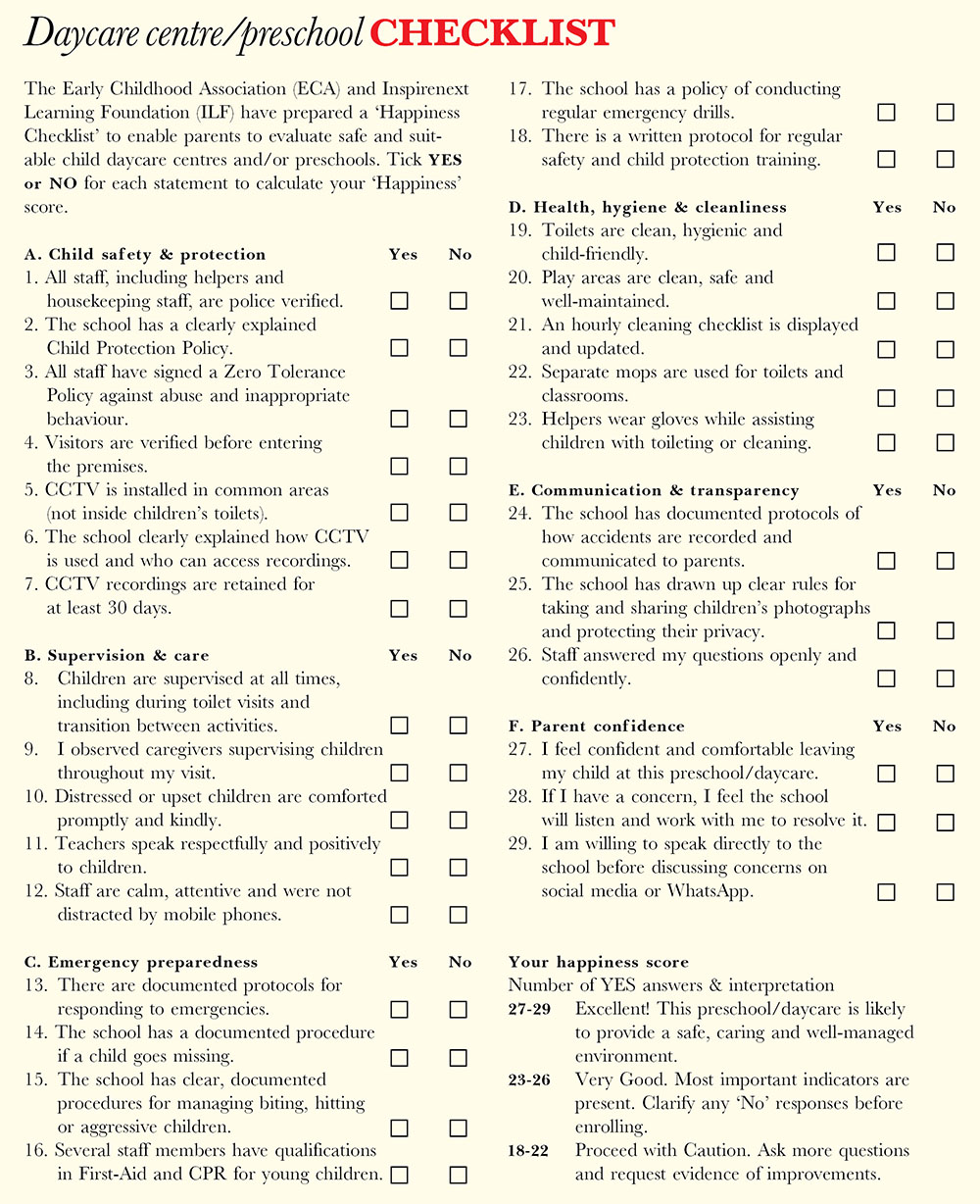
“Most states lack robust safety and hygiene protocols and comprehensive early childhood education frameworks for child daycare centres. In the absence of uniform standards, parents are largely left to do their own due diligence when choosing a childcare facility. The brains of children below five years develop rapidly, so beyond basic care, they need age-appropriate stimulation and early learning opportunities that encourage exploration, discovery and learning. Therefore, parents should thoroughly vet daycare centres before enrolling their infants and, thereafter, make it a daily practice to ask what made their child happy, upset, frightened or excited at the centre. They must believe children when they share experiences that make them uncomfortable, raise concerns promptly with the daycare management and actively partner with caregivers to improve child safety,” says Dr. Swati Popat Vats, President, Early Childhood Association (ECA) which has 35,000 member preschools countrywide, adding that the ECA has prepared a detailed parent checklist to help families evaluate preschools and daycare centres (see box p.14).
Kavitha Murugan, Director, Springwood Academy, Bengaluru, a playschool and daycare centre, concurs that active parental involvement is an important safeguard, as regular conversations with children enable parents to identify and respond to unanticipated incidents. “It is important for parents to spend quality time with their children. Regular, unhurried conversations help children feel comfortable sharing what happened during the day at their preschool/centre — including anything that made them uncomfortable, frightened or upset. This helps parents identify and alert managements to respond to incidents that may otherwise go unnoticed,” says Murugan.
Beyond regular conversations, parents also need to remain vigilant and closely observe changes in children’s behaviour, emotions and routines, because young children may not always have the vocabulary to articulate an uncomfortable or distressing experience. “Long before children develop vocabulary to express discomfort, they communicate through changes in behaviour, emotions and routines. One of the earliest signs parents should pay attention to is a noticeable behavioural change. A child who suddenly clings at drop-off, becomes unusually quiet, withdraws from favourite activities or resists going to daycare or preschool is trying to communicate something she cannot yet articulate. While these changes don’t always indicate a safety concern, they should never be overlooked,” says Meghna Yadav, Head of Training and Development, child psychologist and family counsellor, Klay Preschools chain.

Swati Jain
Choosing the right daycare
For young parents, choosing a child daycare centre is a difficult decision. “As a parent, you want to be reassured that your young child is protected, cared for and adequately supervised throughout the day, while also being engaged in meaningful, age-appropriate learning activities. This requires parents to look beyond the centre’s physical infrastructure and assess its caregivers, safety protocols, routines and early learning philosophy,” says Swati Jain, Director of The Banyan, a company which manages a chain of 200 daycare centres and preschools countrywide. Jain outlines the essential safety, care and learning parameters parents should assess before enrolling their child in a daycare centre.
Personally visit the centre. There is no substitute for assessing the daycare environment firsthand. Visit the centre, observe the cleanliness, infrastructure, safety features, and overall environment, and speak with caregivers and centre head, prior to enrolling children in a daycare centre.
Secure entry and exit systems. One of the first safety parameters parents should check is the centre’s entry and exit arrangements. A good daycare centre ensures a secure entry-exit system that prevents unauthorised individuals from entering the premises. Check out use of access cards, biometric systems, visitor logs, reception-controlled entry points.
Parents should also examine the child pick-up process. Is there a designated list of authorised guardians? How does the centre verify authorised persons’ identities before releasing a child? Clear procedures ensure children are entrusted only to approved individuals.
CCTV monitoring. CCTV surveillance is an important safety feature in modern daycare centres. Cameras placed in classrooms, common areas, entrances, and play zones ensure day-long visibility and accountability. Enquire how CCTV footage is monitored, how long recordings are retained, and the protocols for reviewing CCTV footage of untoward incidents. However, CCTV surveillance should not be a substitute for active supervision by trained caregivers.
Qualified and trained staff. A daycare’s safety standards are only as strong as the people responsible for implementing them. Enquire about staff qualifications, caregiver-to-child ratios, and training programs. Caregivers should be trained in first aid, emergency response, child safety practices, and age-appropriate supervision techniques. Equally important is police verification. Reputable daycare centres conduct thorough background checks on all employees, including teaching, caregiving, and support staff.
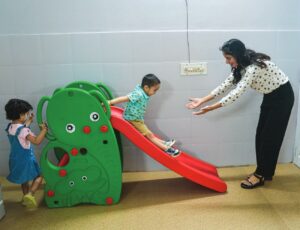 Child-friendly infrastructure. Infrastructure plays a significant role in preventing accidents. Look for rounded furniture edges, covered electrical points, safety gates, anti-slip flooring, secure windows, and age-appropriate furniture. Indoor and outdoor play areas should also be regularly supervised to eliminate potential hazards.
Emergency preparedness. Ask about the daycare’s emergency response plans for accidents such as fire, earthquakes, medical emergencies, and evacuation protocols. A well-prepared centre will have clearly documented emergency procedures, accessible fire safety equipment, emergency contact records, and designated evacuation routes. Regular mock drills enable staff and children to become familiar with safety protocols and ensure quick response during emergencies.
Health and hygiene standards. Young children are more vulnerable to infections, making hygiene a critical aspect of daycare safety. Ask about cleaning schedules, sanitation practices, and illness management policies. Classrooms, washrooms, toys, sleeping areas, and dining spaces should be cleaned and disinfected regularly. Handwashing routines should be mandatory for children and staff. It is also important to understand the centre’s policy regarding sick children, as it helps reduce the spread of infections.
Medical support and first-aid readiness. Cuts, bruises and minor injuries are a normal part of growing up, but appropriate response can make a big difference. Daycares should have well-stocked first-aid kits and staff trained to use them effectively. Enquire whether centre maintains medical records, allergy information, and emergency contacts for every child.
Communication and transparency. Safety is enhanced when parents and caregivers work together. A daycare centre should provide parents information about children’s daily activities, health updates, and developmental progress.
“A daycare centre should do more than provide supervision; it should create a secure environment where children can learn, explore, and grow with confidence. By evaluating security measures, staff preparedness, infrastructure, hygiene practices, and emergency protocols, parents can choose well-equipped and well-managed daycare centres that facilitate their children’s growth, development and well-being,” says Swati Jain.
If you prefer in-home childcare…
If you choose not to enrol your child in a daycare centre, hiring a nanny or caregiver to provide one-to-one care in the familiar surroundings of home is a good option. However, choosing the right person requires careful due diligence. A quick checklist:
- Check credentials and references. Verify the caregiver’s identity, experience and references. Speak to previous employers or people who know her well.
- Observe interactions. Before hiring, watch how the caregiver interacts with your child, including how she responds when your child is upset, restless or refuses to cooperate.
- Set clear expectations. Discuss working hours, responsibilities, feeding routines, hygiene, digital screen usage, discipline and other aspects of childcare upfront.
- Rely on trusted networks. A caregiver recommended by a trusted family member should be shortlisted, but this should not replace formal verification processes.
- Use reputable agencies. If hiring through an agency or online platform, check how they screen and verify their clients. Also ask for references rather than relying solely on a platform’s claims.
- Build in regular checks. Remain involved in your child’s daily routine, maintain open communication with the caregiver and pay attention to any changes in your child’s behaviour or comfort levels.










Add comment