







CJP: Focus on upgrading public education
After decades of neglect and turning a blind eye to a building block of national development, the newly launched Cockroach Janata Party’s (CJP) ‘School Thik Karo’ (mend schools) campaign targeting the country’s 1.10 million public (government) schools, has come like a nationwide gust of oxygen. For the past 26 years, EducationWorld (estb.1999) has been reporting that a majority of government primaries are defined by crumbling buildings, multi-grade teaching, chronic teacher truancy, lack of functional toilets, electricity, and unsafe mid-day meals resulting in pathetic learning outcomes to little avail even though the Annual Status of Education Report (ASER) of the independent Pratham Education Foundation has repeatedly confirmed it.
The latest authoritative institution to confirm the dismal condition of government schools is a report of NITI Aayog, the Central government’s think-tank, which states that 98,592 schools — mainly government — countrywide lack functional girls’ toilets; 61,540 have no toilets at all; 59,829 don’t provide hand-wash facilities; 119,000 are without electricity; 518,910 don’t provide computers and 536,550 lack internet connection.
Against this backdrop, CJP’s Mend Schools campaign — which graphically highlights chronic deficiencies of the public school system through powerful social media reels — is rendering extraordinary public service. It’s shameful that independent India’s influential middle class has turned a blind-eye to the Dickensian deprivations of children from bottom-of-pyramid households for 80 years. It’s also an indicator of the weak intellect of the intelligentsia that it has not understood that human capital development is the non-negotiable precondition of national development.
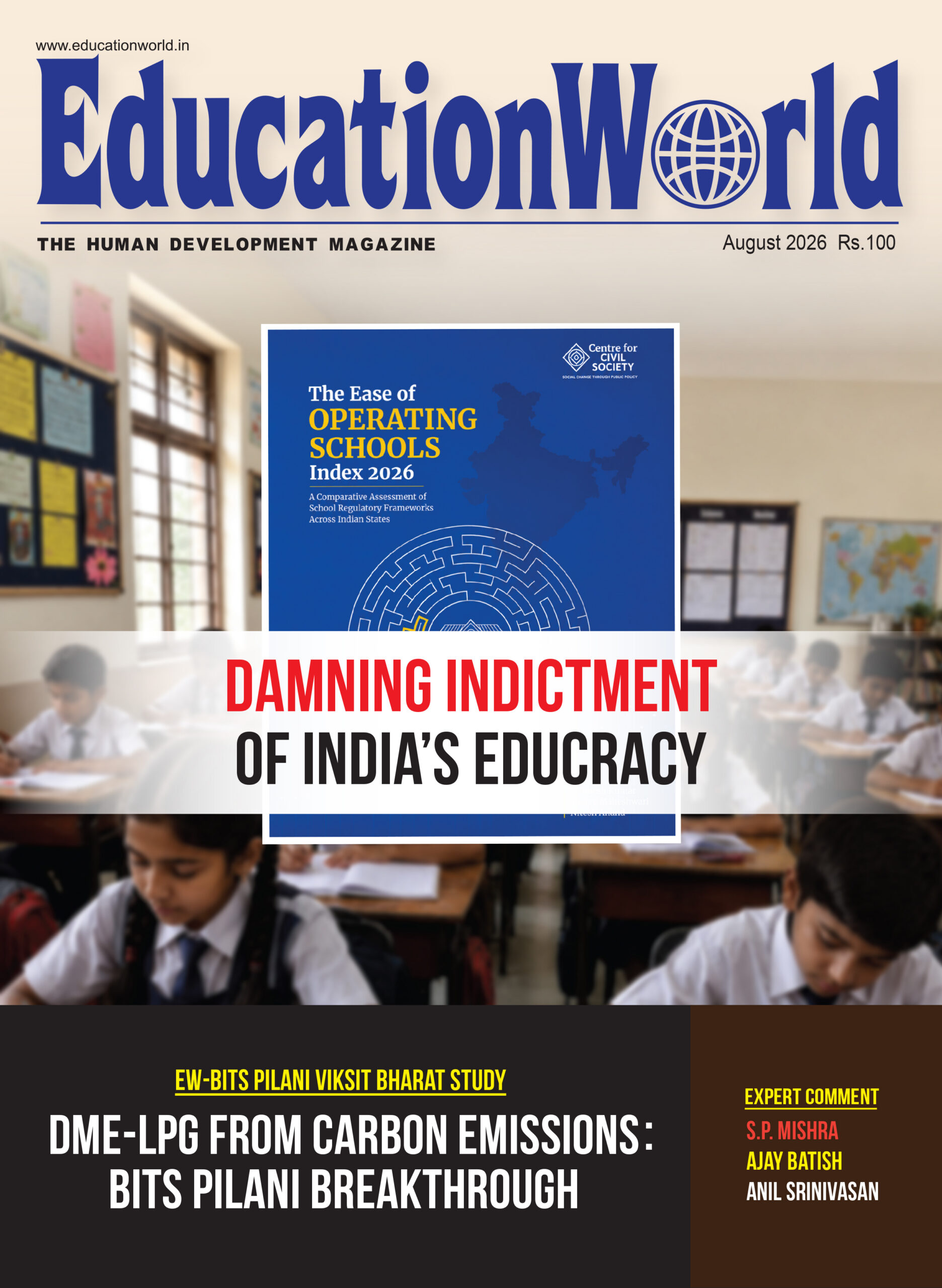
Within the overdue and commendable CJP movement, leftist murmurs to regulate private schools are already being heard. Temptation to incorporate this populist issue into the CJP education reform campaign should be resisted as it will diffuse the focus of the Mend Schools campaign currently targeting public schools. As reported by the Ease of Operating Schools Index 2026 of the Delhi-based think-tank Centre for Civil Society, private schools are subject to a dense web of legislation, rules and regulations that have generated bureaucratic corruption through the system and debilitated Indian education.
Therefore, the objective of CJP — which prefers to describe itself as a reform movement rather than political party — should be to focus on transforming government schools into near equivalents of private schools. In this connection it’s pertinent to note that in OECD (developed) countries a mere 5-10 percent of children are enrolled in private institutions because public schools provide near-equal quality K-12 education. CJP’s demand that annual budgetary expenditure (Centre plus states) for public education is immediately raised to 6 percent of GDP as recommended by the Kothari Commission in 1967, is on the right track. The CJP leadership would do well to avoid the trap of leftist middle class spongers to pull down private schools to attain the equivalence objective.










Add comment