






“Education is the most powerful tool to improve society”
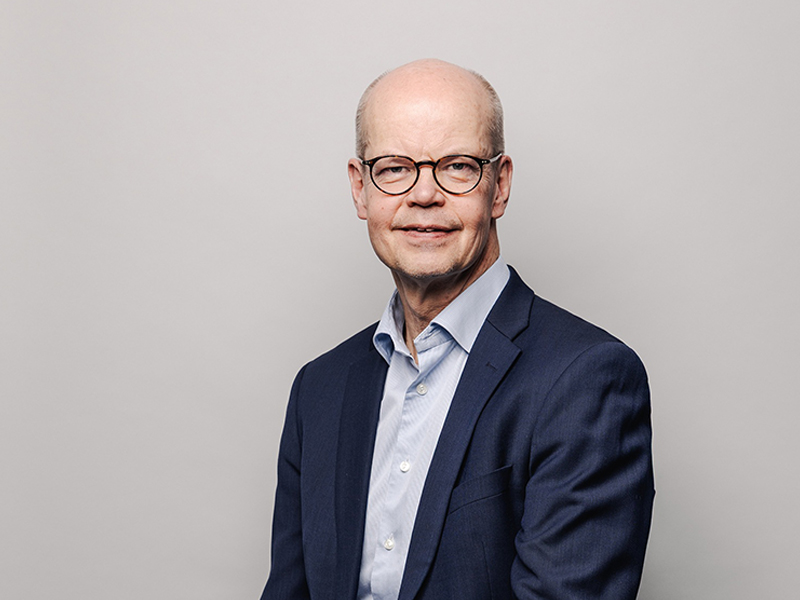
 An alumnus of Helsinki University, former minister for Education & Science of Finland and Director-General of the Finnish National Agency for Education, Dr. Olli-Pekka Heinonen is currently Director-General of the Geneva/The Hague-based International Baccalaureate (IB). Excerpts from an interview with Dilip Thakore:
This is an auspicious occasion. It marks the 50th anniversary of IB in India. Congratulations! What were the founding objectives of IB?
The IB was born out of a powerful idea — that education could prevent the type of conflicts the world witnessed during World War II. Educators from 12 schools came together to design a programme that would build international understanding and co-operation. At the same time, there was a practical need for a high-quality diploma recognised by universities worldwide, especially for globally mobile families.
How satisfied are you that IB has achieved these goals over five decades?
Our growth itself tells the story. From 12 schools, IB has expanded to over 6,000 schools in 160 countries, with an aggregate enrolment of 2 million students. But more importantly, the core mission — to create a better and more peaceful world through education — remains unchanged and continues to guide our evolution.
Has the goal of promoting global peace and co-operation been realised?
There is still much work to be done. Today, one in five student globally lives in conflict-affected regions. However, fostering international-mindedness, intercultural understanding, and collaboration remains central to IB. We encourage not just shared learning but meaningful connections between students worldwide.
IB syllabi and curriculum are praised for their holistic approach. What are their distinguishing features?
From the beginning, IB has gone beyond academics. For instance, community service is mandatory — students must contribute meaningfully to society to earn their diploma. Another distinctive element is that Theory of Knowledge is a compulsory subject. It develops critical thinking — how we know what we know — a vital skill in today’s era of misinformation.
IB has expanded from a diploma programme to include early years education. How significant is this shift?
It’s very important. Starting early allows students to internalise inquiry-based learning and develop a questioning mindset from young age. The learner profile and core concepts are reinforced throughout their educational journey, making the impact much deeper.
IB programmes are often seen as expensive. How do you justify high fees in IB schools?
Our focus is on ensuring quality in affiliated schools. All teachers undergo rigorous IB training so that IB pedagogy is implemented consistently. IB training is mandatory for all teachers of affiliated schools for building a high-quality learning ecosystem. Therefore, affiliation fees and in turn tuition fees of affiliated schools tend to be relatively high. Excellence in education requires sustained commitment and resources.
How well is IB aligned with the AI-driven, self-learning era?
Very well. IB emphasises inquiry-based learning, student agency, and independent research through projects and detailed essays. Students are not passive recipients of knowledge; they actively construct and apply it. This aligns naturally with the demands of the AI age.
What is IB’s response to the growing demand for skills-based education?
Our IB Career-related Programme (IBCP) addresses this directly. It integrates academic learning with career-focused pathways and real-world experience. Currently, it is our fastest-growing programme, especially in India, and simultaneously prepares students for higher education and workplaces.
How should educators respond to artificial intelligence? Fear it or embrace it?
We should engage with AI, not fear it. Students must understand its capabilities and its limitations. AI can assist with tasks but it cannot replace human judgement, ethics, and purpose. Learning still requires effort — you cannot outsource thinking.
Finland is often cited for its model education system. What are its key strengths?
High-quality teachers are central. Teaching is a highly respected and well-remunerated profession, and educators are well-trained and trusted. Moreover, there is strong autonomy at the school level and a culture of trust between teachers and students. Above all, education is holistic — the goal is to help individuals grow into responsible, capable human beings.
Your message to educators and policymakers worldwide…
Education is the most powerful tool we have to improve society. While we often focus on its problems, we must recognise its transformative potential — to build not just skilled individuals, but a more just and peaceful world.










Add comment