






EW INDIA HIGHER EDUCATION RANKINGS 2026-27
Top 400 UNIVERSITIES
To rate India’s Top 400 universities on several parameters of higher education excellence and rank them in discrete categories, 2,175 sample respondents spread across 22 Indian states were interviewed by well-reputed Bengaluru-based AZ Research Partners
Dilip Thakore & Summiya Yasmeen
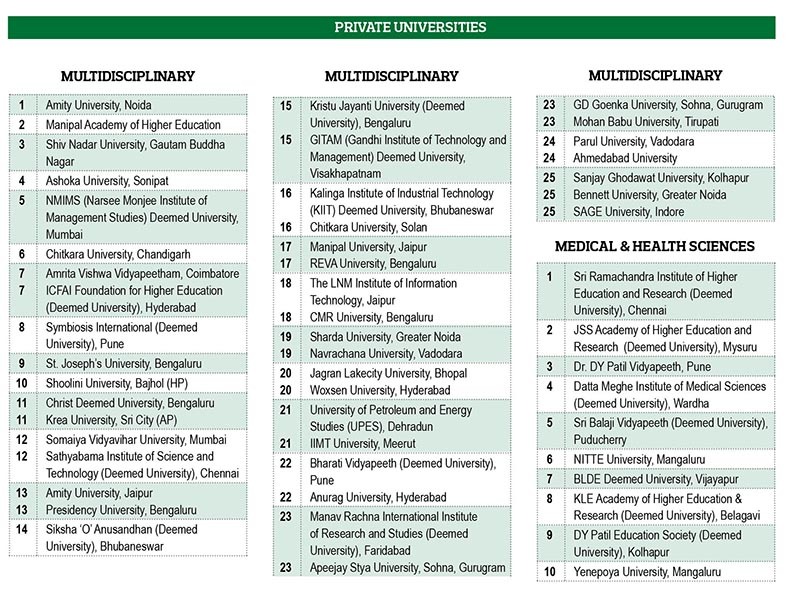
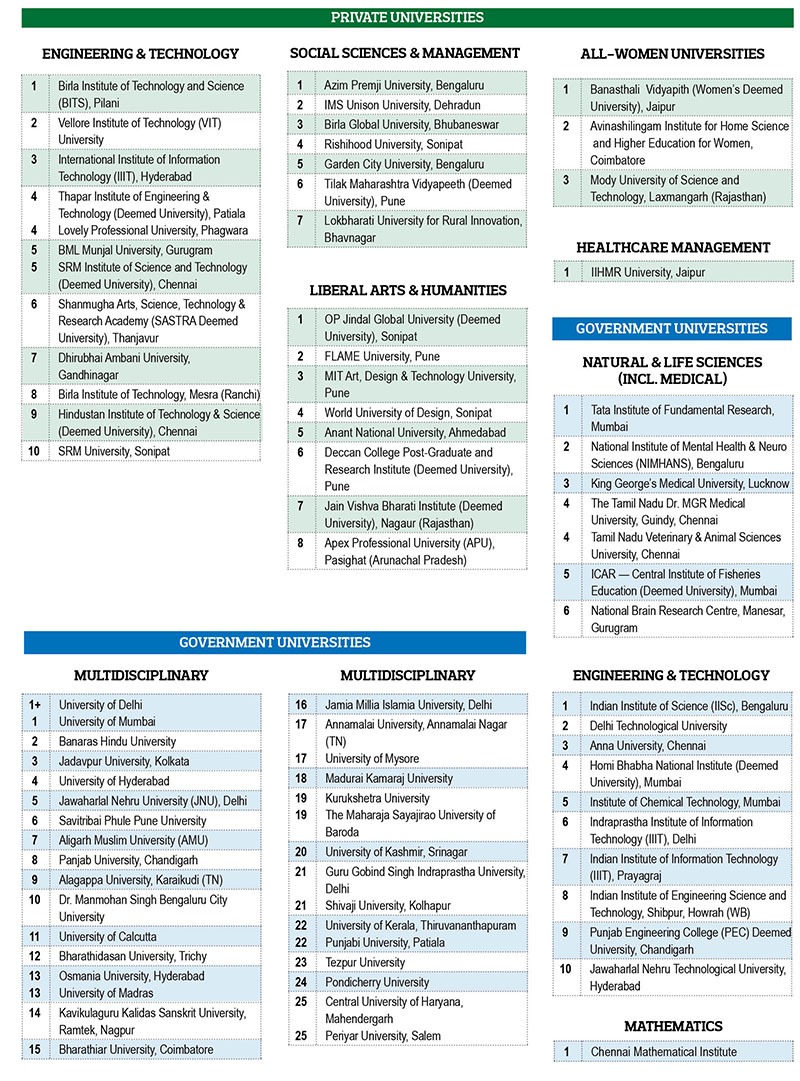
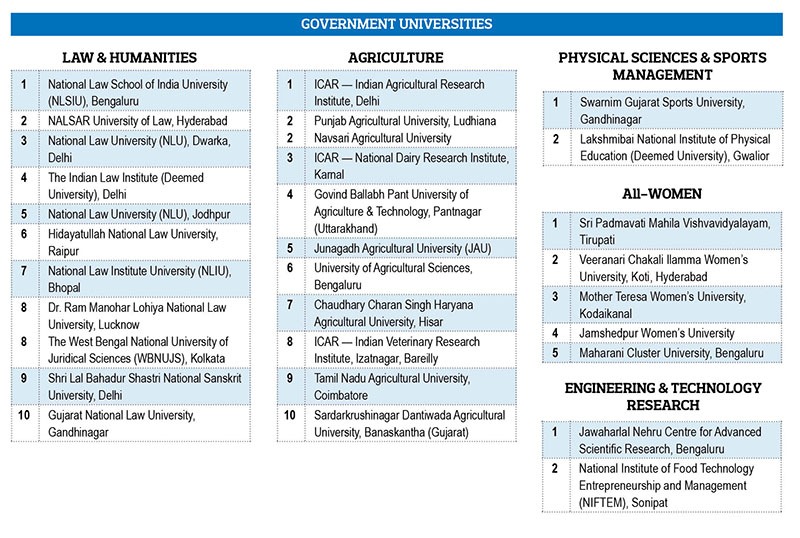
Since the early years of the new millennium, soon after EducationWorld (estb.1999) was launched to attain mission impossible to “build the pressure of public opinion to make education the #1 item on the national agenda”, against the backdrop of Indian students and scholars ready, willing and able to incur astronomical expense to enroll in foreign — especially American and British — universities, your editors have been advocating that reputable foreign universities should be allowed to establish campuses in India. Now some two decades after our cover story ‘Time to welcome foreign universities’ (2007) aired this proposition, for the first time since independence, India’s higher education institutions are about to confront formidable direct competition in their own backyards from some of the world’s most reputed universities.
Nine British universities have received in-principle approval from the Union government to establish branch campuses in India, signalling a decisive policy shift from decades of academic insularity to an era of onshore global competition. Of the nine British universities that have been given the green light, the University of Southampton has been first off the mark. Last August, it admitted its first batch of 150 students in its campus in Gurugram. “We’ve seen nine UK universities set up here in India in just one year. I’ve never seen anything this fast or focused, and we believe there will be 15 very soon,” said Scott McDonald, the UK-based Chief Executive of British Council, addressing a media conference in Delhi on March 17.
Britain is not the sole entrant. Australia’s Deakin University and University of Wollongong have already operationalised campuses in GIFT City, Gujarat and several US-based universities including Illinois Institute of Technology, Chicago are in advanced stages of exploration or approval
The interest of foreign varsities in India is unsurprising. Contemporary India negligently hosts the world’s largest child and youth population. An estimated 285 million children and teens are in the six to 18 years age group, and will shortly be searching for high quality collegiate and university education. Against this, India’s GER (gross enrolment ratio, i.e, the percentage of age-eligible youth in tertiary education) is a mere 28 percent cf. 50 percent in China, 95 percent in the US and 97 percent in South Korea. The Union government has set a 50 GER target for 2035. Therefore, there is unlikely to be a demand shortage for higher education, especially ppp (purchasing power parity) priced study programmes of globally high ranked foreign universities.
But while this is a good augury for students — especially middle class students – the debut of foreign university campuses in India isn’t good news for routinely top-ranked domestic HEIs. They will no longer compete only among themselves for students, faculty and research funding, but also with globally benchmarked institutions operating within national borders. India’s 53,000 colleges and 1,280 universities have to get their act together and urgently raise academic and research standards if they are not to be relegated to the status of also-rans. They are confronted with clear and present danger of not only losing the brightest and best school-leavers, but also best faculty and research grants. Bedevilled by issues of uneven quality, inadequate research output, faculty shortages, and limited global engagement, Indian HEIs are at risk of being outcompeted on their own soil.
With recruitment and placement firms reporting incremental unemployability of India’s graduate students, in 2013, to build upon the highly successful EW India School Rankings (estb.2007) — which have since evolved into the world’s largest primary-secondary schools annual rankings survey — we introduced the EducationWorld India Higher Education Rankings to evaluate the country’s best undergrad colleges and universities.
Under the evaluation model we have ideated, the country’s most well-known HEIs are evaluated on several parameters (competence of faculty, faculty welfare & development, research and innovation, industry interface, placements record, infrastructure, leadership etc). In the absence of publicly available data in India, colleges and universities are evaluated according to the perceptions of a specially constituted respondents’ database comprising academic faculty, students and industry leaders representing informed public opinion. Selection of the respondents’ database and persuading them to rate HEIs according to their perceptions is outsourced to a professional market research agency.

Misra: quantitative research exercise
As such for the past four years, tasks of constituting a robust sample respondents database and conducting evaluation interviews in person and/or remotely, has been entrusted to the Bengaluru-based AZ Research Partners Pvt. Ltd (AZR, estb.2002), a well-reputed market research company. AZR’s clients’ list includes well-known corporates Mars (USA), Tata ClassEdge, NIIS Fund, among others.
To conduct the EW India Higher Education Rankings of Top 400 universities, AZR compiled a database of 2,175 sample respondents comprising 1,245 students and 830 faculty currently studying and teaching in higher education institutions, plus 100 leaders/senior managers of Indian industry in 22 states (Assam, Andhra, Bihar, Delhi, Karnataka, Rajasthan, Maharashtra, Uttar Pradesh and West Bengal, among others) countrywide.
“As usual, the sample respondents for the EWIHER 2026-27 survey have been carefully selected to ensure that they reflect general opinion of the universe of people well-informed and knowledgeable about Indian higher education. The survey has been conducted as a quantitative research exercise with the target audience. For interviews, we have employed a multi-modular approach using the face-face, telephone and online link shared with interviewee models. Scores awarded by respondents on every parameter have been summed up to arrive at total institutional scores. A dense ranking methodology has been used so that universities that have equal total scores receive the same rank, and the next institution receives the immediately following numeral ranks. This methodology ensures better quality and authenticity of respondents’ responses,” says Shubra Misra, promoter-director of AZ Research. An alumna of IIM-Lucknow, Misra is a highly experienced market research and industry professional having served with the pioneer ORG-MARG (now A.C. Nielsen), Blackstone MR (now Synovate) and Tata Global Beverages for an aggregate 25 years before co-promoting AZ Partners two decades ago.
Moreover, this year, to add an element of objectivity under the parameter of career readiness and placements, we have introduced an AI-Enabled Career Readiness Assessment Test in partnership with the US-based GetSetToWork, promoted by Greenlight Credentials LLC. In February-March, higher education institutions were invited to nominate eight students to undertake a structured AI-powered online interview assessing students’ overall career readiness, including real-world application of learning, industry awareness, communication, problem-solving, teamwork, leadership, and adaptability.
In the pages following, we present Part I of EWIHER 2026-27 featuring comprehensive league tables rating and ranking India’s most admired public and private universities. In the May issue (Part II), we intend to publish league tables ranking the country’s best Arts, Science & Commerce Colleges; Private (IITs & NITs excluded) Engineering Colleges; and Private (IIMs excluded) B-schools.
We recommend these league tables are utilised to shortlist the most aptitudinally appropriate HEIs for college and school-leavers. To finalise choice of the most appropriate HEI, further investigation is advised.











Add comment