





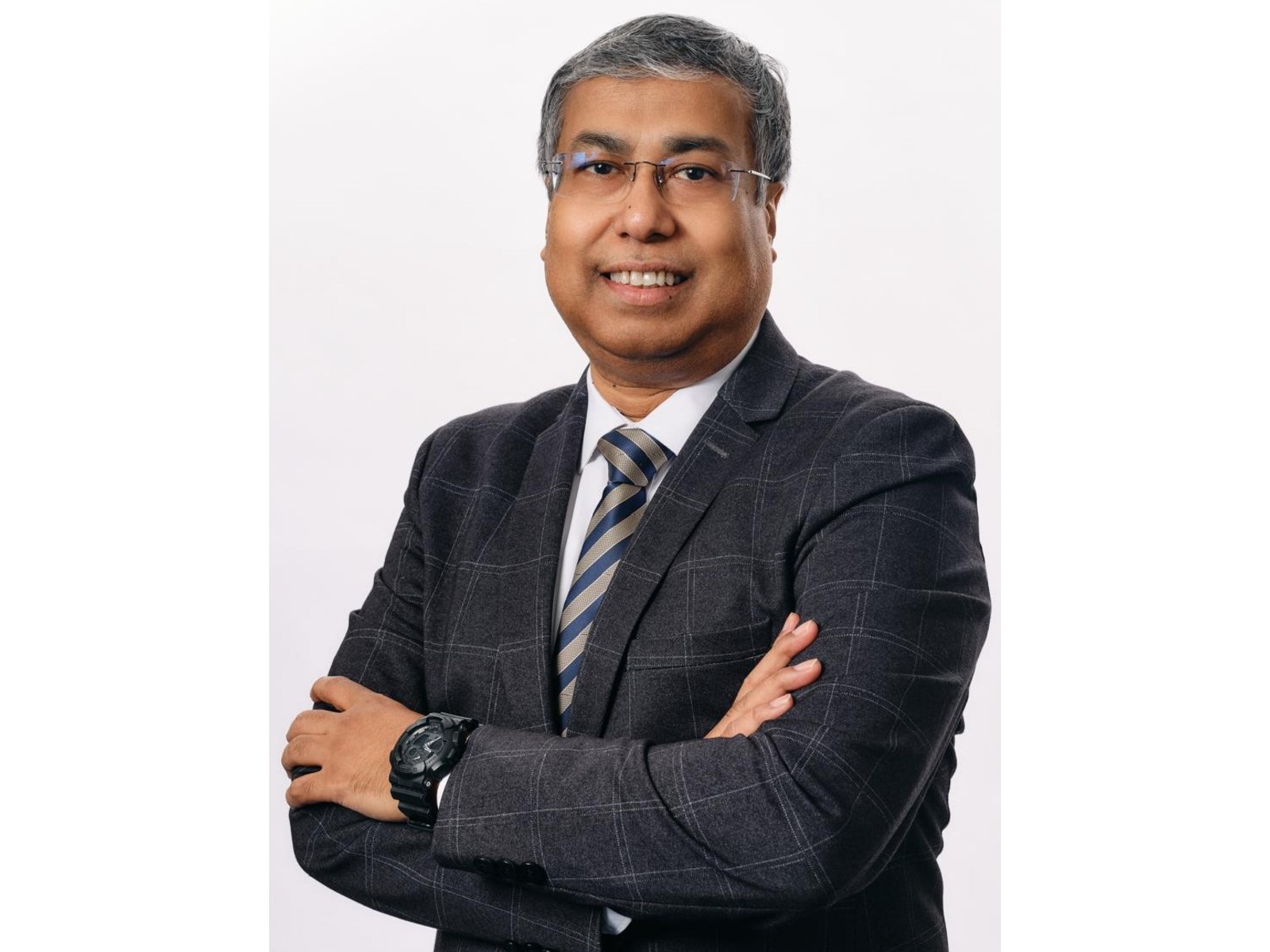
The University of Western Australia (UWA) inaugurated its first international campus in Mumbai in September 2026, becoming the first Australian Group of Eight (Go8) university to establish a campus in India. Following UGC approval, UWA recently inaugurated its second international campus in Chennai, further expanding its international presence.
The expansion builds on UWA’s longstanding academic and research links with India and its assessment of the country’s growing economy and skills needs. The university sees opportunities in technology, artificial intelligence, engineering, clean energy, business and life sciences. Its Indian campuses will offer the UWA curriculum while building stronger links with local industry. In an exclusive interview with Dipta Joshi of EducationWorld, David Das, chief operating officer, UWA India, outlines the university’s India strategy and the opportunities it offers students.
What factors and insights from your research and assessment of international markets led UWA to choose India for its global expansion, and subsequently Mumbai and Chennai as locations for UWA campuses?
India stood out because of its scale, ambition and the pace at which its economy is changing. It has a young population, a strong entrepreneurial ecosystem and growing opportunities in areas such as technology, artificial intelligence, clean energy and advanced engineering. These are also sectors in which UWA and Western Australia have considerable expertise.
Our relationship with India has developed over many years through education, research, alumni and academic partnerships. Establishing campuses here allows us to build on that foundation and contribute more directly to India’s education and skills landscape.
Mumbai and Chennai offer two distinct but complementary environments. Mumbai is a major centre for finance, business and entrepreneurship, while Chennai has strong foundations in technology, manufacturing, engineering and education. Both give us the opportunity to connect what students learn with the industries and opportunities around them. For us, this expansion is about building a long-term presence in India and strengthening the relationship between our two countries, not simply opening campuses in a new market.
UWA offers the same curriculum in India as in Australia. How will the university ensure that students in Mumbai and Chennai get an equivalent academic experience and access to the same standards, resources and opportunities as students in Perth?
The starting point is academic consistency. Students in India should experience the same academic rigour and standards that define a UWA education, while studying in an environment that reflects the realities of the Indian economy.
Our campuses will be fully owned by UWA, rather than operated as joint ventures. This supports consistent academic oversight and quality assurance. We will bring together UWA’s academic expertise and faculty recruited in India, with opportunities for visiting academics and collaboration with colleagues in Perth.
With the Indian employment landscape changing rapidly, how have you assessed the career and employment potential of the undergraduate disciplines UWA is offering in India?
We have looked at both the direction in which India’s economy is moving and the strengths of the cities in which we are establishing our campuses. Across both the Mumbai and Chennai markets, we see growing relevance in areas such as artificial intelligence, data science, cyber security and advanced engineering, alongside opportunities connected to clean energy, critical minerals and life sciences.
But selecting a degree based only on current hiring trends can be limiting. The employment landscape will continue to change, and students need the ability to apply their knowledge, solve problems and adapt as industries evolve.
That is why we want career readiness to be part of the student experience from the outset. A qualification provides the foundation, but future employability is about more than academic achievement. It is about applying knowledge, demonstrating critical workplace skills, and creating value in a professional environment. At UWA India, we provide students with the platform to bridge learning and industry, preparing them to be relevant, adaptable and workplace-ready.
At the postgraduate level, what skills and specialisations are likely to be in great demand from Indian employers?
Employers increasingly need people who can combine technical or business expertise with an understanding of how organisations are changing. Digital transformation, AI, cyber security and data-led decision-making are influencing a wide range of roles, including those outside the technology sector.
Our postgraduate offering in India includes the Master of Business Administration and the Master of Information Technology. Together, they address two important areas: developing business and leadership capabilities, and building the technical expertise needed in a more digitally connected economy.
With students in India following the same curriculum as their counterparts in Australia, how are you building India-specific industry exposure into their education?
The curriculum gives students a common academic foundation, but the context in which they apply that knowledge can be very different. We want UWA India to be closely connected to local businesses, institutions and the challenges facing the country.
The UWA Global Engagement Alliance (UWA’s collaboration with industry and institutional partners across international markets) is one way of bringing industry, academia and students closer together. It is intended to support opportunities for mentorship, internships, applied learning, research and innovation. We also want companies to engage with our academics and researchers on real business and industry challenges. That creates scope for students to see how ideas move from the classroom into practice, while allowing industry to benefit from research and fresh thinking.
Will students have opportunities for internships, live projects, industry mentoring or placements with Indian companies?
Yes, creating stronger connections between students and industry is an important part of our plans for UWA India. We already have relationships with organisations across industry, government and academia, and we intend to develop these further as our campuses grow.
Our partnerships with HCLTech, L&T, ZOHO, Andhra Pradesh MedTech Zone and Avid Sports cover areas including technology, healthcare, sports science and innovation. Through these relationships and the Global Engagement Alliance, we aim to create opportunities for students to engage with industry through industry mentorship, projects, applied learning and research.
The specific opportunities will depend on the programme, the partnerships in place and how these initiatives develop. Our commitment is not to promise an internship or job, but to prepare students to compete for those opportunities. UWA India will facilitate industry engagement and provide platforms that help students translate academic learning into practical capability, develop critical workplace skills and become industry-ready.
What we can do is build an environment in which students have opportunities to understand industry expectations, develop relevant skills and establish professional connections while they study. That preparation can make a meaningful difference when they enter the employment market.
What are the pathways for students who begin their studies in Mumbai or Chennai and later want to study at UWA’s Perth campus? Are there opportunities for credit transfer, exchange, internships or other forms of academic mobility?
Our broader vision is to encourage two-way exchange between India and Western Australia, involving students, academics and researchers. We want the relationship between our campuses to create opportunities for collaboration and international exposure.
At present, however, semester-long mobility between our India campuses and Perth is limited under the regulatory framework for international branch campuses. We are working with regulators and stakeholders, and we hope there will be greater flexibility as the framework evolves.
In the meantime, we are exploring other ways to connect students with UWA’s wider academic community, including short-term immersions, visiting faculty and collaborative academic experiences.
For an Indian student deciding between studying at a UWA campus in India and going directly to Australia, what would you say is the distinctive value (beyond the cost advantage) of studying in Mumbai or Chennai?
For students who want an internationally recognised Australian education but prefer to begin their studies in India, UWA’s campuses offer an additional option. They can study in Mumbai or Chennai while remaining connected to their families and the Indian economy. Studying in these cities can help students understand the industries and opportunities developing around them.
They will also be part of UWA, with its academic standards, research-led approach and international outlook. Through our academic and industry partnerships, we want students to build knowledge and connections that are relevant both within India and more broadly.
The pathway to international engagement remains important, although opportunities for mobility between India and Perth are subject to the applicable regulatory framework.
For students, the choice is not only about where they study. It is about the environment in which they want to begin building their academic and professional future. Our aim is to offer a UWA education that connects them to India while keeping a wider world of ideas, knowledge and opportunity in view.
Also read: University of Colorado Denver to establish India campus in Hyderabad










Add comment