






“Government primaries form base layer of education system”
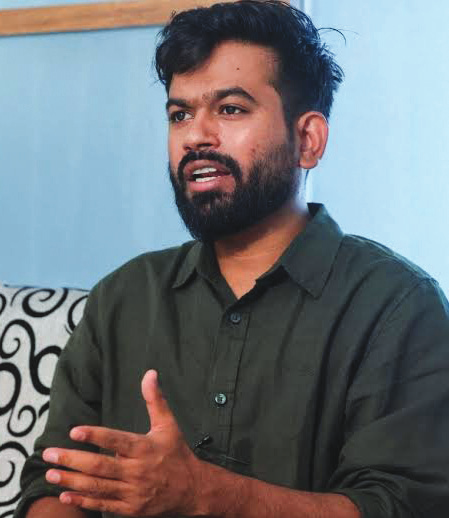 Dipta Joshi interviewed Abhijeet Dipke, Founder & National Convener of the Cockroach Janata Party (CJP) online while on the ‘School Thik Karo’ (Mend Schools) campaign trail in rural Maharashtra. Excerpts:
After the NEET-UG exam papers leakage issue, the ‘School Thik Karo’ campaign audits primary schools. How is this campaign connected to the Cockroach Janata Party’s larger goals?
Demanding the resignation of the education minister was a step towards seeking accountability because under his watch, India’s education system has spectacularly collapsed over the past 12 years — leading to the tragic loss of young lives to suicide due to incompetence and corruption at the top.
However, the rot starts at the very bottom. Government primary schools form the base layer of our education system, where a majority of children in India receive their education. Yet, successive governments have systematically neglected it. In my own village, Hingoli, classrooms lack basic benches for children, toilets are in such disgusting conditions that children — especially young girls — are forced to go back home just to use the bathroom.
These are not complex, macro-level policy dilemmas; they are basic infrastructure failures. Until we solve these fundamental issues, we cannot hope to fix the broader education system. That is why the ‘School Thik Karo’ campaign was launched.
The campaign uses a 10-point audit checklist covering water, toilets, safety, mid-day meals and more — what has the actual data shown so far, and which state or district has surprised you the most?
We are currently compiling nationwide data, but response has already been overwhelming. So far, more than 20,000 people from various states, districts, cities, and villages have uploaded video audits on Instagram. For instance, a young filmmaker in Mumbai personally organised 170 volunteers to audit municipal, corporation schools across the city. People everywhere are stepping forward to expose basic infrastructure deficiencies. This is a true mass movement, awakening citizens to raise their voice for their rights.
Following the success of securing Union Education Minister Dharmendra Pradhan’s resignation, there is immense energy within the public, and we want to channel it into lasting grassroots change.
In Jaipur, a CJP team was attacked and driven away. While some news outlets quote villagers saying they themselves drove your team away, you’ve condemned it as a BJP-orchestrated attack…
To understand what happened, you have to look at the school itself: it is literally being run inside a buffalo shed. Children sit on the floor next to cattle fodder under broken, leaking roofs. Over a year ago, our team member Ashutosh Ranka, then based in Jaipur, visited this school and exposed these pathetic conditions. Under CJP’s ‘School Thik Karo’ campaign, he returned to highlight the issue again and demand that the government build a proper school building instead of forcing children to study in a cattle shed.
On their way to the audit, the CJP team was confronted by a group of goons who instigated an argument, physical assault, and chase.
We know this attack was politically motivated and orchestrated by the BJP because we have photos and videos identifying the attackers as active, recognisable BJP workers. Moreover, right after the incident, the Rajasthan Education Minister publicly defended the attackers, claiming villagers were “protecting the children”. Protecting them from what? It is the children who need protection from a government that forces them to study in unsafe buffalo sheds under collapsing roofs.
Is this kind of resistance — experienced in Jaipur — becoming a pattern for your school visits?
No, this is definitely an exception, not the pattern. In the vast majority of villages across India — whether in Maharashtra, UP, Assam, or Rajasthan — we are welcomed with open arms.
Are private schools’ fees going to be questioned too by CJP?
India already has sufficient laws and Supreme Court guidelines regarding fee regulation for private schools. The long-term solution to excessive private school fees is building high-quality, fully-equipped government neighbourhood schools. When parents have access to free-of-charge, excellent public education, private schools will naturally be forced to keep their fees reasonable to compete.
Will CJP eventually contest elections?
What India urgently needs right now is an uncompromising public movement and pressure group that forces the political establishment to address real public issues. Our goal is not simply to enter office or win seats; our goal is to fundamentally transform the political discourse of the nation.
After the Jantar Mantar protest and now the ‘School Thik Karo’ campaign, what’s next for CJP?
Our next step is embarking on a nationwide listening tour. Broadly, our focus remains on education and unemployment, as these directly determine the livelihoods and future of India’s youth. Our ultimate objective is to build sufficient public pressure to drive long-term structural and governance reforms — ensuring better public infrastructure, quality health and education, and a decisive rejection of divisive politics.










Add comment