






Higher Education as India’s Soft Power
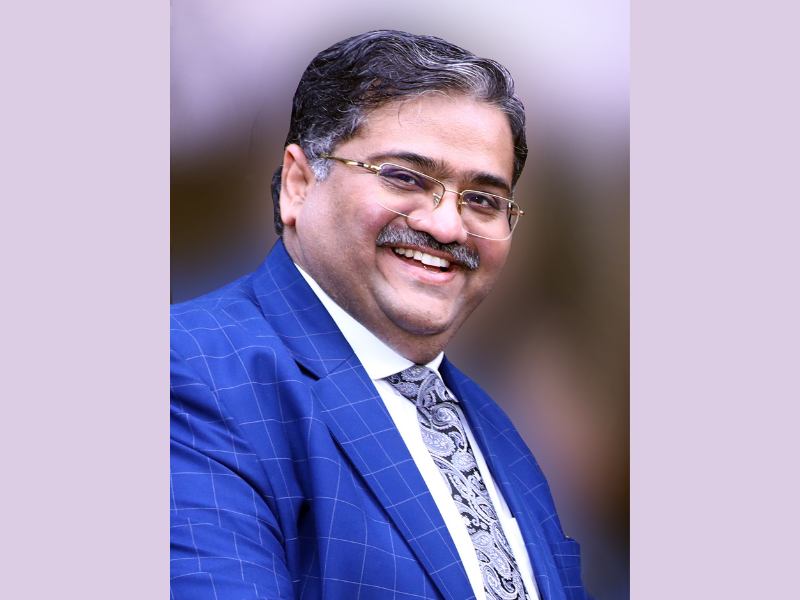
– Miraj D. Shah, Senior Vice President, The Bhawanipur Gujarati Education Society
There is a quiet revolution underway in how nations assert their influence on the world stage. Missiles and markets still matter, of course. But increasingly, it is ideas, institutions, and intellectual capital that determine a country’s standing across generations. For India, this truth presents not merely an opportunity; it presents an obligation. Higher education, if reimagined with strategic intent, can become one of this nation’s most enduring instruments of soft power.
We often speak of soft power in the language of culture, cinema, cuisine, yoga, and spirituality—and rightly so. But there is an equally compelling case for academic soft power: the ability to attract the world’s best minds, to export graduates who go on to lead global institutions, and to produce research that shapes human progress. On all these dimensions, India is still operating below its potential.
Consider what is already working in our favour. The Indian diaspora, comprising accomplished scientists, physicians, entrepreneurs, and policymakers, is the most powerful advertisement for Indian intellectual capital. These individuals were shaped by Indian classrooms, Indian teachers, and Indian values of rigour and resilience. They lead companies and advise governments across dozens of countries. Yet India has not fully leveraged this credibility to build a globally compelling narrative around its academic institutions.
The National Education Policy 2020 is a watershed moment—one that history will judge kindly if its intentions are matched by implementation. For the first time, we have a framework that acknowledges the need for Indian universities to be globally competitive, interdisciplinary, and research-driven. The ambition to host foreign universities and create academic exchange frameworks is not mere aspiration; it is a strategic statement: India is open for academic business.
But policy is only as powerful as the institutions that execute it. Drawing on fifteen years of building educational institutions, I believe this transformation demands three non-negotiable shifts: in quality, in the globalisation of curriculum, and in research culture.
Quality is the foundation of credibility. No nation earns academic soft power by volume alone. The sheer number of graduates India produces each year is staggering—but global respect is earned through the quality of what those graduates know, think, and can do. This demands a serious reckoning with pedagogy—moving decisively away from rote learning toward critical thinking, problem-solving, and applied learning. Industry partnerships, interdisciplinary programmes, and experiential education must cease to be novelties and become the norm.
The globalisation of curriculum is the second imperative. A student graduating from an Indian institution today should be equipped—intellectually and professionally—to compete and collaborate anywhere in the world. This does not mean abandoning the Indian context. On the contrary, the most powerful academic offering India can make is one deeply rooted in Indian thought yet simultaneously globally fluent—blending Indian knowledge systems with contemporary standards, delivered increasingly through hybrid modalities, in ways that define the next generation of India’s academic reputation abroad.
Research and innovation constitute the third pillar. A nation that publishes, patents, and pioneers earns a seat at the table of global intellectual discourse. India’s research output has grown impressively, but it must be matched by a genuine research culture at the institutional level—where curiosity is celebrated, failure is permitted, and original thinking is rewarded. This requires sustained investment, not as a budgetary line item, but as a philosophical commitment to knowledge creation.
There is also a geopolitical dimension worth acknowledging. As the world’s largest democracy and a fast-growing economy, India occupies a unique position of trust across the Global South. Countries in Africa, Southeast Asia, and Latin America seek partnerships with nations whose development journeys resonate with their own. India’s story of building institutions in resource-constrained environments—of producing world-class talent without world-class infrastructure—is profoundly relatable. That relatability is itself a form of soft power.
India is at an inflection point. The demographic dividend of a young population is not a guaranteed gift; it is a ticking clock. If we educate this generation well, they will power not just India’s economy but also contribute meaningfully to the world’s. If we do not, the dividend becomes a deficit. The stakes of getting higher education right have never been greater.
I believe we will get it right. India’s greatest historical strength has always been its capacity for intellectual synthesis—absorbing the best of global thought while remaining firmly anchored in its own civilisational wisdom. If we bring that same instinct to the architecture of our universities, we will not merely produce graduates. We will produce global citizens who carry India’s values, India’s rigour, and India’s ambition into every corner of the world. And that, ultimately, is the deepest and most durable form of soft power any nation can possess.
Also Read: The shift toward industry-integrated and skill-driven management education










Add comment